
Cobá Ruins, Mexico: 2026Guide (What to See, How to Visit & Tips)
Are you planning to visit Cobá in Yucatán during your trip to Mexico?
Great idea!
Cobá ruins are one of the most fascinating Mayan archaeological sites in the region. Less crowded than Chichén Itzá and more immersive than Tulum, Cobá offers a unique experience in the middle of the jungle.
Here, you explore the site on foot or by bike, following the ancient sacbeob (white roads) that connect the pyramids, temples, and steles. The atmosphere feels wilder and more authentic. And just minutes away, you’ll find several beautiful cenotes near Cobá where you can swim after your visit.
In this complete guide to visiting Cobá, I explain everything you need to know: how to get to Cobá, ticket prices, opening hours, bike rental options, how much time to plan, and my best practical tips to avoid mistakes.
You’ll also find a clear comparison between Chichén Itzá vs Cobá vs Tulum, plus the best things to do around Cobá: Punta Laguna, a traditional temazcal experience in a local community, Valladolid, and the most beautiful cenotes near Cobá.
Finally, I share my hotel recommendations for every budget: staying in the village of Cobá, or using Tulum, Playa del Carmen, or Mérida as a base to organize your itinerary efficiently.
So, how to visit Cobá?
Let’s find out!
Sommaire
- Cobá Ruins, Mexico: 2026Guide (What to See, How to Visit & Tips)
- 1. Why visit Cobá?
- 2. Where is Cobá and how do you get there?
- 3. Practical information & tickets for visiting Cobá in 2026
- 4. History of Cobá and its importance
- 5. What to see in Cobá: exploring the site and the Mayan jungle
- 6. Chichén Itzá, Cobá, and Tulum: What are the differences?
- 7. Things to do around Cobá: adventure, nature, and culture
- 8. Cenotes near Cobá
- 9. Where to stay when visiting Coba?
- Conclusion: is Cobá worth visiting?
- Frequently Asked Questions About Cobá
- How to Find Cheap Flights
- You’re traveling in Mexico? These articles will help you!
1. Why visit Cobá?
Visiting Cobá is like traveling back in time to discover an archaeological site buried deep in the tropical jungle of the Yucatán.
Unlike Chichén Itzá, Cobá retains a raw charm and a wild atmosphere. It offers a rare balance between nature and history, far from the endless queues and heat of the large tourist complexes.
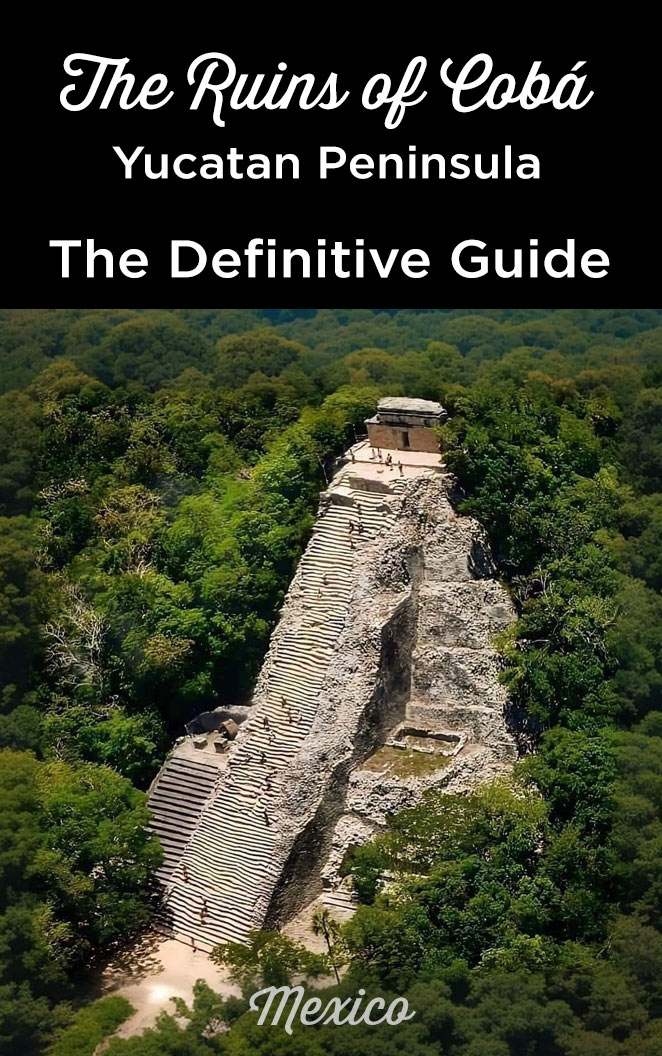
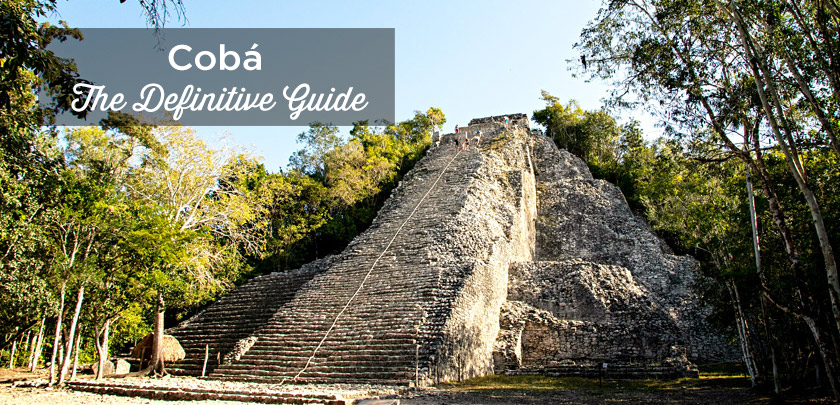
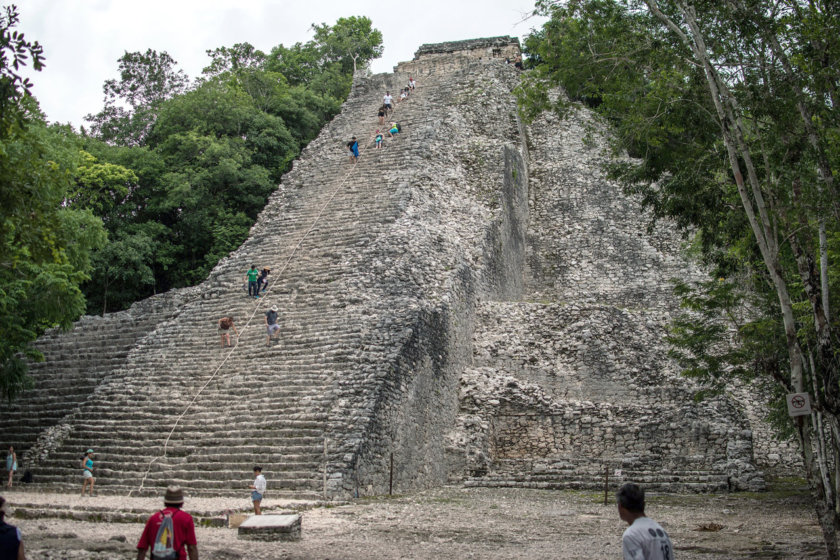
One of the site’s major attractions is the Nohoch Mul pyramid, the highest in Yucatán, which rises to 135 ft.
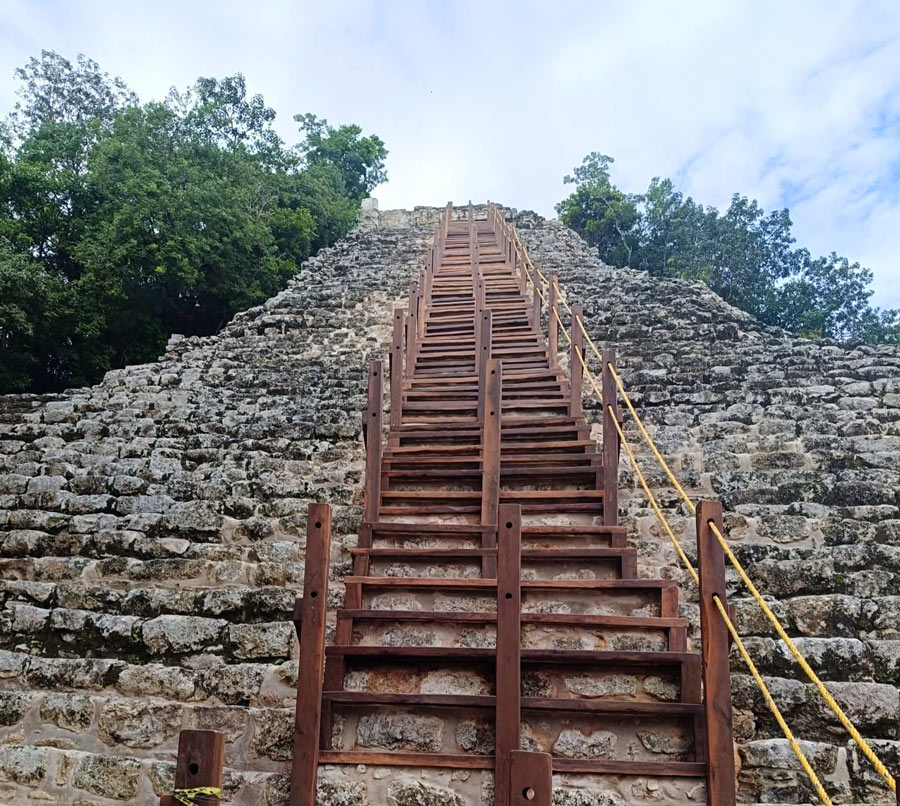
- After being closed for several years, it is now possible to climb the Cobá pyramid via a new staircase, which offers a magnificent view of the surrounding area!
Cobá is also famous for its sacbés, ancient paved roads built by the Maya to connect the different cities in the region. These paths, still visible today, give the site a historical and lively dimension.
After the visit, the cenotes around Cobá offer a refreshing break in a spectacular natural setting. It is also a great opportunity to discover places managed by local communities, where sustainable tourism is at the heart of development.
2. Where is Cobá and how do you get there?
Cobá is easily accessible from several key points on the Yucatan Peninsula.
From Cancún, take Carretera Federal 307 south towards Tulum, then take Carretera 109 towards Nuevo Xcan. After about 30 miles, you will arrive at Cobá.
2.1 By rental car
A car is the most flexible way to explore Cobá and its surroundings. It allows you to travel at your own pace and easily combine a visit to the archaeological site with Punta Laguna or the nearby cenotes.
- From Tulum: about a 45-minute drive.
- From Playa del Carmen: allow about 1 hour and 15 minutes.
Parking is available at the entrance to the archaeological site, making it very convenient for those who want to explore Cobá independently.
Many travelers choose to visit the Riviera Maya and Yucatan by rental car. And indeed, there are many advantages! Freedom, speed, flexibility of itineraries and schedules…
As you know, finding a reliable car rental agency in Mexico is not easy, as scams and disappointments are unfortunately common!
To rent a car, personally, I always use Booking.com Cars, for a few reasons:
- You can easily compare the rental cars prices between all the agencies: for sure the easiest way to find the best rate!
- Cancellation is often offered free of charge: no need to worry if you change your mind
- Booking Cars offers full insurance coverage at a lower price than the rental companies, so it’s an instant saving with no effort
Simply click on the green button to find your rental car at the best price:
2.2 Go to Cobá by colectivo or bus
This is the most economical option for getting to Cobá from Tulum or Playa del Carmen.
From Tulum
- Departure from the city center (near the central market) or the bus station.
- Frequency: every 30 to 45 minutes.
- Journey time: approximately 45 minutes.
From Playa del Carmen or Cancún
- First take an ADO bus or a collectivo to Tulum.
- Travel time to Tulum: 1 to 2 hours depending on the city of departure.
- In Tulum: change to a local collectivo or minibus to Cobá.
Collectivo fares to Cobá: the price of colectivos varies between 50 and 100 pesos per person, depending on the departure point and distance traveled.
Take the bus from the ADO station (check the timetables on their website here), then for the return trip, hop on a colectivo—they run regularly throughout the day, allowing you to stay at the site as long as you like!
When you arrive in Cobá, the bus or car will drop you off in the village or near the entrance to the archaeological site, from where you can easily walk to the main entrance.
3. Practical information & tickets for visiting Cobá in 2026
Visiting Cobá is a delightful adventure, but to ensure your trip goes smoothly, it’s best to arrive well prepared.
3.1 Cobá entrance fee 2026: ticket prices and bike rental
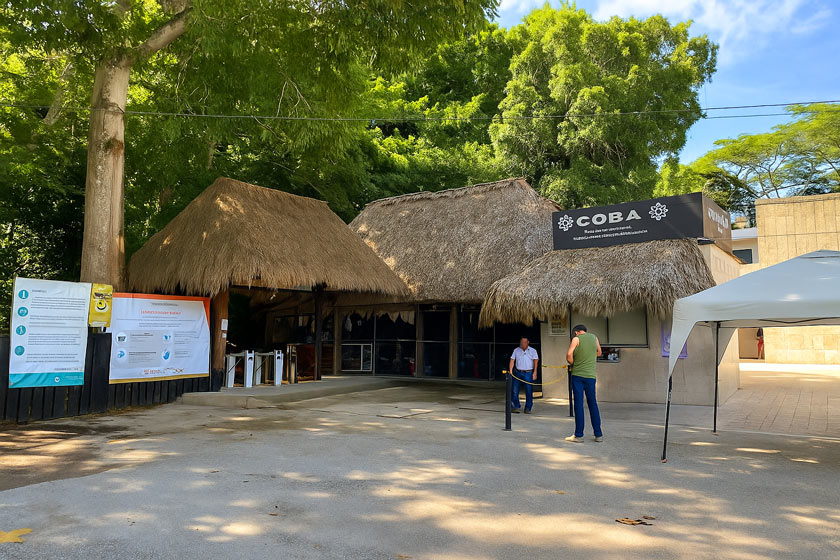
There are two tickets to pay for. The total entrance fee 2026, for non-resident foreign tourists is 330 pesos.
Inside the site, you can rent bikes to tour the site, which is often one of the preferred options for travelers. The rental fee is 80 pesos.
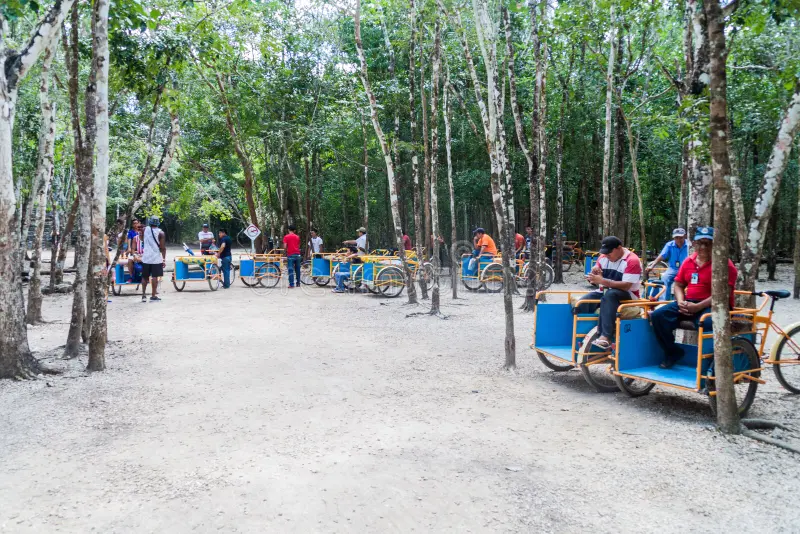
For those who do not wish to cycle, there is a tuk-tuk system available: someone pedals and takes you around the entire site. The cost is approximately 150 pesos for 1.5 hours.
On Sundays, admission is free for Mexicans, so there may be more visitors on that day.
3.2 Opening hours and access to the Cobá archaeological site
Cobá is open every day from 8:00 a.m. to 5:00 p.m., with last admission at 4:00 p.m., to allow visitors to move around and leave the site before closing time.
Parking on site is subject to a fee: approximately 80 pesos.
3.3 How long does it take to visit Cobá?
Of course, it all depends on your pace, but for a typical visit to Cobá, covering the main groups of ruins, allow an average of two to three hours.
For those who wish to explore more thoroughly, take the time to observe the wildlife and steles, or venture into quieter areas of the site, consider three to four hours.
The best time to visit Cobá is in the morning, as soon as it opens, to avoid the crowds and enjoy more pleasant temperatures before the heat sets in.
Some areas of the site have little shade, so it is advisable to bring a hat or cap. A later visit during the day is still possible, but the light is stronger and the experience may be less comfortable under the Yucatán sun.
3.4 Do you need a guide at Cobá?
Visiting Cobá with an English-speaking guide is highly recommended, especially if you want to understand the history, symbols, and organization of the city. A guide can provide anecdotes about the rulers, rituals, and mysteries of the pyramids, as well as explanations about the sacbes and nearby cenotes.
If you opt for a local guide, rates generally vary between 600 and 1,000 pesos per group or per person depending on the package, with the language sometimes including transportation within the site and the loan of a bicycle or tricycle.
The main advantage is that you save time and enjoy a more immersive and secure experience, especially for those visiting Cobá for the first time.
I recommend this guided tour to Cobá with hotel pick-up — it also includes the Tulum ruins, a cenote swim, and a buffet lunch:
3.5 Tips for visiting Cobá
To take the best photos of Cobá and its surroundings, I recommend arriving early in the morning or late in the afternoon, when the light is soft and the jungle and pyramids take on spectacular hues.
Aerial photos with drones are prohibited on the site, so use your camera or smartphone instead.
It is essential to wear comfortable shoes, mosquito repellent, a hat, and to stay hydrated.
If you are using a bike, stay on the marked paths and watch out for roots and uneven ground.
For cenotes and swimming, avoid deep areas if you cannot swim and always follow local guidelines.
3.6 What should you bring to visit Cobá?
To fully enjoy your visit to Cobá, bring comfortable shoes suitable for walking on jungle trails and sacbés.
Bring plenty of water, a hat, sunscreen, and mosquito repellent. A small, lightweight bag for your personal belongings and a camera for souvenirs.
If you plan to swim in the nearby cenotes, don’t forget your swimsuit and towel. If you have water shoes, be sure to bring them so you can be comfortable in the cenotes.
4. History of Cobá and its importance
Cobá, nestled in the heart of the Quintana Roo jungle, was once one of the most powerful Mayan cities in the northern Yucatán Peninsula.
Its name comes from the Mayan Kob Ha’, meaning “waters stirred by the wind,” in reference to the five lagoons surrounding the city.
The first traces of occupation date back to around 100 BC, when small farming villages were established around the Cobá and Macanxoc lakes. From the year 100 onwards, the city grew rapidly: the population became more concentrated, a political hierarchy was established, and the first monumental buildings appeared.
Between 300 and 600 AD, Cobá reached its golden age: a major economic, religious, and political center, it controlled regional trade thanks to a vast network of stone roads, the sacbés, connecting its internal neighborhoods and other cities as far as Yaxuná, nearly 60 miles away.
This expansion led to the construction of pyramids, temples, and richly carved stelae. At its peak, between 600 and 800 AD, Cobá covered more than 70 km² and is thought to have been home to up to 50,000 inhabitants!
Around the 9th century, Cobá entered into rivalry with Chichén Itzá, whose power eventually eclipsed its influence.
Cobá was ruled by a line of sovereigns, including two remarkable women: Ixic Yopaat and Ixic K’Awaiil Ajaw, reflecting the important role of queens in Mayan society.
In 2024, recent excavations revealed a panel engraved with more than a hundred glyphs near the Nohoch Mul pyramid, mentioning the founding of the Keh Witz Nal people in 569 AD and a previously unknown ruler, K’awiil Ch’ak Chéen. These discoveries confirm the historical and religious importance of Cobá in Mayan chronology.
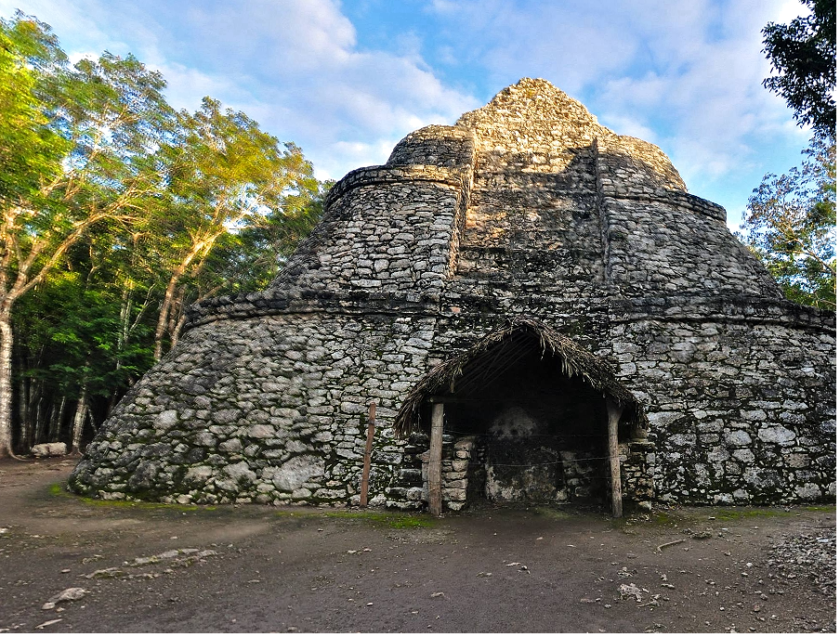
5. What to see in Cobá: exploring the site and the Mayan jungle
Today, the site is divided into several monumental complexes connected by sacbés. The most famous is the Nohoch Mul group, dominated by the pyramid of the same name: 137 feet high, it is the most imposing in Yucatán and symbolized the spiritual power of the city.
Built between 600 and 900 AD, it was probably used for astronomical and religious rituals. Once accessible by climbing, it is no longer open to the public in order to preserve its structure.
Nearby, the Macanxoc group houses a series of remarkably well-preserved stelae recounting ceremonies and political events, some of which are associated with Mayan queens. It is an area imbued with calm and mysticism, located near Lake Macanxoc, considered a sacred place.
The Coba group, located near the entrance, is the most accessible area: it features a well-preserved Mayan ball court, several ceremonial platforms, and the starting points of major sacbes, including the famous Sacbe 1, which connected Cobá to Yaxuná.
The Las Pinturas group is one of the oldest on the site; it owes its name to fragments of murals depicting religious and natural scenes.
Layers of occupation dating back to the Preclassic period, well before the city’s heyday, have been discovered here. Xaibé, a rare circular pyramid, served as an astronomical observatory and was located at the intersection of several sacbes.
Its name means “crossroads” in Mayan, evoking its central role in urban planning.
Around the site, the lakes and cenotes —Cobá, Macanxoc, Yaxnahá, Sacalpuc, and Xcanh—were essential to daily life and rituals. The Choo-Ha, Tamcach-Ha, and Multum-Ha cenotes, accessible within a few minutes, served as places of offering and still retain a mystical atmosphere.
The sacbés of Cobá, made of white limestone, are among the most impressive in the Mayan world; their construction is evidence of complex organization and considerable regional influence.
Even today, walking along these ancient paths, amid the cries of howler monkeys and the scents of the jungle, is like stepping back through more than a millennium of history.
Cobá remains a living city in the memory of the Yucatán Peninsula, a forgotten rival of Chichén Itzá that preserves, buried under the trees, the secrets of a vanished empire.
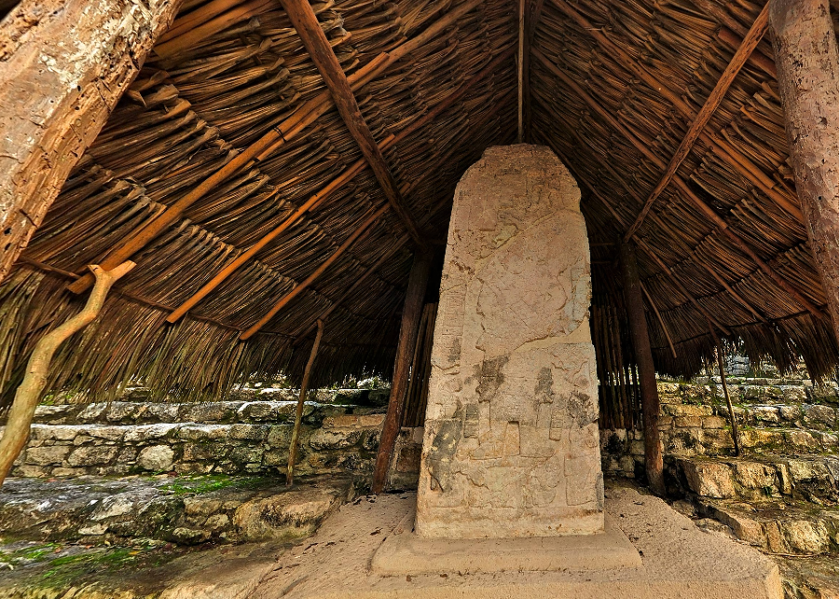
6. Chichén Itzá, Cobá, and Tulum: What are the differences?
In the heart of the Yucatán Peninsula, three Mayan cities still stand as silent witnesses to a fascinating civilization.
Chichén Itzá, Cobá, and Tulum tell three different chapters of the same story, that of a visionary, builder, and deeply spiritual people.
Chichén Itzá, majestic and perfectly preserved, embodies the power and precision of Mayan genius.
Cobá, buried beneath the jungle, exudes nature and mystery, offering an authentic immersion into the ancient world.
Tulum, facing the sea, combines history and beauty, between temples and the turquoise horizon.
Here are a few key points to help you distinguish between the three must-see sites in the region.
6.1 Chichén Itzá: the grandeur and perfection of the Mayan world
It is impossible to talk about the Mayan world without mentioning Chichén Itzá, the most iconic and best-restored city on the Yucatán Peninsula.
Listed as a UNESCO World Heritage Site and voted one of the Seven New Wonders of the World, it impresses with its geometric architecture and astronomical symbolism.
The Temple of Kukulcán, also known as El Castillo, is one of the most precise constructions in all of Mesoamerica: at each equinox, the sacred serpent appears to descend the steps, projected by the play of light and shadow from the sun.
Chichén Itzá embodies the power and organization of the Mayan world at its peak in the 10th century. It is an essential visit to understand the cosmogony, engineering, and religious rigor of this civilization.
However, it is also the most touristy site: waiting for it to open at 8 a.m. or coming from Valladolid at the very beginning of the day is the best way to avoid the crowds.
I recommend this english tour of Chichen Itza so you don’t miss a thing!
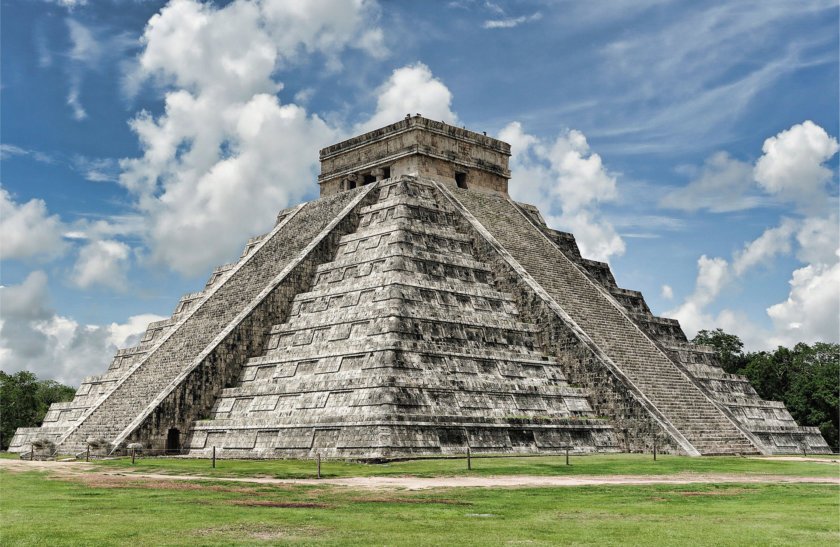
6.2 Cobá: the city of the jungle and white roads
Cobá offers a radically different experience.
Here, the jungle has reclaimed its rights: the ruins are intertwined with roots, and birdsong replaces the hubbub of crowds. It is the city of white roads, the sacbés, limestone paths that connected the different districts of the city and other Mayan cities, as far as Yaxuná, more than 60 miles away.
Its main pyramid, Nohoch Mul, 137 ft. high, remains one of the most imposing in the Mayan world. Even though climbing it is now prohibited, simply standing in front of this mass of stone emerging from the jungle is a unique experience.
Cobá was a major strategic center, rivaling Chichén Itzá, ruled by powerful sovereigns, including several queens.
Less restored and more organic, the site can be explored by bike or on foot along shaded paths, between temples, steles, and observatories. It is the perfect place for travelers seeking authenticity, silence, and nature.
6.3 Tulum: the Mayan city facing the Caribbean Sea
Tulum is the most poetic of the three. Built later, around the 13th century, it was a fortified port city, a crossroads between land and sea. Its setting is simply spectacular: temples overlooking a white cliff, the turquoise sea below, and the sea breeze blowing through the ruins.
The Temple of the Descending God and the Castillo offer some of the most photographed views in Mexico!
Tulum stands out for its symbolic role. It was a place of worship linked to Venus, the planet of fertility and renewal, but also a vital trading point for the Maya.
Today, the city attracts history buffs and bohemian travelers alike. Its easy access, proximity to beaches, and cenotes make it a must-see destination for combining culture and relaxation.
Unlike Chichén Itzá and Cobá, Tulum is located by the sea, bathed in light and salt, offering a unique blend of history and nature.
For a complete experience, I recommend this excursion to Tulum with pick-up from your hotel. It includes a visit to the Mayan ruins and swimming in two magnificent cenotes.
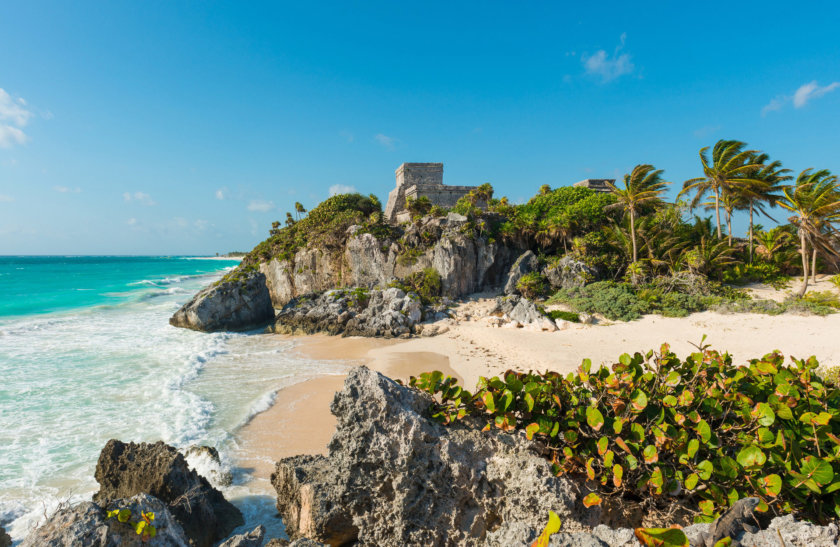
7. Things to do around Cobá: adventure, nature, and culture
Around Cobá, the jungle and Mayan culture offer an almost endless terrain of discovery. The region is full of activities that extend your visit to the site and allow you to fully experience the soul of the Yucatán.
7.1 Punta Laguna: monkeys, zip lines, and wilderness
Just 30 minutes from Cobá is Punta Laguna, a small natural haven renowned for its howler monkey and spider reserve.
The biodiversity here is exceptional: as you walk through the forest, you can observe the primates in their natural habitat, listen to their powerful cries echoing above the trees, and admire the lush vegetation.
The reserve also offers zip lines and rappelling, allowing you to admire the lagoon and canopy from a spectacular angle.
If you are looking for authentic contact with nature, Punta Laguna is a must-see in Quintana Roo!
It includes a visit to the Cobá ruins by bike, adventure activities in Punta Laguna (hiking, canoeing and ziplining), a swim in a cenote, and a traditional meal in a Mayan community.
A very complete experience that combines history, nature and local culture.
7.2 Temazcal and discovery of the community of Nuevo Durango
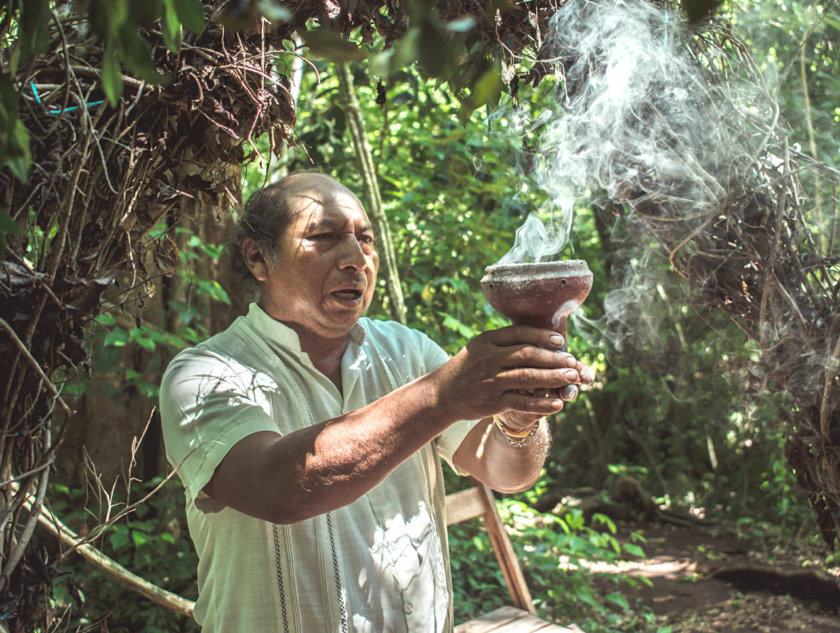
A few miles from the archaeological site, the community of Nuevo Durango welcomes travelers eager to enjoy a unique cultural experience. Visitors can participate in a traditional temazcal, a Mayan purification ritual in a natural steam sauna.
Led by a local guide, this ritual combines medicinal plants, songs, and meditation, offering a spiritual immersion in ancestral practices. The community also offers visitors the opportunity to discover their daily life, local crafts, and Mayan cuisine, helping to support the local economy.
You’ll take part in a traditional Mayan purification ceremony in a private setting, followed by a refreshing swim in the cool waters of a cenote.
7.3 Valladolid: colonial city
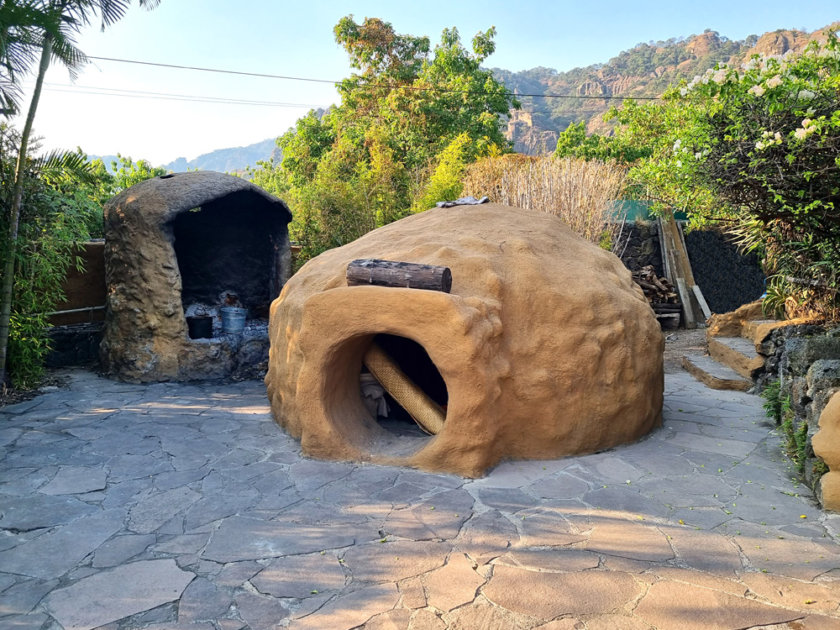
About 45 minutes from Cobá is Valladolid, a colorful colonial city that contrasts with the surrounding jungle.
Its cobbled streets, San Servacio church, and urban cenotes make it an ideal stop for combining culture and relaxation. It is also an excellent base for visit Cobá for a half-day or full-day trip, with quality accommodation and dining options.
7.4 Combined tours around Cobá
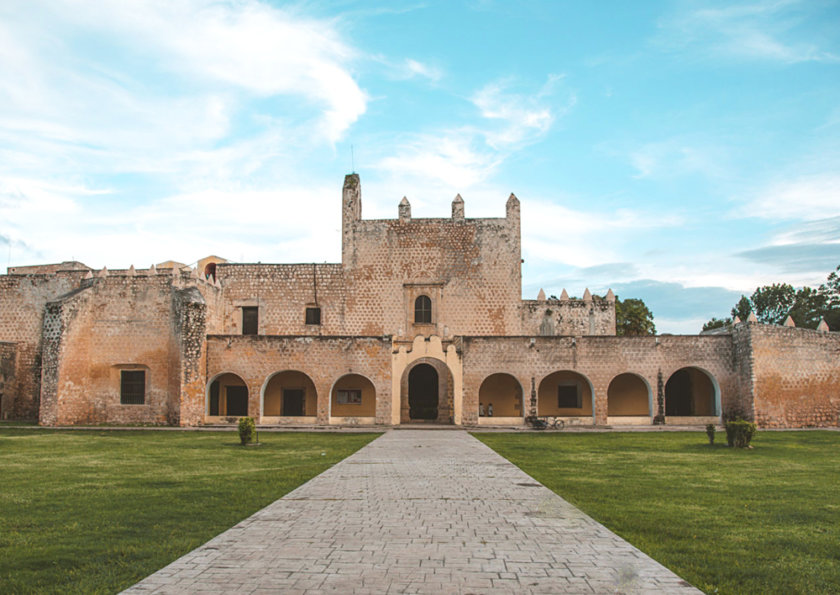
To fully enjoy the region, several excursions combine visits to Cobá, Tulum, and the surrounding natural treasures.
From Cancún: Take a day trip to the Mayan ruins of Cobá and Tulum, while discovering local traditions. You will also have the opportunity to swim in a cenote. – Several cenotes nearby for a refreshing swim. – Book your excursion to Tulum and Cobá here!
From Tulum or Playa del Carmen: Set off on a day trip combining Cobá, the Punta Laguna nature reserve, and a cenote. You’ll explore the jungle, observe howler monkeys, and enjoy activities such as canoeing and zip-lining before swimming in a cenote with crystal-clear waters. Book your trip to Cobá and Punta Laguna here!
8. Cenotes near Cobá
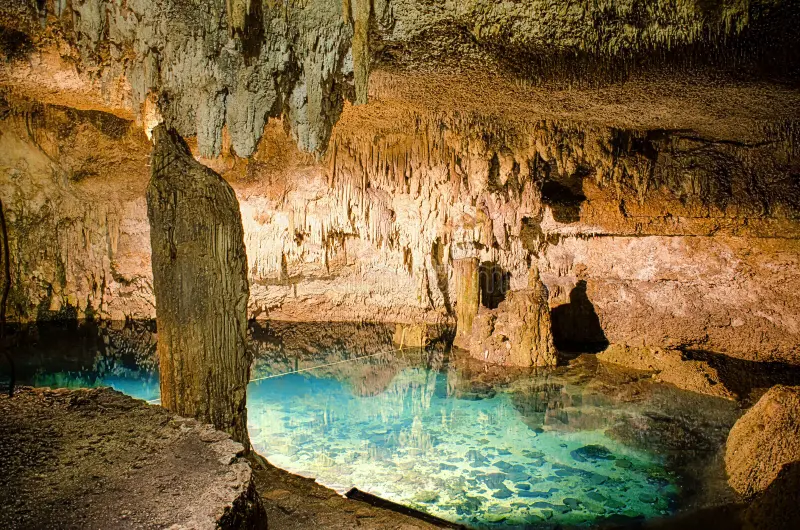
Few travelers know this, but Cobá is not limited to its Mayan ruins: there are also several cenotes nearby, perfect for cooling off after your visit.
They are easily accessible by car, bike, or taxi from the village of Cobá.
Cenote Choo-Ha
Just 4 miles from Cobá, Choo-Ha is a shallow underground cenote, perfect for a peaceful swim and a refreshing dip after visiting the ruins.
The water is clear, the temperature pleasant, and access is easy thanks to a wooden staircase. It’s the best choice for families or those who prefer a quiet experience.
- Entrance fee: 130 pesos (+ 40 pesos for a life jacket, cash only)
- Location: Cenote Choo-Ha
Cenote Multum-Ha
Located about 5 miles from Cobá, Multum-Ha is larger and deeper. You descend via a spiral staircase to a wooden platform. The water is crystal clear and swimming is more challenging. It’s a good compromise between calm and adventure, ideal for those who want to swim a little more freely.
- Entrance fee: 130 pesos (+ 50 pesos for a life jacket, cash only).
- Location: Cenote Multum-Ha
Cenote Tankach-Ha
4 miles from Cobá, Tankach-Ha is the deepest and most dynamic of the three. It has two diving platforms at 15 and 32 ft, making it a favorite among thrill-seeking travelers. The water is very clear and the site is well maintained. Perfect for adrenaline junkies.
- Entrance fee: 130 pesos
- Location: Cenote Tankach-Ha
To make the most of your day, you can book this excursion, which includes the ruins of Cobá and swimming in a cenote:
9. Where to stay when visiting Coba?
There are some beautiful accommodation options near the archaeological site of Coba, such as ecolodges, perfect for those who want to sleep peacefully in the heart of nature.
However, most travelers prefer to visit Coba in a day, as the site is very easy to reach from several cities in Yucatán and the Riviera Maya: Tulum (45 minutes), Valladolid (1 hour), Playa del Carmen (2 hours), Cancún (2.5 hours), and even Mérida (about 4.5 hours).
These cities offer a wide range of hotels for all budgets and allow you to combine a visit to Coba with other attractions, such as cenotes or the idyllic beaches of the Mexican Caribbean.
9.1 Staying in the village of Cobá
Here are my top hotel recommendations in Cobá, carefully selected for every budget:
- Hotel y Hostal Nojoch Che: ideal for travelers on a budget, this property offers simple yet comfortable rooms with breakfast included, a pleasant outdoor pool, and even a shuttle service to the archaeological site. A great option to explore Cobá affordably while staying close to the action. From around $33 USD per night.
- Hotel Kaab Cobá: located just a 10-minute walk from the archaeological site, this 3-star hotel offers excellent value for money. Modern rooms with air conditioning, free Wi-Fi, and minibar, plus an inviting outdoor pool and an on-site restaurant. A practical and comfortable base for visiting Cobá. From around $38 USD per night.
- Aldea Cobá – An Escape Boutique Experience: just 3 minutes from the ruins, this charming eco-lodge in the heart of the jungle blends comfort with authenticity. Rooms feature local materials such as tropical wood and palm roofs, alongside an outdoor pool, a restaurant serving regional cuisine, and an on-site café. Perfect for a more immersive stay in nature. From around $112 USD per night.
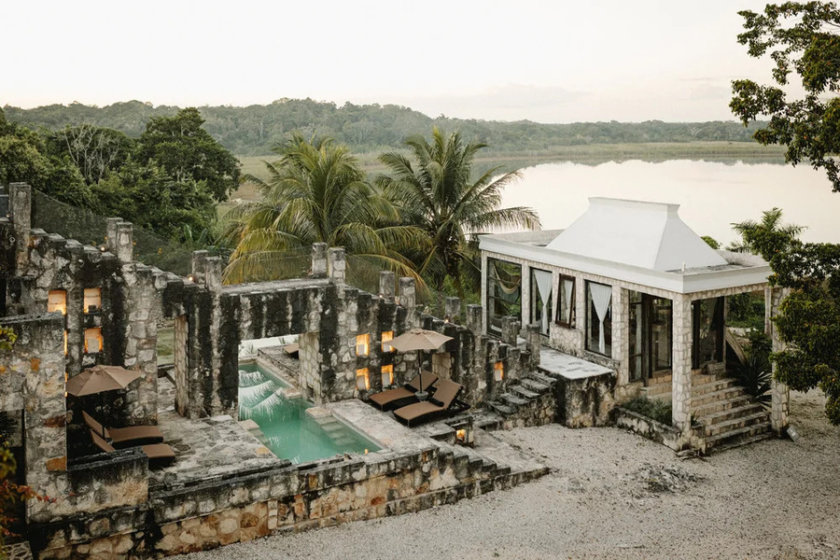
- Coqui Coqui Papholchac Cobá Residence & Spa: for an exclusive and refined experience, this luxury jungle retreat offers elegant suites with private pools and a spa inspired by Mayan traditions. Two restaurants, a curated library, and lush tropical gardens create a serene and sophisticated atmosphere. From around $330 USD per night.
9.2 Staying in Mérida
If you want to explore the Yucatán Peninsula more deeply, Mérida, the cultural capital of the region, is an excellent base. The city offers beautiful colonial-style hotels, boutique guesthouses, and charming Airbnbs that combine comfort with authenticity. Mérida is also perfectly located for day trips to Cobá, Chichén Itzá, Celestún, and the famous Ring of Cenotes.
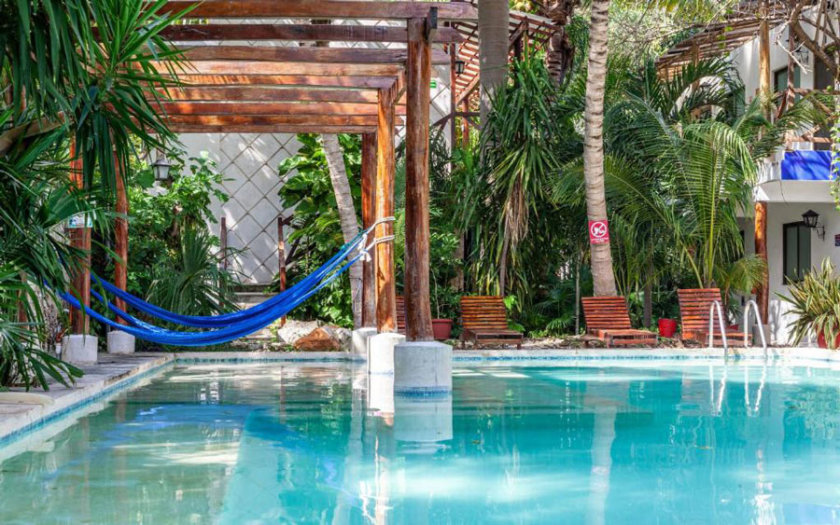
- Che Nomadas Mérida Adults Only: one of the best hostels in Mérida, reserved for adults and ideally located in the city center. Friendly atmosphere, swimming pool surrounded by plants and hammocks, and plenty of activities (yoga, cooking classes, outings, etc.). From just $8 USD for a dorm bed or around $47 USD for a private room.
- El Gran Hotel: perfectly located in downtown Mérida, right next to the cathedral, this charming historic hotel feels like stepping back in time, with its colonial architecture and beautiful woodwork. Spacious rooms, on-site restaurant, and reliable Wi-Fi. Great value at around $64 USD per night.
- Hotel Boutique Mérida Santiago: a small and comfortable hotel with a colorful hacienda style that blends modern comfort with traditional Mexican design. Swimming pool with loungers and parasols, excellent homemade breakfast, and spacious rooms. Ideal if you’re looking for comfort without going full luxury. From around $177 USD per night.
- Hotel Hacienda Mérida VIP: a small luxury boutique hotel, perfect for a romantic stay in Mérida. Located in the historic center, this elegant hacienda-style property is beautifully lit at night, creating a refined atmosphere. Lovely swimming pool, very comfortable rooms, plus an on-site restaurant and bar. From around $212 USD per night.
9.3 Accommodation in Tulum
Tulum is one of the most convenient bases for visiting Cobá, located just a 45-minute drive away.
The town offers a wide range of accommodation options, from laid-back bohemian beach cabanas to stylish boutique and luxury hotels.
It’s the perfect place to combine a visit to the Cobá archaeological site with time to relax by the Caribbean Sea. Beachfront hotels in Tulum are especially popular, so booking in advance is highly recommended.
Here are my top hotel recommendations in Tulum, for every budget:
- Mayan Monkey Tulum: excellent value for money with modern décor and a lively atmosphere. Swimming pool, bar, garden, fast Wi-Fi, shared kitchen, yoga classes, coworking space, and bike and motorcycle rental. Dorms and private rooms available. From $26 USD per night.
- Casa Almendro: a small and affordable hotel in downtown Tulum, ideal if you want comfort without overspending. A green oasis with a spacious rooftop terrace featuring hammocks and lounge chairs. Walking distance to shops, restaurants, and the ADO bus station. King-size bed and breakfast included. From $53 USD per night.
- Diamante K: offers high-end comfort at a surprisingly reasonable price, which is rare in Tulum. Located directly on the beach in the hotel zone, with a relaxed bohemian atmosphere. On-site restaurant, hammocks and sunbeds on the private beach, and massage services available. Bungalows from $225 USD per night.
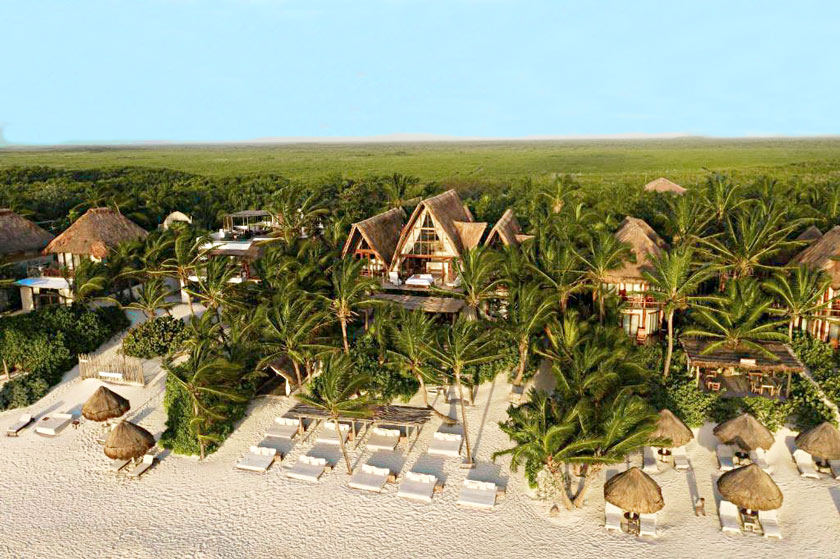
- Habitas Tulum: a stylish and eco-friendly boutique hotel, ideal for a romantic stay in Tulum. Hidden among palm trees, it offers a peaceful atmosphere, a beautiful swimming pool, and direct beach access. Yoga classes and curated activities are available on site. From $400 USD per night.
- Kanan Tulum – Adults Only: the ultimate option for a luxury stay in Tulum. Adults-only eco-luxury hotel located on a stunning private beach with hammocks and sunbeds. Rooftop terrace with bar, excellent restaurant, spacious rooms, and attentive service. From $615 USD per night.
9.4 Accommodation in Playa del Carmen
Playa del Carmen is one of the most popular destinations in the Riviera Maya — and for good reason.
Located in the heart of the region, it’s an excellent base for visiting Cobá and exploring other major archaeological sites such as Tulum and Chichén Itzá. You’ll find accommodation for every budget, from lively hostels to luxury all-inclusive resorts.
Its main advantage is easy access to guided tours to Cobá, Tulum, Chichén Itzá, and Cancún, along with beautiful Caribbean beaches, vibrant nightlife, and a wide range of restaurants.
Here are my recommended hotels in Playa del Carmen for every budget:
- Che Playa Hostel & Bar – Adults Only: the perfect hostel for meeting other travelers and enjoying a social atmosphere. Rooftop terrace with bar and small pool, plus daily activities and events. Clean facilities, good Wi-Fi, and friendly staff. From $10 USD for a dorm bed or around $41 USD for a private room.
- Hotel Lunata: a charming hacienda-style hotel located on Quinta Avenida, close to the beach. Quiet atmosphere, garden courtyard, rooms with balconies, and excellent service. From $77 USD per night.
- Porto Playa Condo Beach Club: spacious apartments ideal for families or longer stays, just steps from Quinta Avenida. Fully equipped kitchen, living room, terrace, large swimming pool, gym, and on-site restaurant. From $188 USD per night.
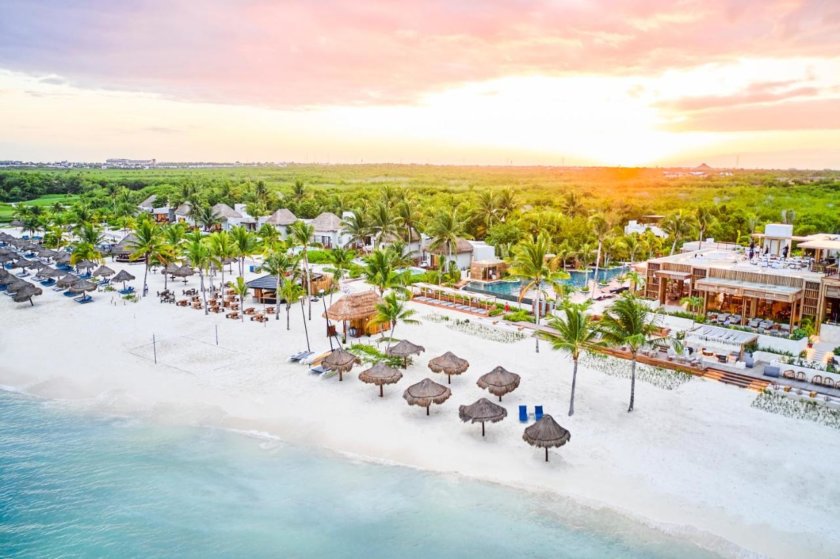
- The Reef 28 – Adults Only: centrally located all-inclusive hotel with spacious rooms and a spectacular rooftop terrace overlooking the sea. Swimming pool, jacuzzi, gym, spa, and excellent breakfast buffet. From $265 USD per night (all-inclusive).
- Hotel Xcaret Mexico – All Parks All Fun Inclusive: one of the most complete luxury options in Playa del Carmen. Ideal for couples and families, this resort includes meals and unlimited access to Xcaret parks (Xcaret, Xplor, Xplor Fuego, Xenses, Xoximilco, Xel-Há, and Xenote). From $740 USD per night, all-inclusive.
Conclusion: is Cobá worth visiting?
The answer is definitely yes!
Visiting Cobá allows you to immerse yourself in the heart of the Mayan jungle, where history and nature still meet today.
Less crowded than Chichén Itzá or Tulum, Cobá offers a more authentic, peaceful, and immersive experience. Whether you opt for a self-guided tour, a guided excursion, or a combination with Punta Laguna or the nearby cenotes, each itinerary reveals a different facet of this fascinating place.
Nearby accommodation options, ranging from intimate eco-lodges to more comfortable retreats, allow you to extend your experience in a preserved natural setting.
By leaving early and following a few practical tips, you can fully enjoy this exceptional site while supporting tourism that respects the local culture and environment.
Frequently Asked Questions About Cobá
Can you visit Cobá without a car?
Yes, it is absolutely possible to visit Cobá without a car. Local collectivos and buses run regularly from Tulum, Playa del Carmen, and Cancún.
From Tulum, collectivos leave from the bus station or downtown near the central market every 30 to 45 minutes. From Playa del Carmen or Cancún, you’ll first need to reach Tulum by bus or colectivo, then take a local minibus to Cobá. The minibus typically drops passengers in the village or near the entrance of the archaeological site.
Can you climb the pyramid at Cobá?
Yes. It is now possible to climb the pyramid at Cobá thanks to a new, secure wooden staircase, making access safer and more comfortable for visitors.
When is the best time of year to visit Cobá?
The best time to visit Cobá is during the dry season, from November to April, when temperatures are milder and rainfall is less frequent. To avoid both heat and crowds, plan to arrive right at opening time.
Is it possible to visit Cobá with an English-speaking guide?
Yes, English-speaking guides are available either directly at the entrance or through organized tours. A guide will help you better understand the history, rituals, sacbeob (white roads), and nearby cenotes.
Are there day trips to Cobá from Tulum, Playa del Carmen, or Cancún?
Yes, many day tours combine Cobá with Tulum, Punta Laguna, or nearby cenotes. These excursions usually include transportation, an English-speaking guide, and additional activities such as canoeing or ziplining.
Is it easy to swim in the cenotes near Cobá?
Yes. The Choo-Ha, Multum-Ha, and Tankach-Ha cenotes are all suitable for swimming.
Some cenotes have platforms for jumping or relaxing. It’s important to follow local guidelines and avoid deep areas if you are not comfortable swimming. Life jackets are available for rent on site for added safety.
Can you pay for entrance tickets or cenotes by credit card?
No. Most attractions around Cobá, including cenotes, accept cash only (Mexican pesos). Make sure to bring enough cash to avoid inconvenience.
Is Cobá accessible for seniors or visitors with reduced mobility?
Cobá is a large archaeological site with jungle paths, stairs, and uneven trails. Full access may be challenging for visitors with limited mobility, but the areas near the entrance are easier to explore.
At the entrance, bicycles are available for rent to explore the site. For those who cannot ride a bike or prefer not to walk long distances, small pedal-powered taxis (tricycle taxis) are available.
A local driver will pedal you around the site, allowing you to sit comfortably and enjoy the visit.
Do I need to book Cobá tickets in advance?
No. Tickets can only be purchased on site. There is currently no official online ticket office for Cobá.
Are there lockers at the cenotes near Cobá?
Some cenotes offer limited storage space for belongings, but it’s best to travel light and avoid bringing valuables. Leave important items at your hotel whenever possible.
Can you enter Cobá before it officially opens?
No. Access before 8:00 a.m. is not permitted. However, arriving early allows you to be among the first visitors to enter and enjoy cooler temperatures and soft morning light.
How to Find Cheap Flights
The nearest airport is Cancun (1h30), which has many flights from major cities in Mexico, Europe and North America.
To find cheap flights to Cancun, I suggest you use our flight comparator, in partnership with Skyscanner: it’s the best way to get the best price!
🚗 Rent a car
🗽 Book entrance tickets and guided visits
🏄 Book your sports activities
🌍 Take a travel insurance
🙎 Book a tour
✈️ Book your flight
You’re traveling in Mexico? These articles will help you!
Discover all my articles about Mexico: All my articles to help you plan your trip to Mexico are listed there.
- Cancun: the 35 Best Things to Discover
- Playa del Carmen: Top 30 Things To Do and Must-See Attractions
- Tulum: 21 Best Things to Do + All My Best Tips!
- El Cuyo: The Ultimate Guide to Mexico’s Hidden Paradise
- The 6 Best Hotels in El Cuyo (Yucatan)
- Kitesurfing in El Cuyo: The Comprehensive Guide to Yucatan’s Wind Paradise
- Mérida: 20 Best Things to Do and Must-See Attractions
- Where to stay in Mérida? (For an EPIC First Time Visit)
- 1 Day in Merida – The Perfect Itinerary (1st time visit)
- 2 Days in Merida – An Epic Itinerary
- Uxmal (Mérida): the Definitive Guide + tips
- Valladolid: the 25 Best Places to Visit!
- My Definitive Guide to Ek Balam Ruins (Valladolid)
- How to visit Xcanché: the hidden cenote of Ek Balam
- The 21 Best Cenotes in Valladolid
- Itinerary: 10 days in Mexico – Mexico City, Chiapas and Yucatan
- Itinerary: 2 weeks in Mexico – Best itinerary to discover the Yucatan Peninsula and Chiapas!
- Itinerary: 3 weeks in Mexico – Mexico City, Puebla, Oaxaca, Chiapas, Campeche, Yucatán and Riviera Maya
- Itinerary: 1 month in Mexico – My Epic 30-31 Days Itinerary from Mexico City to Cancun
- Road trip in Mexico: The best itineraries for 10, 15, 21 days and a month
- Itinerary: 1 week in Yucatan – The Ultimate 6, 7 or 8 days Itinerary
- Itinerary: 10 days in Yucatan – Best Itinerary for 9, 10 or 11 Days in Yucatan
- Itinerary: 2 weeks in Yucatan – Epic Itinerary + All my Best Tips!
- Itinerary: 3 weeks in Yucatan – Best things to do in 20-21 days
- Itinerary: 1 month in Yucatan – Yucatan Peninsula in 29, 30 or 31 days from Cancun
- Road trip in Yucatan: The best itineraries for 7, 10, 15, 21 days and 1 month
You’re using Pinterest? Here is the picture to pin!