
Yucatán Travel Budget: How Much Does a Trip Cost in 2026?
Wondering how much a trip to the Yucatán Peninsula costs in 2026?
You’re in the right place!
Between Cancún, Tulum, Holbox, and smaller towns inland, the cost of traveling in the Yucatán can vary a lot depending on the season, your accommodation choices, and the activities you want to do. Without a bit of planning, your travel budget can increase quickly.
In this guide, I’ll break down the real travel prices in the Yucatán: a daily budget depending on your travel style, a sample budget for a 14-day trip, and the typical costs of transportation, accommodation, food, and activities.
I’ll also share my best tips to travel in the Yucatán on a budget without missing the experiences that make this region so special.
So, how much does a trip to the Yucatán really cost? Let’s break it down.
- If you plan to travel to other parts of the country, don’t miss my guide Mexico travel budget to find out how much to plan depending on the length of your trip and the regions you want to visit.
Sommaire
- Yucatán Travel Budget: How Much Does a Trip Cost in 2026?
- 1. Yucatan budget 2026: quick summary by type of expense (MXN–USD)
- 2. How to adjust your budget according to the season and your reservations
- 3. Travel budget by destination in the Yucatán Peninsula
- 4. How much to budget for expenses in Yucatán: accommodation, transportation, food, activities
- 5. Sample budget for two weeks in Yucatán based on your profile
- 6. When to go to Yucatán: the best seasons to save money on your trip
- 7. How to save money in Yucatán: my practical tips 2026
- 8. Mistakes to avoid to get the most out of your trip to Yucatán
- FAQ: Budget for a stay in Yucatán in 2026
- 1. What is the estimated budget for a two-week stay in Yucatán in 2026?
- 2. How much do tickets to archaeological sites in Yucatan cost?
- 3. Should you rent a car in Yucatán?
- 4. How to get around Yucatán by public transport?
- 5. Where to stay in Yucatán on a budget?
- 6. How to manage internet, communication, and payments on site?
- 7. When is the best time to travel to Yucatán?
- 8. How much does it cost to enter the cenotes in Yucatán?
- 9. What are the must-do activities in Yucatán?
- 10. How can you reduce your travel budget in the Yucatán without missing out?
- Want to rent a car in Mexico?
- Find the best deals on flights to Mexico
- You’re traveling in Mexico? These articles will help you!
1. Yucatan budget 2026: quick summary by type of expense (MXN–USD)
The estimates below correspond to a budget per person per day, except for accommodation (rate for a double room). The amounts are indicative and may vary depending on the season, availability, and special promotions.
| Expense item | Backpacker (MXN / USD) | Confort (MXN / USD) | High-end (MXN / USD) |
|---|---|---|---|
| Accommodation (1 bedroom) | 450 MXN ≈ 25 $ | 1 815 MXN ≈ 100 $ | 4 270 MXN ≈ 237 $ |
| Meals | 250 MXN ≈ 14 $ | 600 MXN ≈ 33 $ | 1 200 MXN ≈ 66 $ |
| Local Transport | 100 MXN ≈ 6 $ | 300 MXN ≈ 16 $ | 600 MXN ≈ 33 $ |
| Activities / Entries | 250 MXN ≈ 14 $ | 600 MXN ≈ 33 $ | 2 350 MXN ≈ 130 $ |
| Car rental + fuel | 0 MXN ≈ 0 $ | 925 MXN ≈ 51 $ | 1 425 MXN ≈ 80 $ |
| Other expenses | 150 MXN ≈ 8 $ | 300 MXN ≈ 17 $ | 600 MXN ≈ 33 $ |
| Total/day | 1 200 MXN ≈ 69 $ | 4 540 MXN ≈ 250 $ | 10 445 MXN ≈ 580 $ |
2. How to adjust your budget according to the season and your reservations
Prices on Mexico’s Yucatan Peninsula vary greatly depending on the season and how far in advance you make your reservations. The low season (May to October, excluding summer vacations) remains the most affordable, with accommodations often 20 to 40% cheaper!
The mid-season (November, February-March) offers a good balance between pleasant weather and reasonable rates. On the other hand, the high season (December to January, Holy Week, and summer holidays) is the most expensive: hotels are fully booked, car rentals are harder to find, and prices sometimes double.
To reduce costs, it’s best to book accommodation and car rentals early, especially in tourist areas such as Tulum or Holbox.
Flexible travelers can also keep an eye out for last-minute deals: some hotels or booking sites offer one-time discounts to fill remaining rooms.
Finally, remember to check the current exchange rate (e.g., on Xe.com) between the Mexican peso (MXN) and the dollar before calculating your budget. A small difference can go a long way on a stay of several weeks.
3. Travel budget by destination in the Yucatán Peninsula
Before planning your trip, it is essential to have a clear idea of the budget you will need for each destination on the Yucatán Peninsula.
Whether you choose Cancún, Playa del Carmen, Tulum, Bacalar, Holbox, Valladolid, or Mérida, costs can vary considerably depending on the type of accommodation, the season, and the activities you plan to do.
Here is a detailed overview to help you estimate your expenses and better organize your trip, presented in four categories: accommodation, meals, local transportation, and activities.
3.1 Budget in Cancún
Accommodation in Cancún
In Cancún, prices vary greatly depending on the type of accommodation and location.
For budget travelers, a hotel or hostel in the city center generally costs between MXN 1,000 and MXN 1,500 (≈ $55–88) per night, which is affordable and convenient for exploring the city.
For mid-range travelers, hotels located slightly outside the hotel zone or in the city center with a few extra amenities range between MXN 1,500 and MXN 2,500 (≈ $88–145) per night. They offer a good compromise between comfort and budget.
Travelers looking for comfort, an all-inclusive beachfront hotel in high season can expect an average of 7,475 MXN (≈ $410) per night. These establishments often include meals, drinks, and on-site activities.
Eating in Cancún
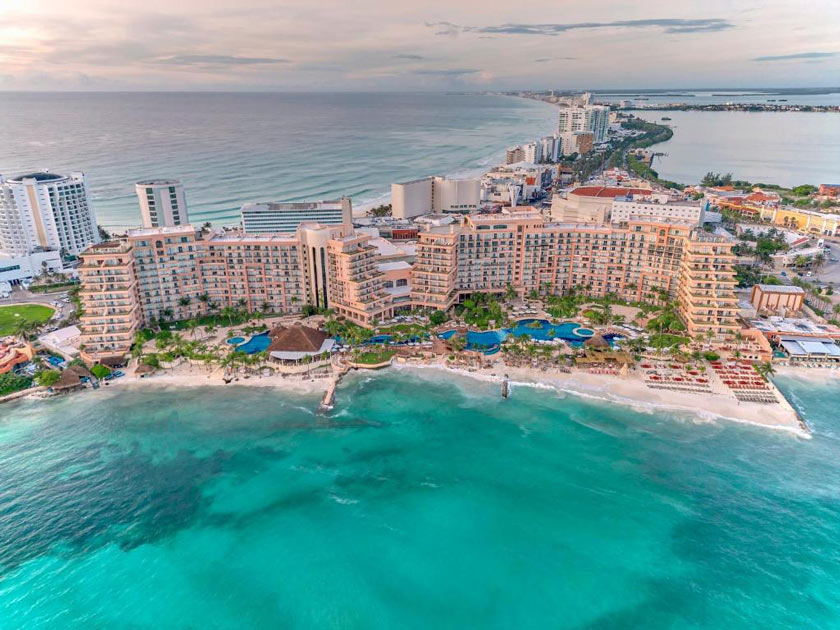
The average daily budget for food in Cancún is around 825 MXN (≈ $45). Breakfast ranges from 80 to 260 MXN (≈ $6–14), lunch from 140 to 360 MXN (≈ $10–20), and dinner from 260 to 620 MXN (≈ $18–45). Meals in tourist restaurants are generally more expensive than in local establishments.
It is important to tip a minimum of 10%, although waiters often expect 15%. This applies to all types of restaurants, including all-inclusive hotels where an extra tip may be appreciated for personalized service.
Local transportation in Cancún
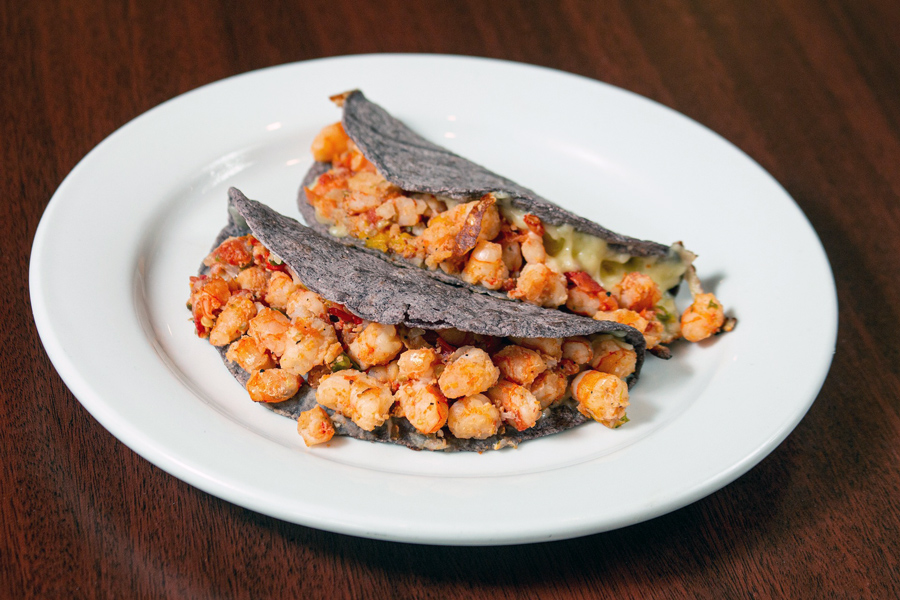
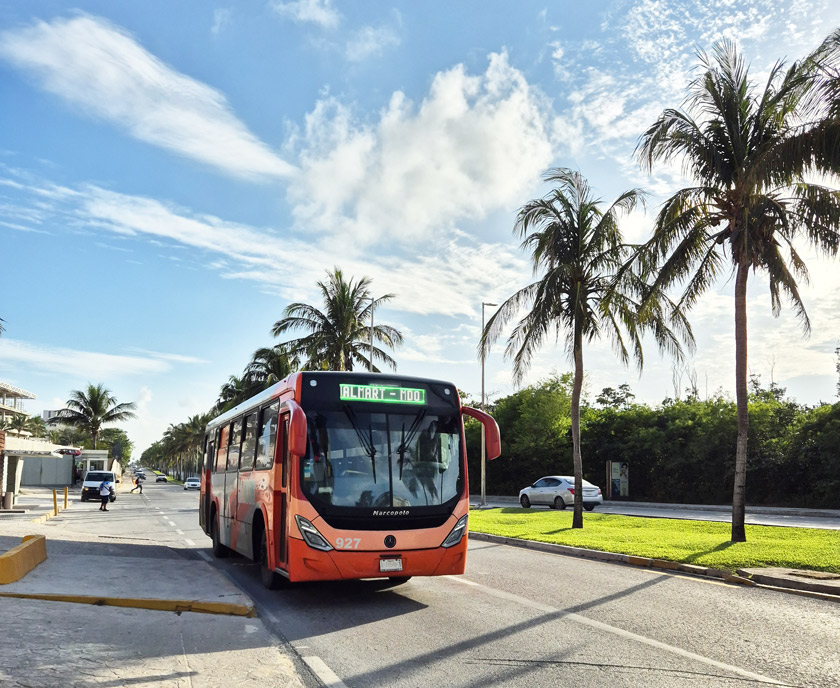
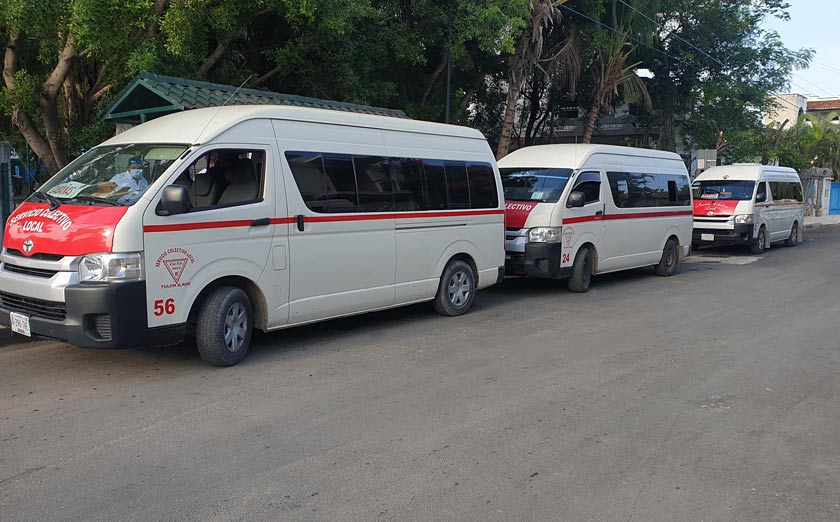
To get around town, the local bus costs around MXN 10–12 (≈ $0.50–0.60) for a trip in the city center, while longer trips, such as to Playa del Carmen, cost around MXN 70 (≈ $3.90). Colectivos (shared vans) are very convenient, payment is cash only, and they remain economical for intercity travel.
Uber is available in downtown Cancún but not from the airport. For taxis, always ask the price before getting in. Hotels can book a taxi for you, which is recommended for safety reasons. The transfer from the airport to your hotel in the city costs at least 700 MXN (≈ $39), and if you are leaving Cancún, the fare doubles.
ADO buses are a regular alternative for reaching the city center or other destinations. They run frequently and tickets can be purchased online or at the central station counter.
Things to do in Cancún
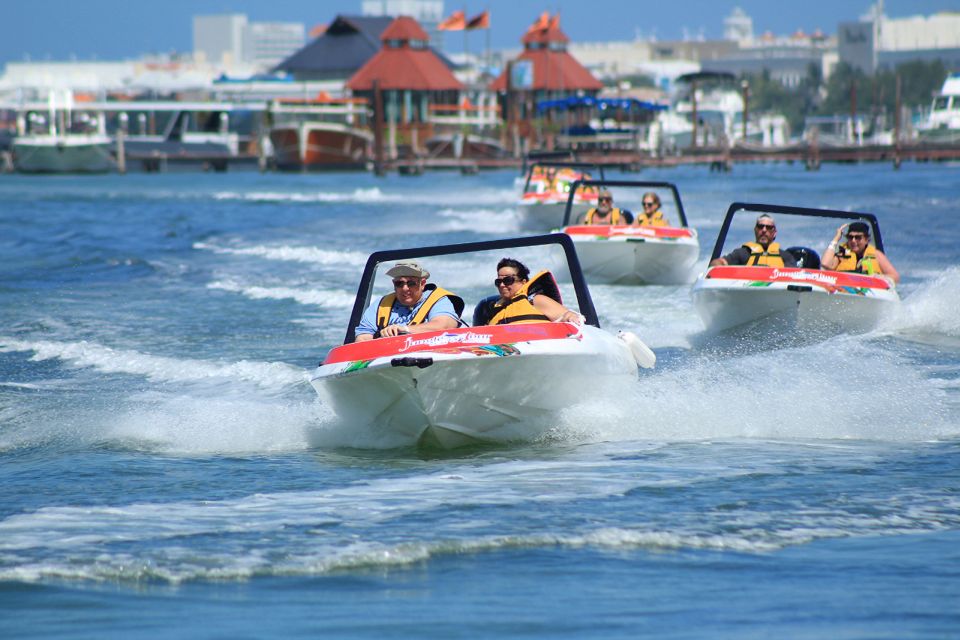
There are lots of things to do in Cancún, but some attractions are far away and you’ll need to take a car or bus to get there.
You can also visit Chichén Itzá, Isla Mujeres, Tulum, Coba, or the Xcaret theme parks, as well as the colonial city of Valladolid combined with cenotes.
Excursions are available in English, Spanish, or French. The average cost of activities ranges from MXN 1,000 to MXN 2,500 (≈ $55–145) depending on the type of tour, often including transportation and admission.
3.2 Budget in Playa del Carmen
Accommodation in Playa del Carmen
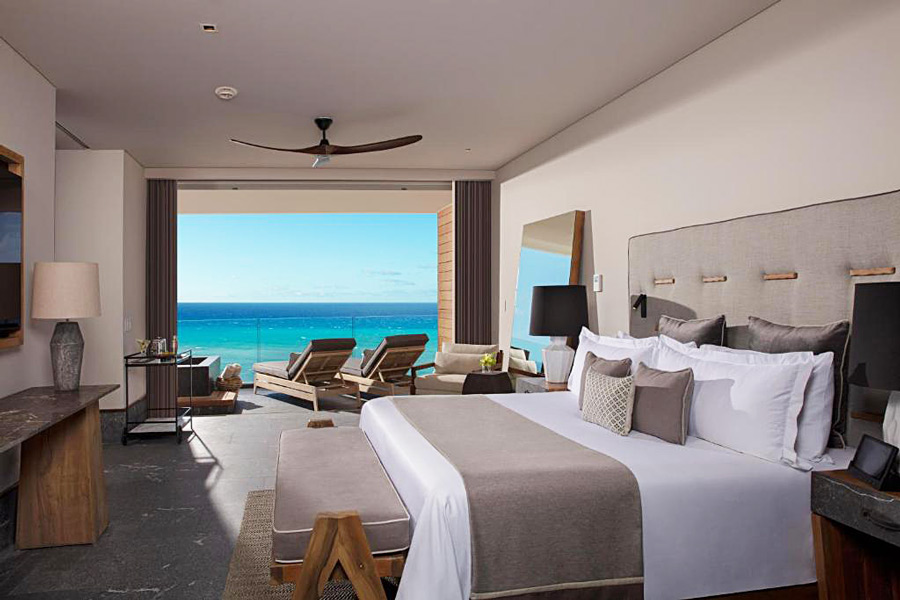
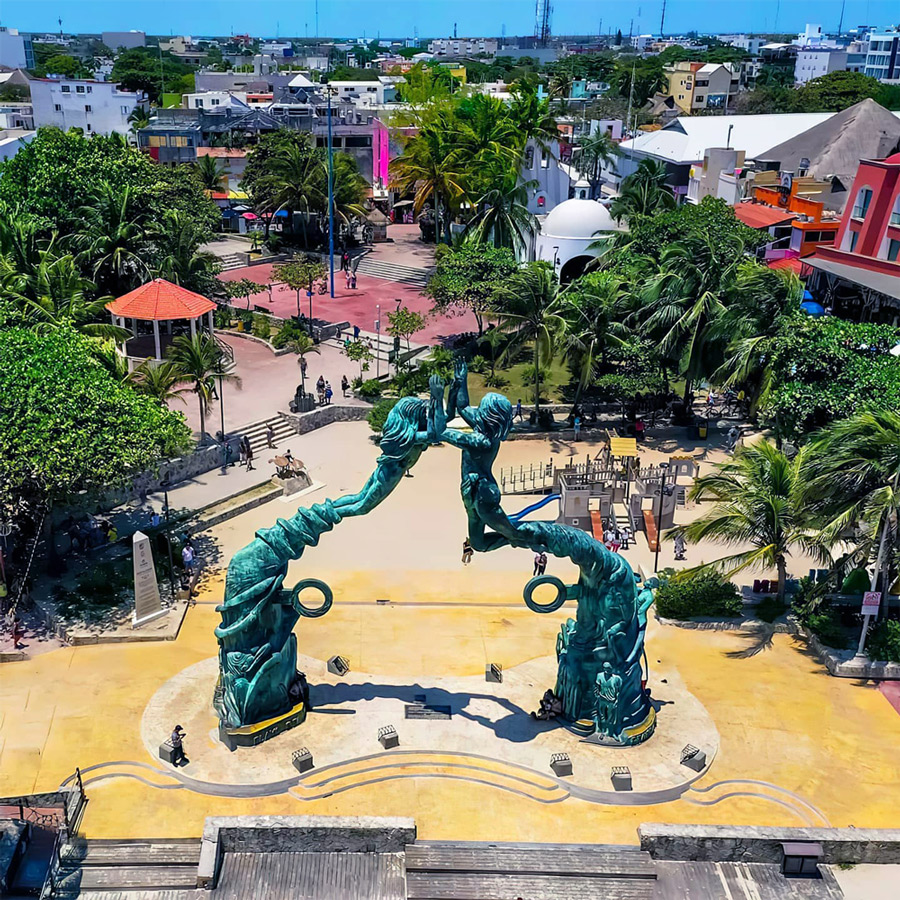
Playa del Carmen and the Playacar area have a high concentration of hotels along the beach, making it easy to be close to the sea.
For budget travelers, it is possible to find hostels or simple hotels in the city center for around 600 to 1,500 MXN (≈ $35–80) per night. These options allow you to get around on foot and quickly access the beach and shops without needing a car.
For those looking for something in between, hotels offering a little more comfort and services cost between 1,500 and 2,500 MXN (≈ $88–145) per night. Most are located near Quinta Avenida or slightly further back for more peace and quiet.
For a comfortable stay, an all-inclusive hotel near the beach in high season costs around 7,000–8,000 MXN (≈ $385–440) per night. These establishments usually include meals, drinks, and on-site activities, perfect for those who want to enjoy the beach and services without having to travel too far.
Eating out in Playa del Carmen
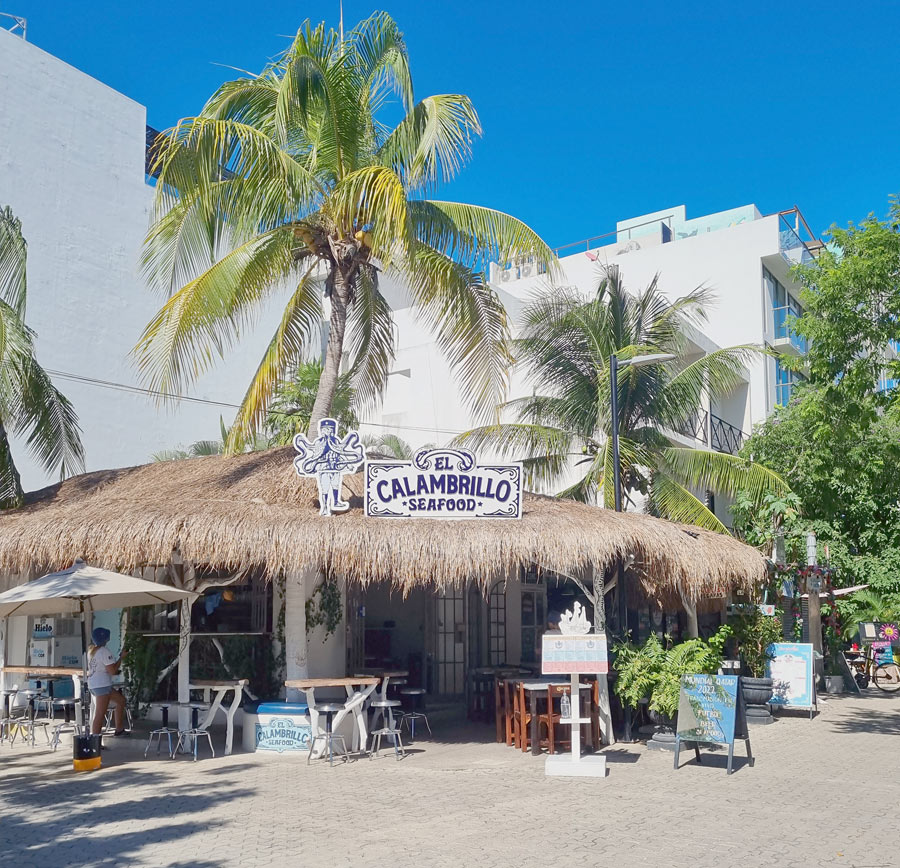
The food budget in Playa del Carmen is similar to the one in Cancún, with a daily average of MXN 825 (≈ $45). Breakfast costs between 80 and 260 MXN (≈ $5–15), lunch between 140 and 360 MXN (≈ $8–20), and dinner between 260 and 620 MXN (≈ $15–36).
Restaurants on Quinta Avenida are much more expensive, while less touristy local options offer cheaper dining. An interesting recommendation is 38th Avenue, which is illuminated at night and has some nice restaurants that cater to vegetarians and offer a pleasant atmosphere for dinner.
It is advisable to tip a minimum of 10%, with 15% often expected.
Local transportation in Playa del Carmen
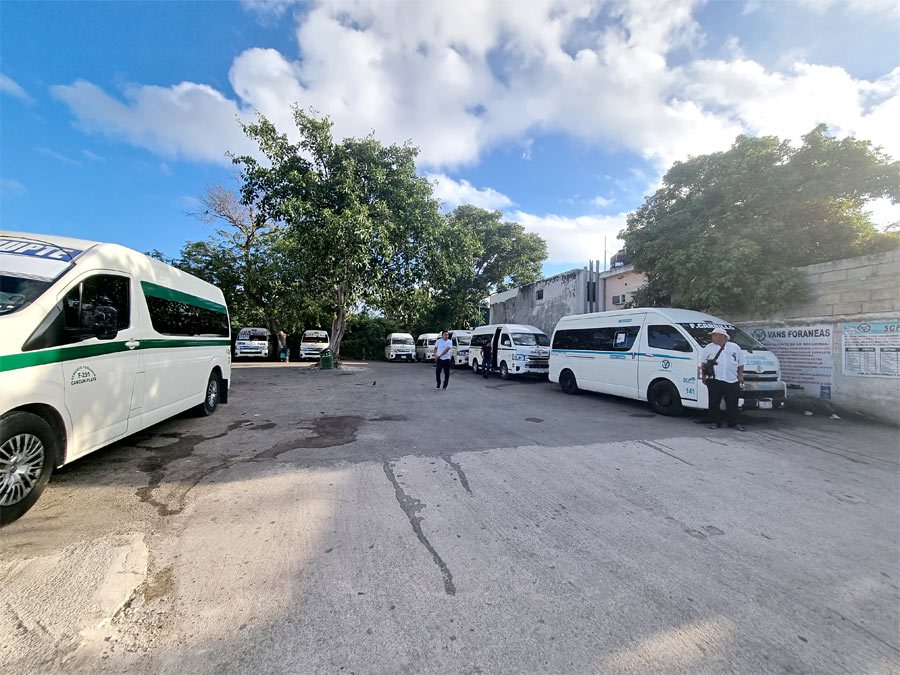
Playa del Carmen is very easy to explore on foot if you are staying in the center or near the beach. For longer journeys, colectivos provide a quick way to reach Cancún, Tulum, Valladolid, or Holbox.
Playa del Carmen is an ideal central location, reducing travel time compared to Cancún. Collectivos can only be paid for in cash, and fares remain economical for these destinations.
If you opt for an activity that includes transportation, most tour agencies will pick you up at your hotel and make it easy for you to get around.
Taxis are available in the city, and for trips to the airport or excursions, it is advisable to confirm the price before getting in or to book through your hotel. Uber does not operate in Playa del Carmen.
If you rent a car, be aware that street parking in Playa del Carmen is not free. There are many small parking lots available for around 20 MXN per hour if you are spending the day there. If you are staying in Playa del Carmen, for simplicity’s sake, you can check which hotels have parking before booking.
Things to do in Playa del Carmen
Playa del Carmen is a great starting point for lots of day trips without having to drive too far. You can easily reach Cozumel and its beaches, El Cielo, the Sian Ka’an reserve, Akumal beach and its turtles, as well as Tulum, Coba, and Chichen Itza. Not to mention the hundreds of cenotes available nearby.
As with Cancun, excursions are often available in Spanish, English, or French.
Private tours that include transportation come at an additional cost, but offer more flexibility and comfort. Prices for activities generally range from MXN 1,000 to MXN 2,500 (≈ $55–145) depending on the type of tour and whether transportation and entrance fees are included.
3.3 Budget in Tulum
Tulum and Holbox are among the most expensive destinations in Yucatán. Cocktails, beach club access, and high-end restaurants are quite costly. Despite a bohemian vibe reminiscent of Bali, it’s important to plan a substantial budget to fully enjoy the city.
Accommodation in Tulum
Tulum is one of the most popular and expensive destinations in Yucatán. For budget travelers, the city center offers hotels or Airbnbs starting at MXN 1,500 to 2,500 (≈ $88–145) per night. Staying in the center allows you to get around easily on foot or by bike and access shops and restaurants without a car.
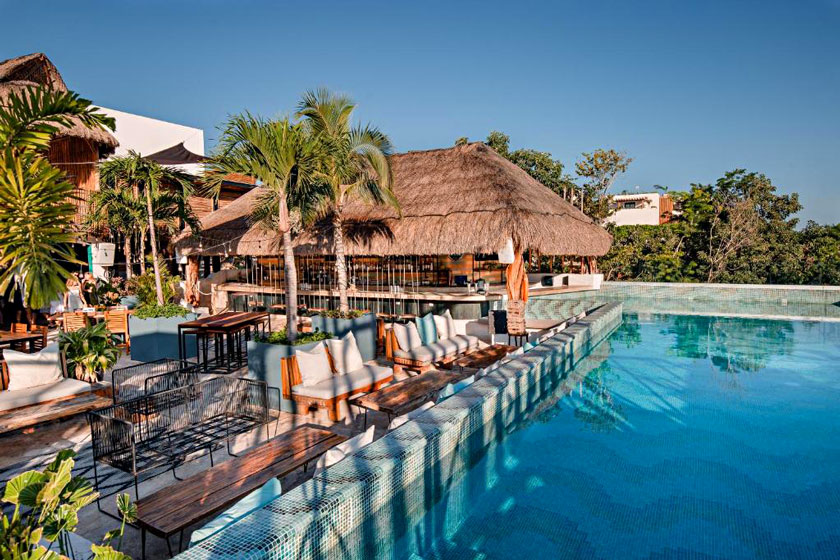
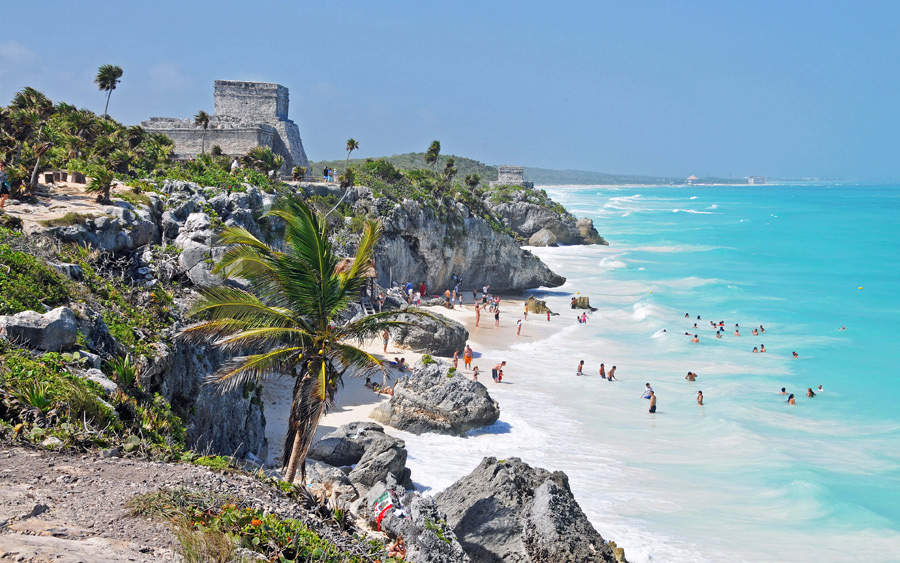
For those on a mid-range budget, hotels in the hotel zone near the beach cost between 3,500 and 6,000 MXN (≈ $205–350) per night. The advantage is direct access to trendy beach clubs and the beaches of Parque del Jaguar, where you can combine a visit to the archaeological site with a swim.
For luxury, all-inclusive hotels or private villas often exceed 7,000 MXN (≈ €328) per night. These establishments generally include meals, drinks, and on-site activities, perfect for enjoying Tulum’s bohemian style in maximum comfort.
Eating in Tulum
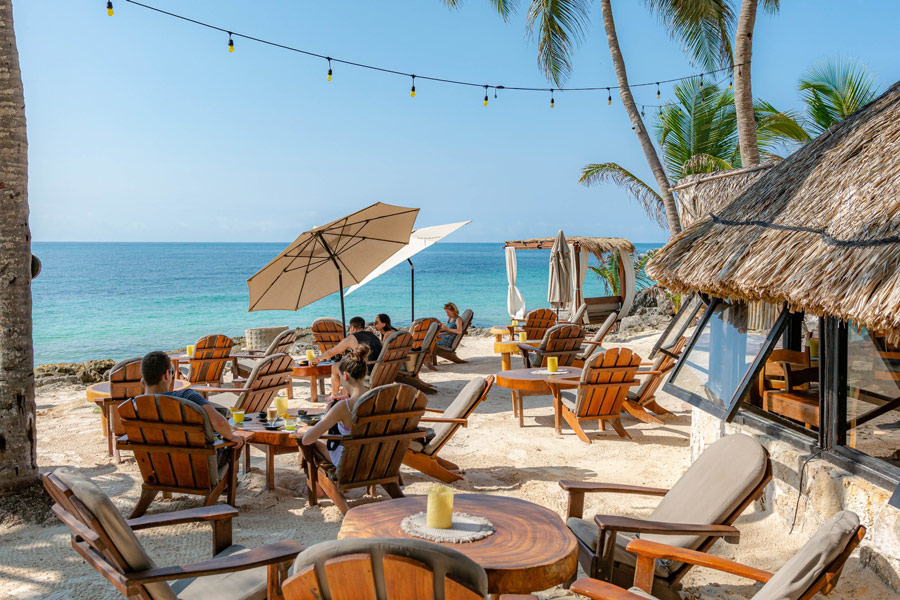
The cost of food in Tulum is high. Expect to pay between 150 and 350 MXN (≈ $10–20) for breakfast, lunch between 300 and 700 MXN (≈ $18–40), and dinner between 600 and 2,100 MXN (≈ $35–130) per person. Restaurants located near beach clubs or the hotel zone are more expensive.
To give you an idea of a quality dining experience, the Rosa Negra restaurant can cost up to 2,100 MXN (≈ $130) per person for a full dinner with cocktails and a great atmosphere.
It is advisable to tip 15% in all establishments.
Local transportation in Tulum
In Tulum, bicycles are very convenient and can often be rented directly from your hotel. It is important to note that taxis are very expensive, with fares ranging from 400 to 500 MXN (≈ $23–$30), or even more, as there are no real regulations in this regard.
Colectivos from Federal Highway 307 Chetumal/Cancun allow you to reach the cenotes, Playa del Carmen, Cancún, or other points in the region near Tulum. Expect to pay between 20 and 70 pesos depending on the length of the trip.
From Tulum Airport, you can take a taxi or a private transfer. From Cancun or Playa del Carmen, ADO buses run regularly to Tulum, offering a convenient and economical alternative. You can also take them from Tulum to Bacalar from the main road that runs through Tulum.
If you prefer to rent a car, it is possible to park in the streets of downtown Tulum, some of which are paid and others free. It’s easy to get lost, so be sure to note the location and name of the street so you can find your car.
If you’re staying near the hotel zone, you’ll need to leave your car in a secure paid parking lot, which costs between 150 and 300 MXN ($9-18) for 2 hours in this area.
Things to do in Tulum
Tulum offers a wide range of activities for all tastes.
The Parque del Jaguar provides access to the Tulum archaeological site and its beaches.
The diving in cenotes is a unique experience (≈ $115), as is a visit to the Kaan Lum or the lagoon further south in Bacalar for those who have less time to stay.
The Mayan site of Coba, 45 minutes away, can be visited by bike or tuktuk, with the option of combining it with the Punta Laguna lagoon and its spider monkeys.
The Sian Ka’an and Muyil reserves are also not to be missed.
Several activities can be easily done without going through an agency, but there are a few exceptions, such as the Sian Ka’an reserve. In high season, I recommend booking in advance to ensure a unique experience!
[/su_box]Tulum is also renowned for its nightlife and parties, but activities are easily accessible from the center or the hotel zone. The cost of activities varies depending on the distance and type of tour: generally, expect to pay between 1,000 and 2,500 MXN (≈ $55–145) for excursions with transportation and admission included.
3.4 Budget in Bacalar
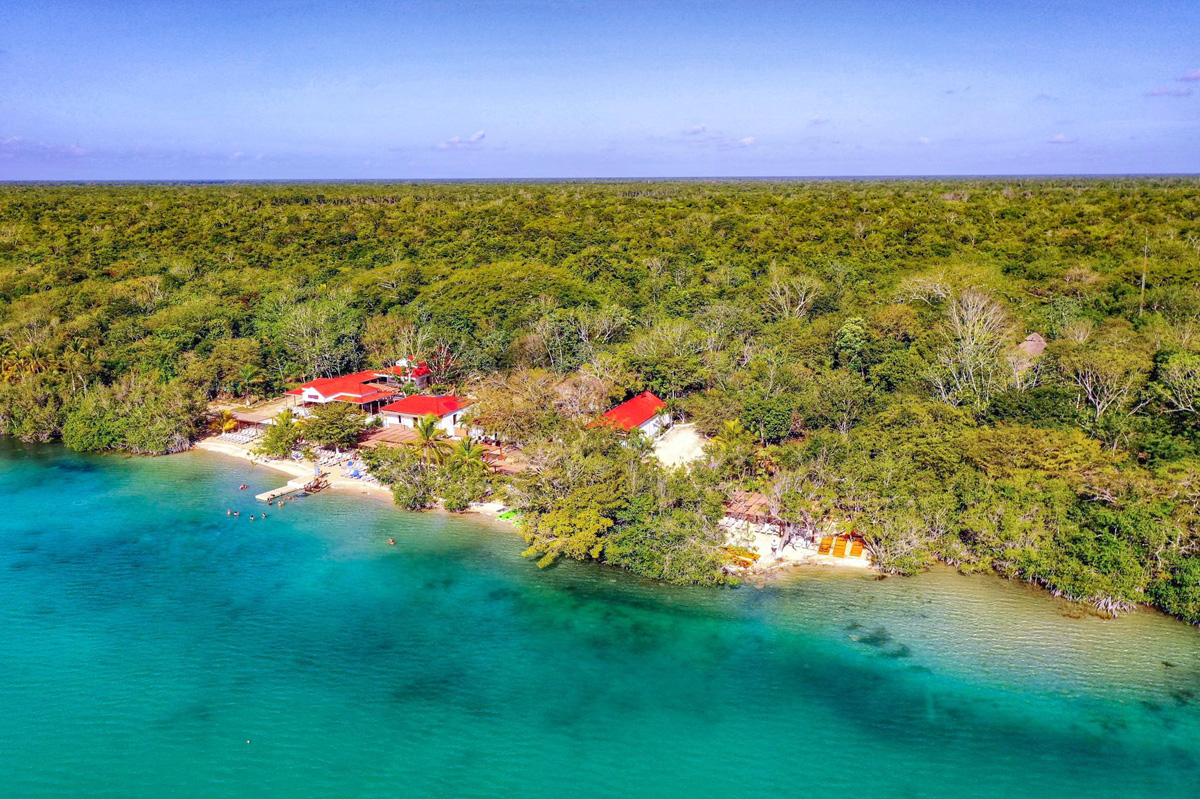
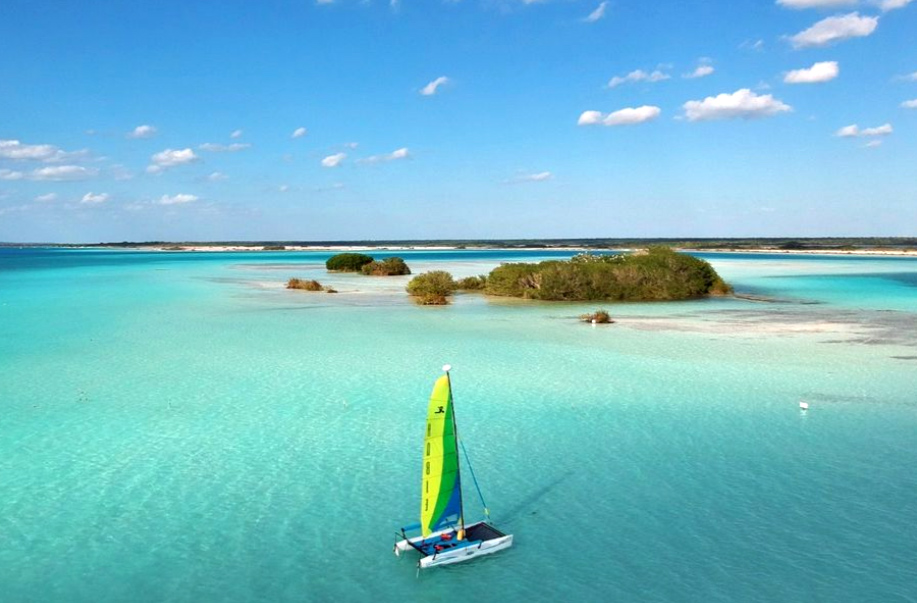
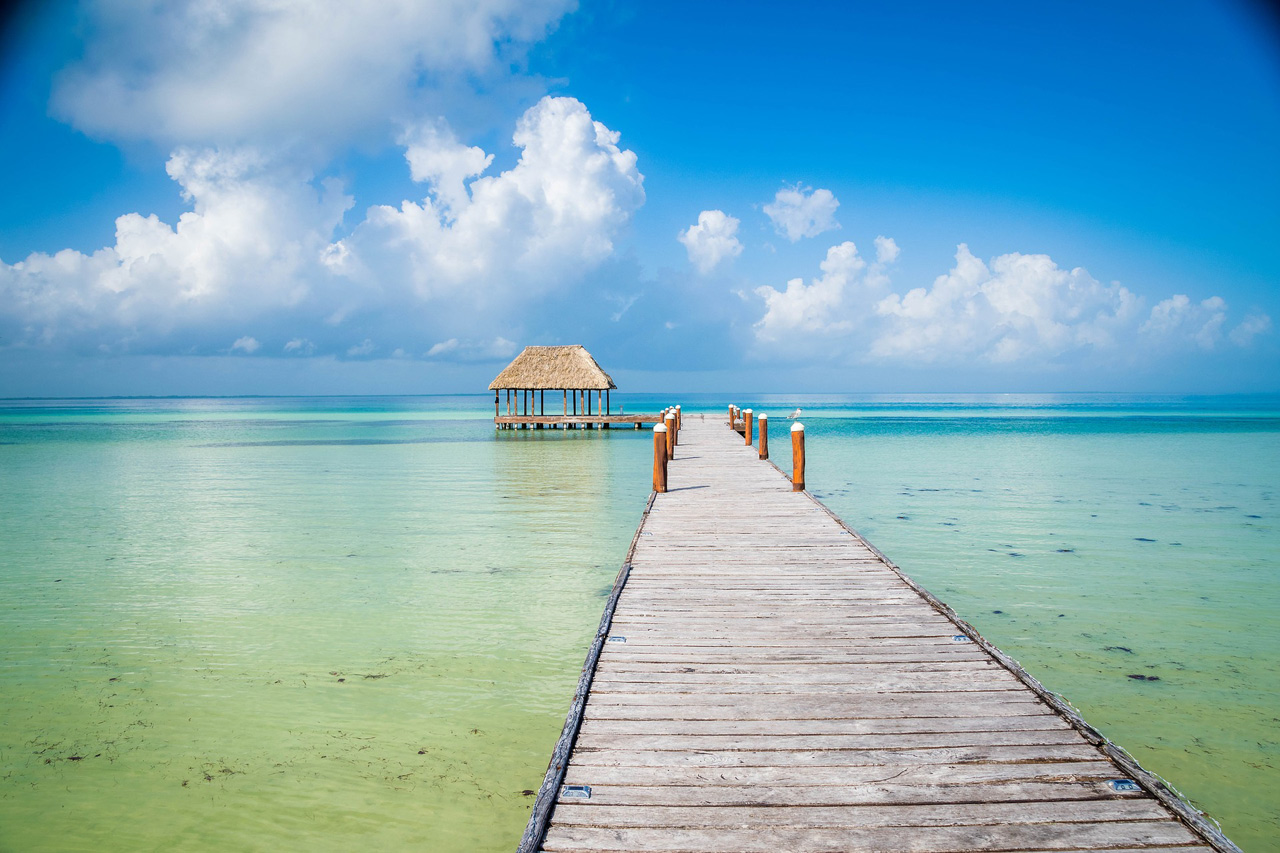
Bacalar is a peaceful and still unspoiled destination, known for its beautiful lagoon with seven shades of blue. It’s the perfect place to relax away from the hustle and bustle of the Riviera Maya!
For those who want to explore further, it is possible to take a day trip to the coastal village of Mahahual or the archaeological site of Kohunlich, hidden in the jungle.
Accommodation in Bacalar
The great advantage of Bacalar is that you can stay facing the lagoon with direct access to the water and a private pontoon, a luxury that is affordable for all budgets.
Budget travelers can find simple hotels or cabins from MXN 1,000 to MXN 1,800 (≈ $55–105) per night in the center or slightly away from the lagoon.
For those on a mid-range budget, hotels with direct access to the lagoon and a private dock cost between MXN 2,000 and MXN 4,000 (≈ $115–230) per night. These establishments allow you to enjoy the sunrise and swim from their dock. This is the best value for money for those who want to experience the lagoon without spending too much.
For high-end travelers, boutique hotels on the lagoon offer suites with panoramic views, often with direct access to the water. Rates can easily reach MXN 5,500–7,000 (≈ $320–410) per night. An ideal stay for a romantic getaway or to completely disconnect and reconnect with nature.
Eating in Bacalar
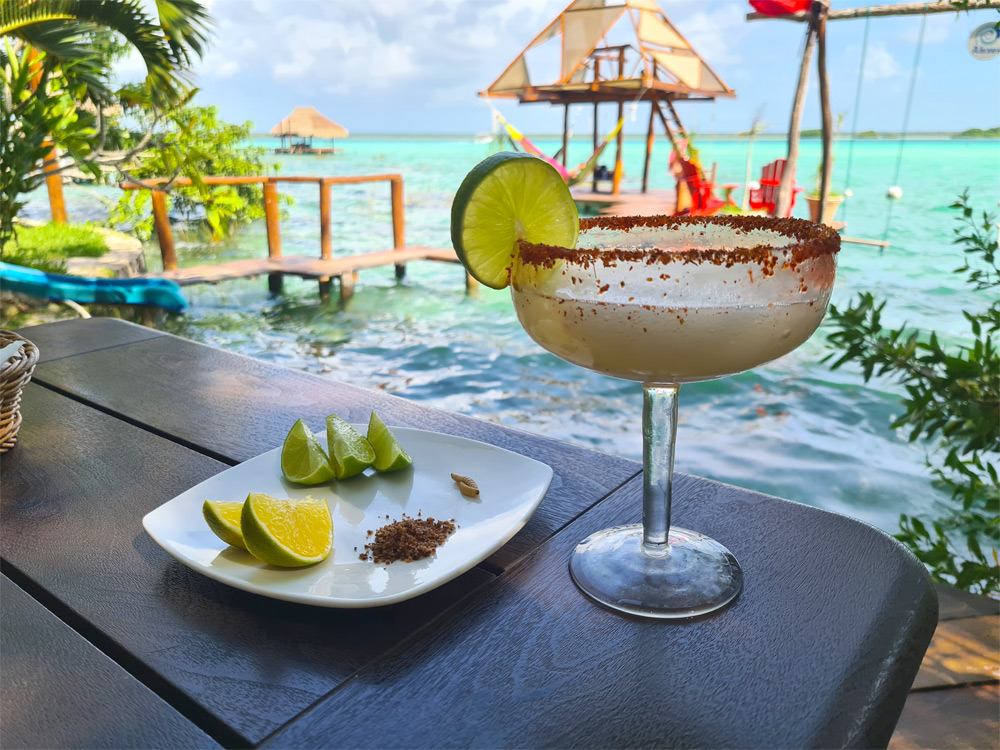
Meals in Bacalar are more affordable than in larger beach resorts. Expect to spend around 600 to 900 MXN (≈ $35–52) per day to eat well. Breakfast costs between 100 and 250 MXN (≈ $6–15), lunch between 200 and 400 MXN (≈ $12–23), and dinner around 300 to 600 MXN (≈ $18–35) depending on the restaurant you choose.
To enjoy delicious octopus or empanadas by the lagoon, I recommend one of the best restaurants: La Playita.
Along the shore, you will find many restaurants offering local cuisine based on fresh fish and tropical fruits. But on the main avenue and around the fort in the evening during high season, you can also find entertainment and very good restaurants.
Don’t forget to tip 10 to 15%, as is customary in the rest of Mexico.
Transportation in Bacalar
Bacalar is easily accessible from Tulum or Chetumal by road via ADO bus or car. The center is small and can be explored on foot or by taxi, with fares costing around MXN 200 (≈ $12) in the central area.
There are no collectivos in the city center, but it is easy to find taxis on demand to take you to your hotel, the ADO terminal, or the viewpoints around the lagoon.
If you have a car, traffic is easy and parking is free on most streets.
ADO Bacalar bus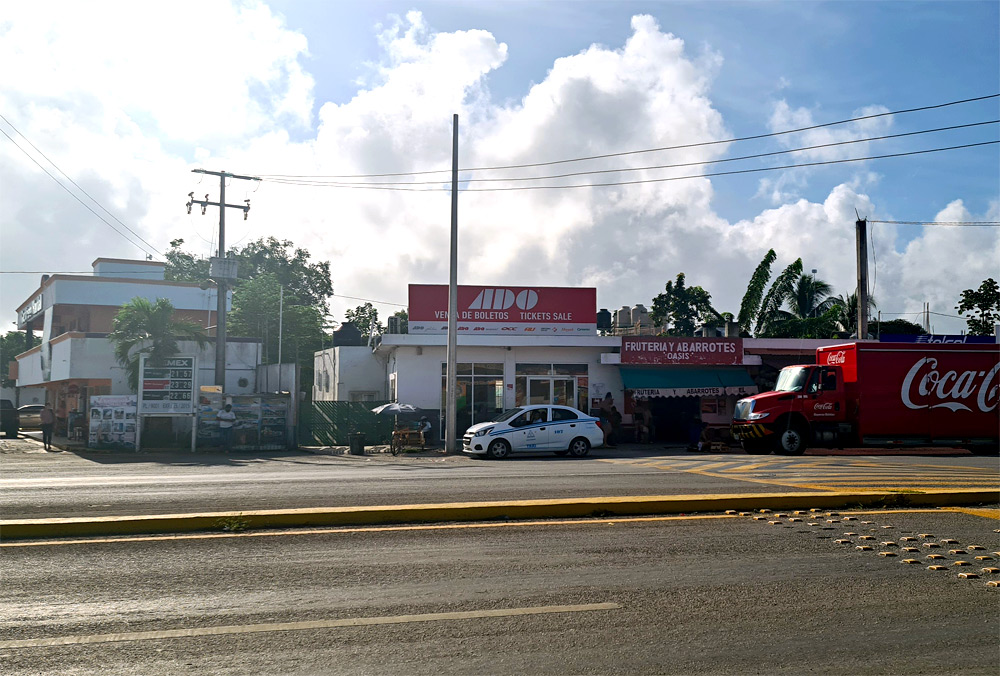
Things to do in Bacalar
The main attraction in Bacalar is, of course, its Seven Colors Lagoon, a true natural gem!
Must-do activities include a catamaran or boat trip to explore the lagoon’s various points of interest, as well as paddleboarding at sunrise or renting a kayak to explore the lagoon at your own pace.
Water activities cost on average between MXN 600 and MXN 1,500 (≈ $35–88)depending on the duration and type of excursion chosen.
3.5 Budget in Holbox
Holbox is a small paradise island located north of the Yucatán Peninsula, highly prized for its bohemian atmosphere, charming hotels, and unspoiled landscapes.
It is a more expensive destination than average, especially in high season, but it remains a must-see for travelers seeking peace and authenticity.
- As Holbox is an isolated island, it is strongly recommended that you carry cash with you. The banking network is sometimes unstable, and ATMs do not always work properly. To avoid any inconvenience, it is best to bring cash with you before embarking for Holbox!
Accommodation in Holbox
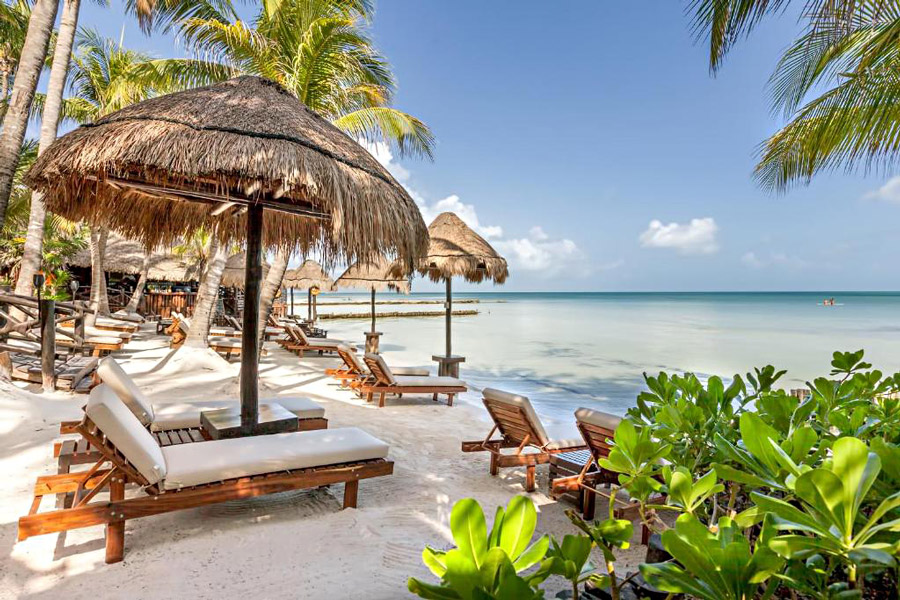
Holbox offers a wide range of hotels, from small eco-friendly establishments to luxury hotels right on the beach.
For budget travelers, expect to pay between MXN 1,500 and MXN 2,500 (≈ $88–145) per night in the center or in the slightly more secluded side streets. For those on a mid-range budget, hotels with a pool or partial sea view cost between MXN 3,000 and MXN 4,500 (≈ $175–260). These are usually close to restaurants and bars, while offering more comfort.
High-end establishments, located on the seafront with direct access to the beach, can easily cost 6,000–8,000 MXN (≈ $350–465) per night. Be aware that hotels located around Tiburones Ballenas Avenue can be noisier at night due to the bars and passing golf carts.
Eating in Holbox
The island has everything: pizzerias, seafood restaurants, Mexican cuisine, and vegetarian options. The average budget for eating well is around 700 to 1,200 MXN (≈ $40–70) per day.
The local specialty is lobster pizza, served during lobster season (July to February). It costs around MXN 500 to 700 (≈ $30–40) depending on the restaurant.
An excellent place to try it is Roots Pizza a la Leña, a must-visit spot on the island. As elsewhere in Mexico, you should tip 10 to 15% in restaurants and bars.
Transportation in Holbox
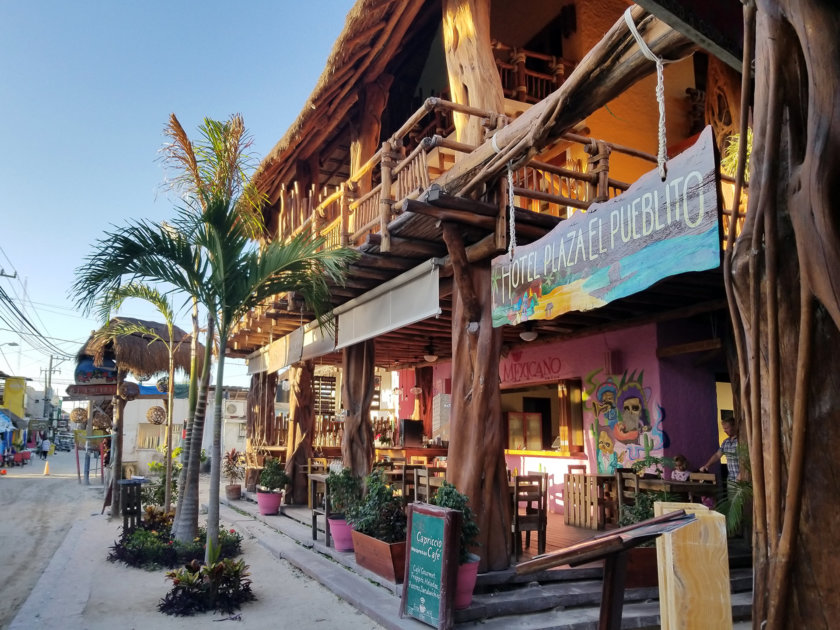
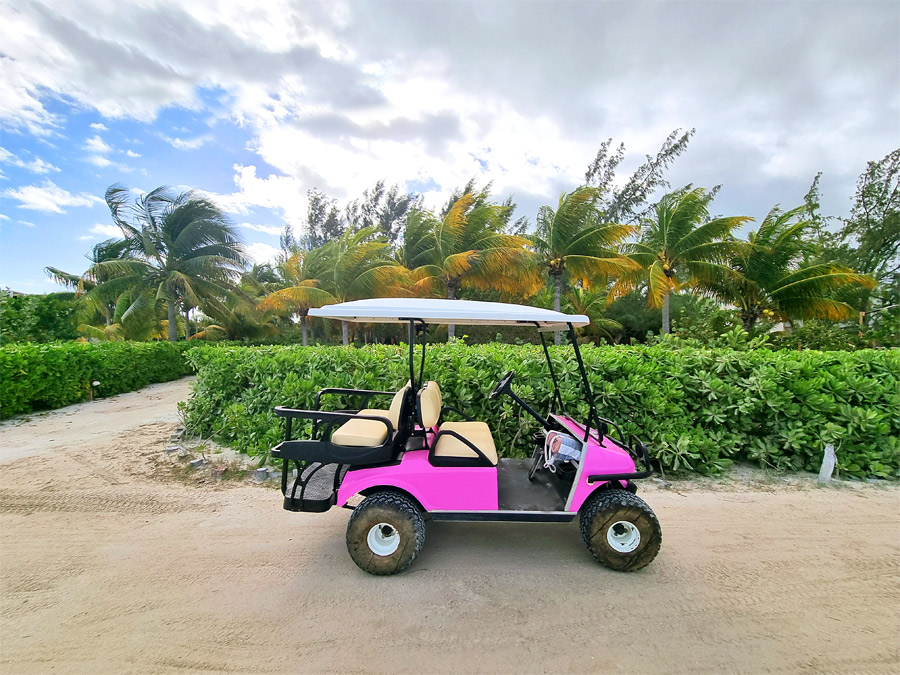
There are no cars on Holbox. Getting around is done on foot, by bike, or by golf cart, which are used as taxis or rental vehicles. A taxi ride costs around 200 to 250 MXN (≈ $15–$18) depending on the distance.
To rent a golf cart during your stay, expect to pay: 3 hours: 1,000 MXN (≈ $55), 6 hours: 1,500 MXN (≈ $88), 12 hours: 2,300 MXN (≈ $135), and 24 hours: 2,800 MXN (≈ $163). The island can be reached by ferry from Chiquilá: the journey takes about 25 minutes and ferries depart every 30 minutes.
Two companies operate regular services. You can find timetables and buy tickets in advance via their websites: 9 Hermanos and Holbox Express. The round-trip fare from Chiquilá to Holbox is approximately MXN 330 (≈ $19) for adults and MXN 160 (≈ $9) for children.
Things to do in Holbox
The island tour (Isla Pasion, Isla de los Pajaros, and Yalahau) is a classic, as is the trip to Cabo Catoche to swim with whale sharks in beautiful turquoise waters.
You can also explore the island by bike, swim in the shallow waters up to Punta Cocos, or admire the magical phenomenon of bioluminescence by kayak, visible on certain nights depending on the season and the moon.
Water activities, such as paddleboarding, boat trips, or kayaking, cost between MXN 600 and MXN 1,800 (≈ $35–105) depending on the duration. It should be noted that there is no large continuous sandy beach, but there are many small access points, especially on the north coast, which are perfect for swimming and enjoying the sunset.
3.6 Budget in Valladolid
Valladolid is a charming colonial city located in the heart of Yucatán. It’s an ideal stopover for exploring iconic Mayan sites such as Ek Balam and Chichen Itza, as well as the region’s cenotes.
The atmosphere is peaceful, much more local, and prices are more reasonable than on the coast!
Accommodation in Valladolid
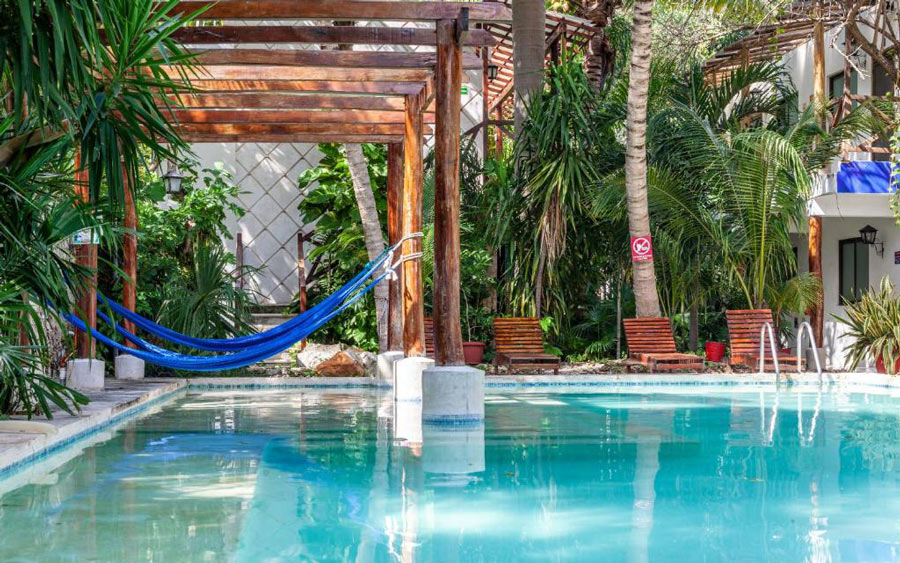
Hotel prices in Valladolid are much more affordable than on the coast. For budget travelers, there are simple hostels and hotels starting at 800 to 1,200 MXN (≈ $50–$70) per night. In the historic center, there are many charming places offering good comfort with a swimming pool for MXN 1,800 to 2,800 (≈ $105–131) per night.
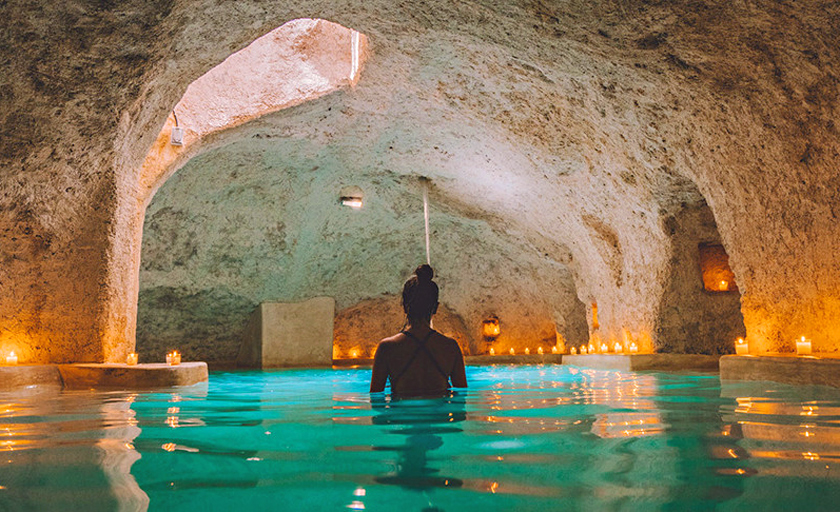
For more upscale stays, boutique hotels housed in former colonial mansions charge between 3,500 and 5,000 MXN (≈ $205–290) per night, often with a patio, swimming pool, and traditional decor.
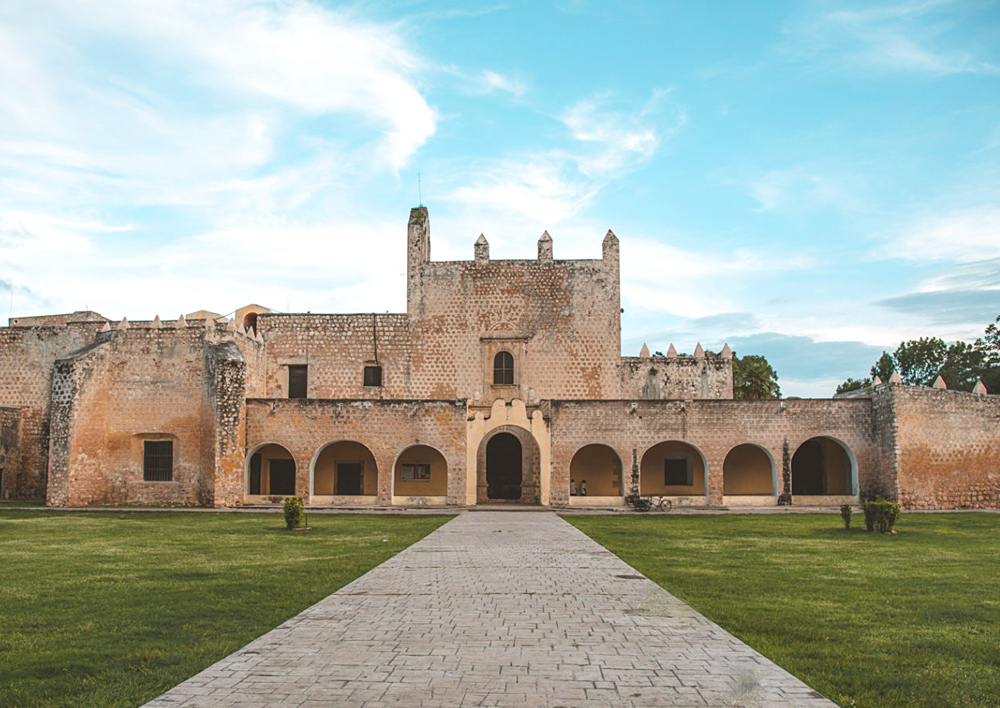
Travelers enjoy staying in the center, as it is easy to do everything on foot: restaurants, market, San Servacio church, and even the Zací cenote. Many hotels have parking, but if not, it is easy and safe to park on the street.
Eating in Valladolid
The food is affordable and tasty, with typical Yucatán influences. You can eat very well for 500 to 900 MXN (≈ $30–52) per day. Local restaurants offer traditional dishes such as cochinita pibil or pollo en escabeche for less than 200 MXN (≈ $12).
In the center, the cafes and restaurants around the main park are perfect for a quiet dinner. For vegetarians, there are several affordable options available. As everywhere in Mexico, tip 10 to 15% at the end of the meal.
Transportation in Valladolid
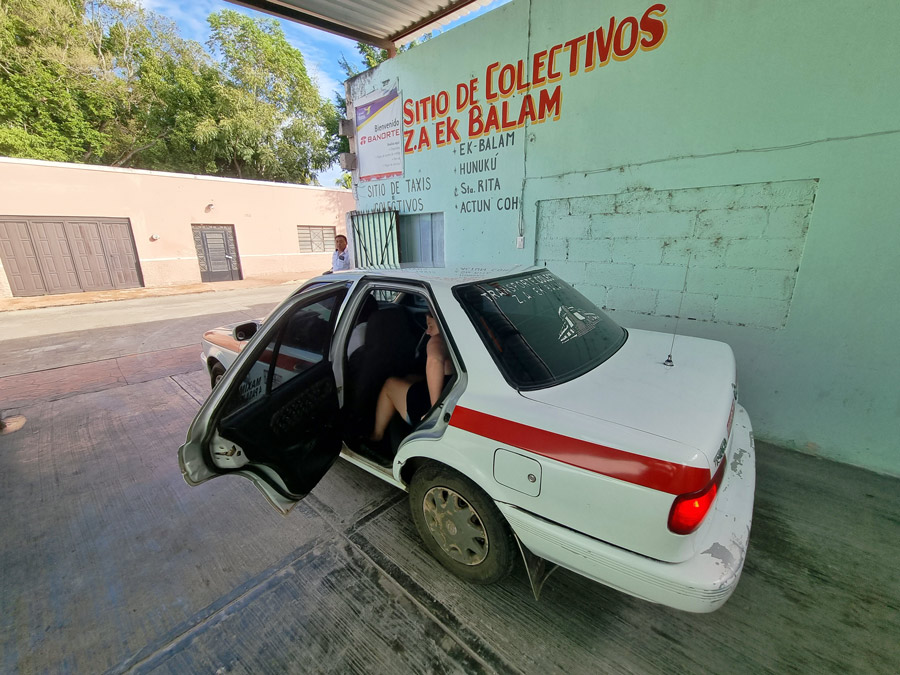
Valladolid is easily accessible by ADO bus from Cancún, Mérida, or Playa del Carmen, or by collectivo for shorter trips. Once there, the center can be easily explored on foot.
However, to explore the surrounding area—such as Chichén Itzá, Ek Balam, Rio Lagartos, or Las Coloradas —it is advisable to rent a car, book a tour with transportation included, or take a taxi for more flexibility.
Taxi fares vary depending on the distance: expect to pay around MXN 150 to 200 (≈ $8–12) for a nearby cenote and up to MXN 800–1,000 (≈ $47–58) for a longer round trip such as Ek Balam or Rio Lagartos.
Things to do in Valladolid
Valladolid is a perfect base for exploring the natural and cultural wonders of the Yucatán. Close by, you’ll find the Zací cenote in the city center and the famous Chichén Itzá site, ranked among the New Seven Wonders of the World, just 40 minutes away.
History and nature lovers can also visit Ek Balam, a less crowded Mayan site, or take a day trip to Rio Lagartos and the pink lagoons of Las Coloradas.
About an hour away, the yellow village of Izamal offers a unique colonial interlude. Finally, adventurers can head to Cobá and Punta Laguna, a magical place to observe spider monkeys in their natural habitat.
For more information, feel free to check out our dedicated article to discover the city of Valladolid.
3.7 Budget in Mérida
The cultural capital of Yucatán, Mérida charms visitors with its colonial architecture, lively streets, and warm atmosphere. It’s an ideal city for immersing yourself in local life while enjoying a good level of comfort. The distances on foot in the center are a little longer than in Valladolid, but the city is still pleasant to explore by bike, taxi, or Uber.
Accommodation in Mérida
There is a wide range of accommodation in Mérida, with many options to suit all budgets. Budget travelers can find a decent hotel room or hostel for between MXN 900 and MXN 1,500 (≈ $52–88) per night in the center.
The boutique hotels and charming establishments located around Paseo de Montejo offer excellent value for money at between MXN 2,000 and MXN 3,500 (≈ $115–$205) per night.
For a more authentic experience, there are several restored haciendas about a 30-minute drive from Mérida. These boutique hotels offer an exceptional setting with swimming pools and tropical gardens, for a budget of between 4,000 and 6,000 MXN (≈ $230–$210) per night.
Eating in Mérida
Mérida is a destination renowned for its Yucatecan cuisine. Expect to spend around MXN 600 to MXN 1,000 (≈ $30–$55) per day to eat well. Breakfast in a local café costs around MXN 120 (≈ $7), while a full lunch in a restaurant in the center costs MXN 250–MXN 400 (≈ $15–$23)..
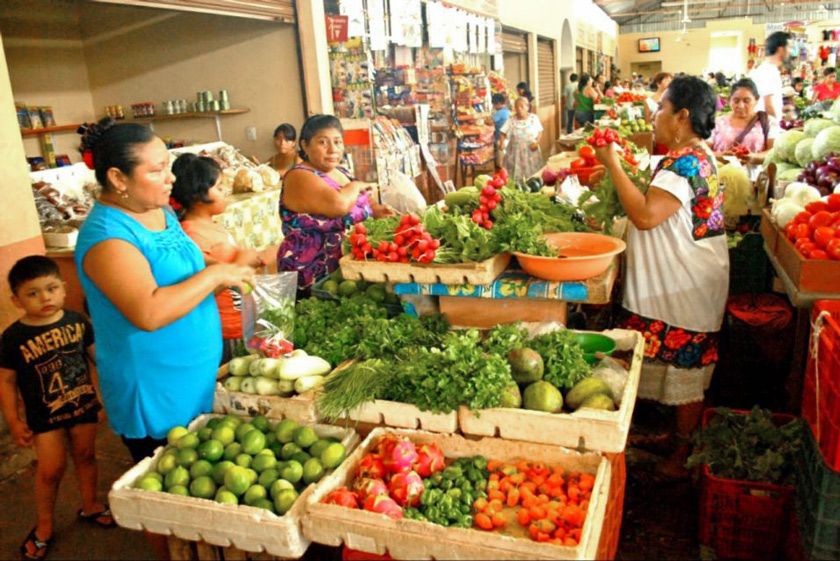
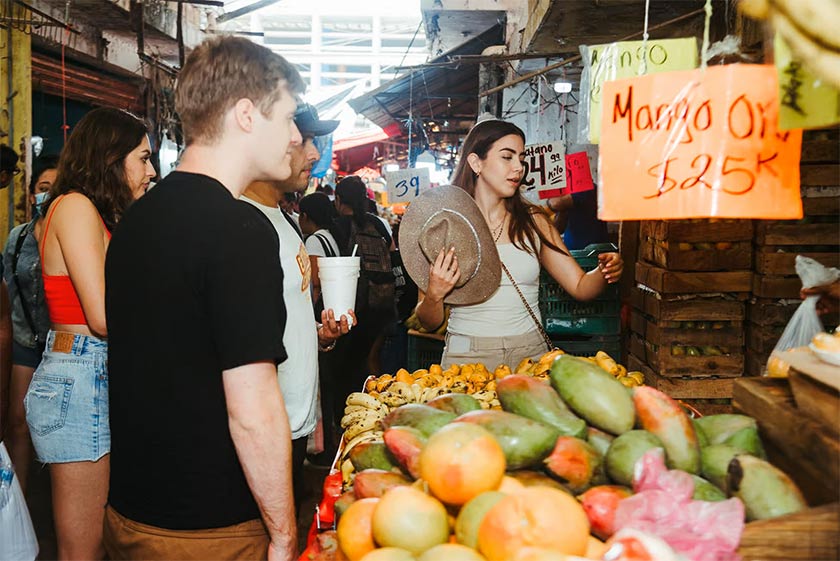
You can enjoy typical dishes such as sopa de lima, poc chuc, and panuchos. Traditional markets such as Lucas de Gálvez and Santa Ana are perfect for sampling local cuisine at low prices. Remember to add a tip of 10–15% depending on the service.
To immerse yourself in Mérida’s gastronomy, don’t miss this gastronomic walking tour with a local guide who will take you through the downtown neighborhoods to sample the true flavors of Yucatan.
 merida food tour[/caption]
Transportation in Mérida
merida food tour[/caption]
Transportation in Mérida
Mérida is well connected: an international airport offers direct flights from Mexico City (CDMX) and other major cities in the country. From Valladolid, the ADO bus remains the most comfortable way to reach Mérida.
Once there, local taxis and Uber are available via the app, with affordable fares: a trip to the city center costs around MXN 80 to 150 (≈ $5–8). To reach the haciendas or beaches around Mérida, expect to pay between MXN 250 and 400 (≈ $15–23) depending on the distance.
Mérida also has the Va y Ven (15 pesos per trip or 45 pesos for a trip between the airport and downtown Mérida), a modern and sustainable public transportation system that connects the city to its metropolitan area and the main neighboring areas.
If you want to explore the surrounding area at your own pace, renting a car is still the most convenient option.
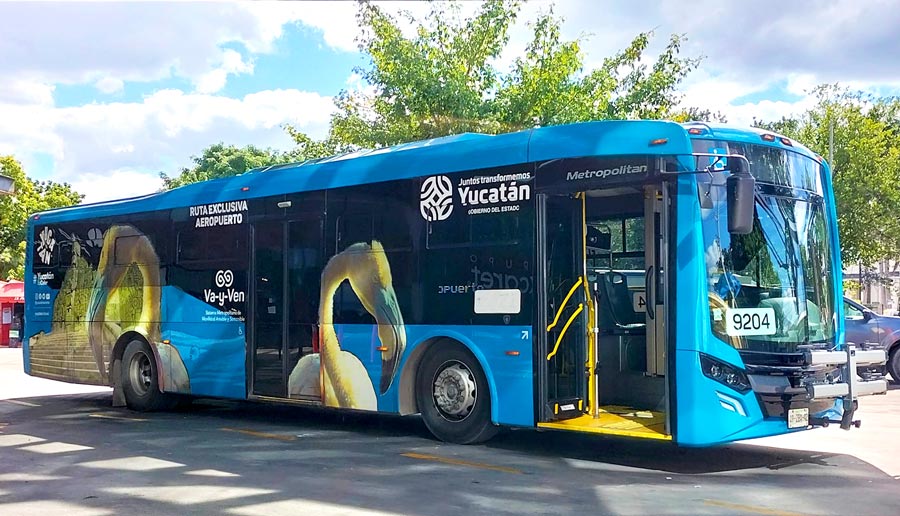
The “Va y Ven” bus in Merida
Things to do in Mérida
Mérida is a great starting point for exploring the Yucatán. An hour’s drive away, the archaeological site of Uxmal is a must-see for lovers of Mayan culture. Nature lovers will enjoy the Celestún reserve, famous for its flamingos, which can be seen between December and March.
When it comes to beaches, Progreso Bay andPig Island offer a relaxing break, while Sisal Beach remains more local and unspoiled. Inland, don’t miss the Ring of Cenotes, a series of magnificent natural pools located a few miles from the city.
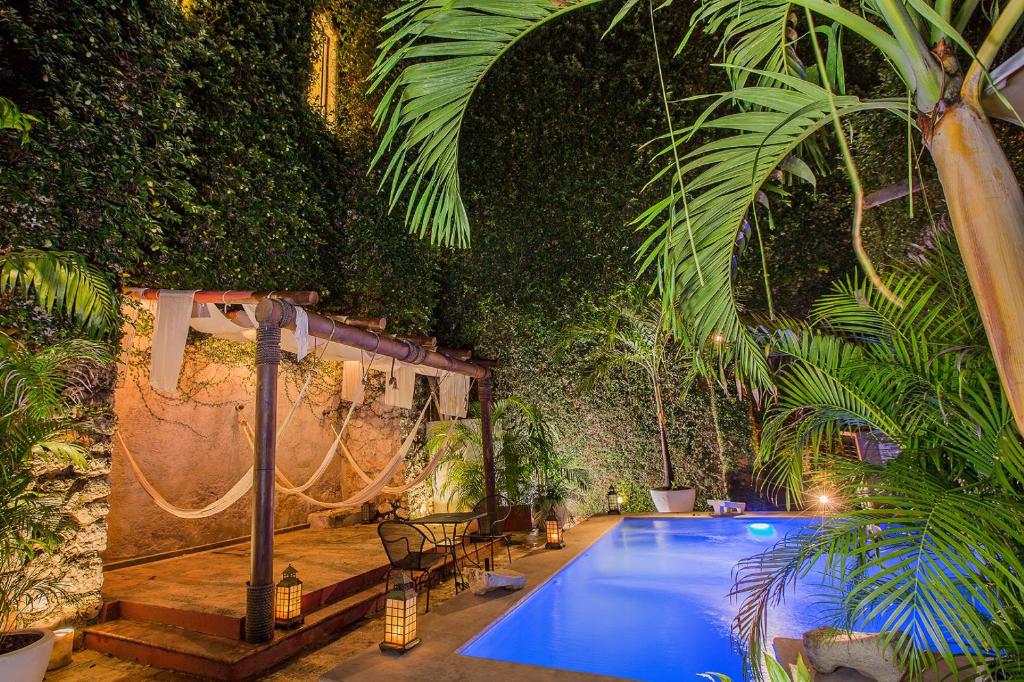
Piedra de Agua Merida
4. How much to budget for expenses in Yucatán: accommodation, transportation, food, activities
Traveling on the Yucatán Peninsula is not just about “beaches” and “ruins”: it’s also about juggling between ultra-touristy areas and the more affordable inland areas and small villages.
Here is an overview, with average prices in MXN and their equivalent in USD ($1 = MXN 17.13), as well as practical tips for optimizing your budget.
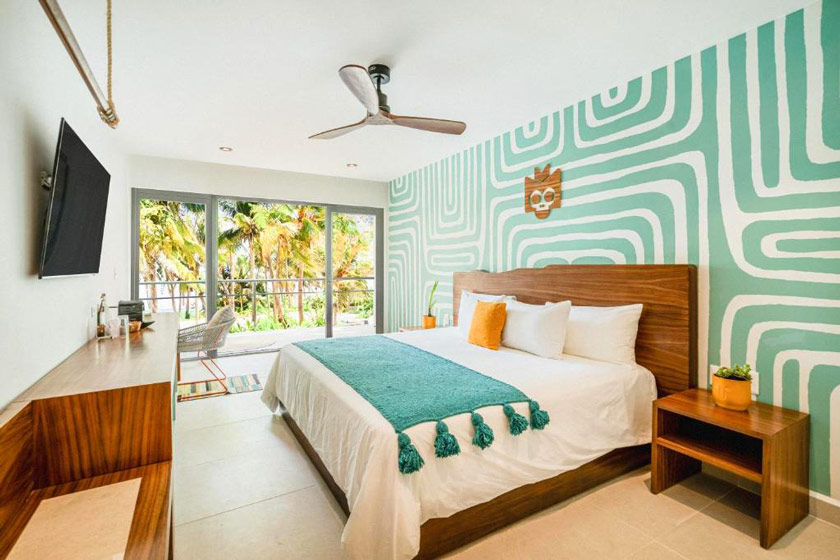
4.1 Accommodation in Yucatán: how much does it cost?
Accommodation is undoubtedly the most variable expense in Yucatán. Prices depend on location, season, and the type of comfort you are looking for.
In seaside areas such as Cancún or Tulum, beachfront hotels and all-inclusive packages can quickly become expensive: expect to pay between 5,000 and 8,000 MXN (≈ $290 to $465) per night. These establishments offer total comfort, but the bill reflects it.
For travelers seeking charm and tranquility, hotels in the city center or inland (in Mérida, Valladolid, or Bacalar) offer much more affordable rates: a comfortable room costs between MXN 800 and MXN 1,200 (≈ $40 to 70). Mid-range accommodation costs around MXN 1,200 to 3,000 (≈ $70 to $175).
Another tip: consider alternative areas such as Puerto Morelos, Chemuyil, or the outskirts of Mérida—you’ll still be close to the major sites, while saving up to 40%!
4.2 Food & drinks: average prices in Yucatán
Yucatán’s cuisine is varied and affordable, especially if you eat locally. Small restaurants, taquerías, and markets offer good food for MXN 80 to 200 (≈ $5 to $12). A complete menu del día with a drink, soup, and main course is still an excellent economical option.
For a typical day, expect to spend around:
– Backpacker: 300–700 MXN (≈ $17–40)
– Comfort: 800–1,500 MXN (≈ $46–88)
– Luxury: > 1,800 MXN (≈ $105)
In tourist areas (Tulum, Playa del Carmen, Cancún, Holbox), prices skyrocket: a dish + drink in a beach restaurant or beach club can exceed 900 MXN (≈ $52). Also, remember to consider water: it is not drinkable everywhere, so you will need to buy bottles or use a filter bottle (~ $1.50 to $4.50/day).
Around Bacalar, Valladolid, Akumal, Coba, and Mérida, prices are more affordable.
Tipping is part of the local culture. It is customary to leave 10 to 15%, but in restaurants frequented by Americans, staff often expect 20%.
Always check the bill: sometimes an automatic 15% “service charge” is already added (automatic tipping is illegal, and you have the right to dispute it).
4.3 Transportation in the Yucatán Peninsula: fares and options
There are several ways to get around Yucatán, depending on your budget. ADO buses remain the most comfortable option for long distances: reliable, air-conditioned, and regular, they connect all major cities. A trip from Cancún to Mérida costs around MXN 500 to 700 (≈ $30 to $40) depending on the class.
Collectivos, small shared vans, are the most economical option: only MXN 10 to 70 (≈ $0.60 to $4) depending on the distance. They only accept cash and leave once they are full. This is an excellent solution for getting around locally, particularly between Cancún, Playa del Carmen, and Tulum.
For more freedom, renting a car is still the best option. Expect to pay 900 to 1,800 MXN/day (≈ $52 to $105), depending on the model and season. Basic insurance is mandatory, and a deductible/deposit is often blocked on your card (often $590 to $1,180). Add fuel (≈ MXN 25/liter, or $1.46/liter) and parking (MXN 100 to 300/day, ≈ $6 to $17)..
Taxis are convenient for short trips, but fares can quickly add up. Always ask the price before getting in. Uber operates in certain areas (Cancún center, Mérida), but not at the airport.
4.4 Activities & admission fees: how much to spend in Yucatán?
Activities are one of the biggest expenses on a trip to Yucatán, especially if you alternate between ruins, cenotes, and boat trips. Archaeological sites often charge two fees: a federal ticket and a state ticket.
For Chichén Itzá, the total comes to 875 pesos (≈ $51) + parking.
Access to a cenote costs on average 150 to 500 MXN (≈ $9 to $30), plus the rental of a life jacket or locker (50–150 MXN). Adventure parks or nature reserves (Sian Ka’an, Xcaret, Bacalar, Isla Mujeres) vary between 1,000 and 3,000 MXN (≈ $55 to $175) depending on the duration and options included.
To balance your budget, alternate between free activities (walks, public beaches, markets) and more memorable paid visits.
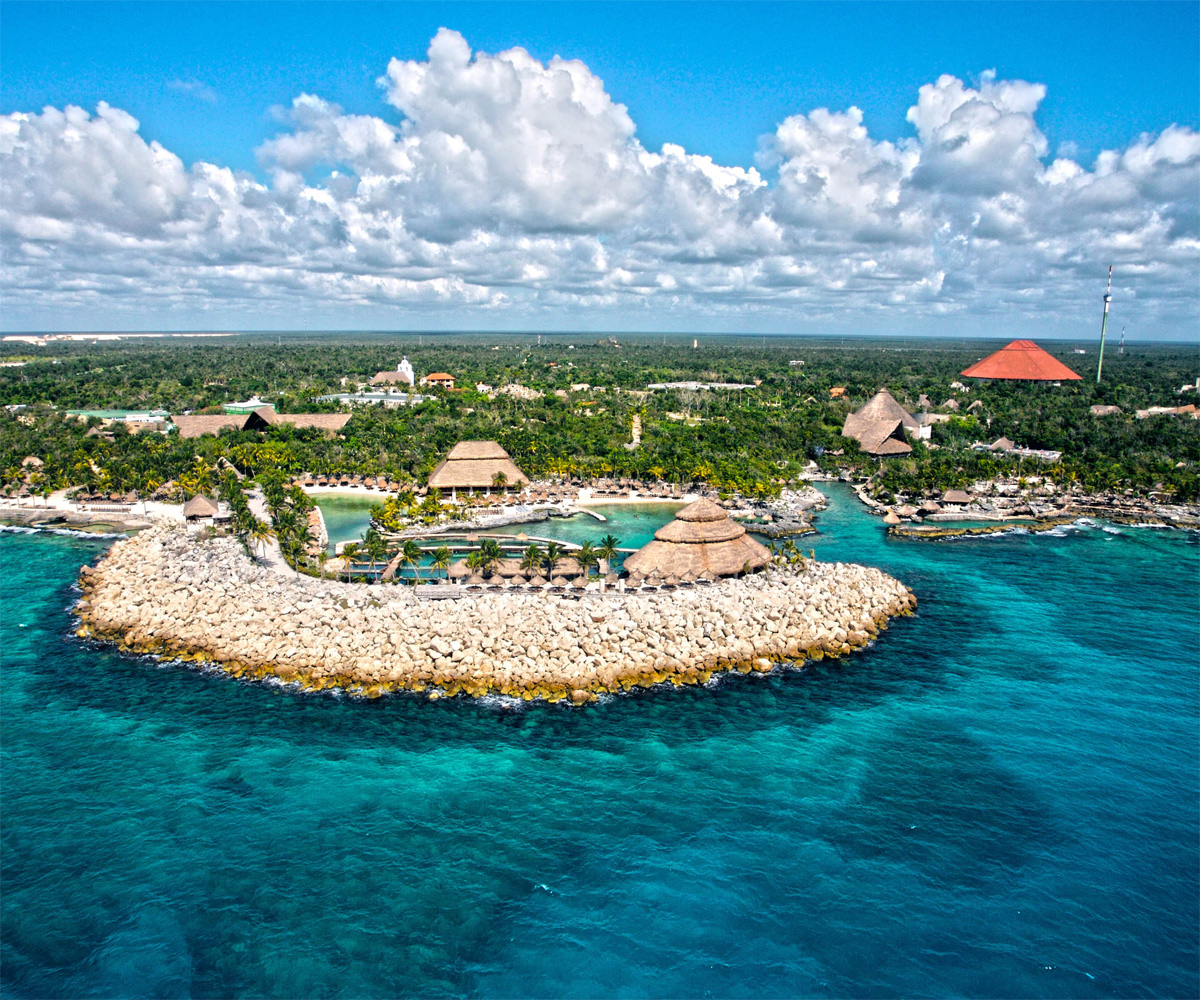
Xcaret Park
4.5 Communication & money: expenses to expect on site
There are several options available for you to stay connected. Local SIM cards (Telcel, AT&T Mexico) cost between MXN 100 and MXN 300 (≈ $6 to $17) for 5 to 10 GB of data.
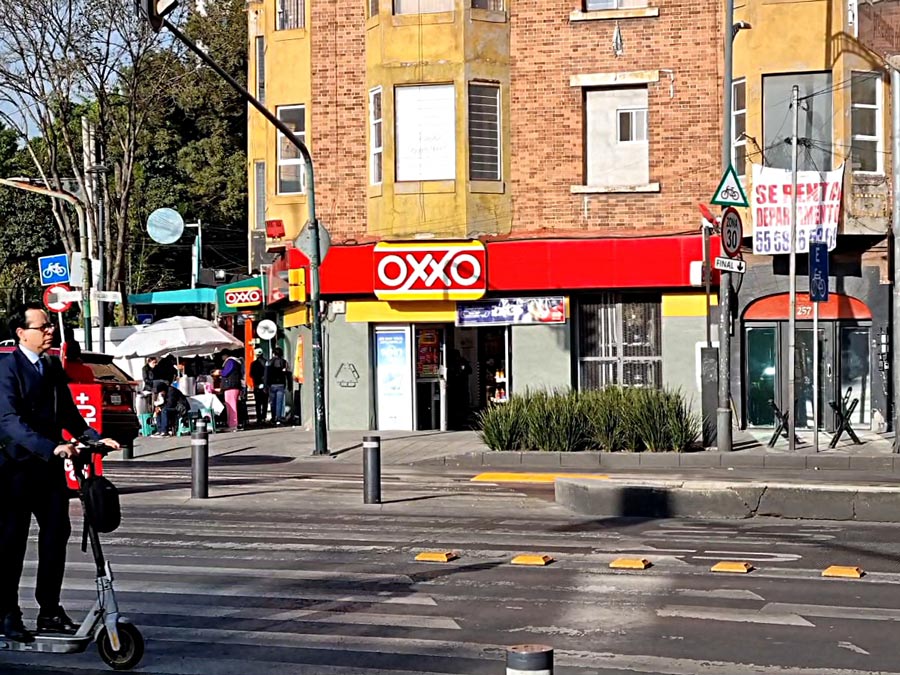
You can buy them directly from an OXXO, an airport kiosk, or an official store. More forward-thinking travelers can activate a tourist eSIM before departure—convenient and instant, provided your phone is compatible.
Another option is to get an international plan from your home carrier, but the rates are often much higher.
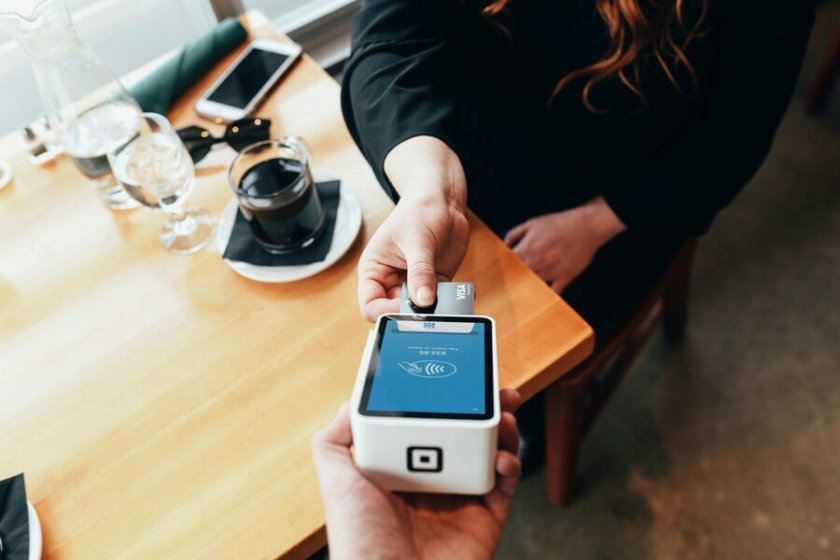
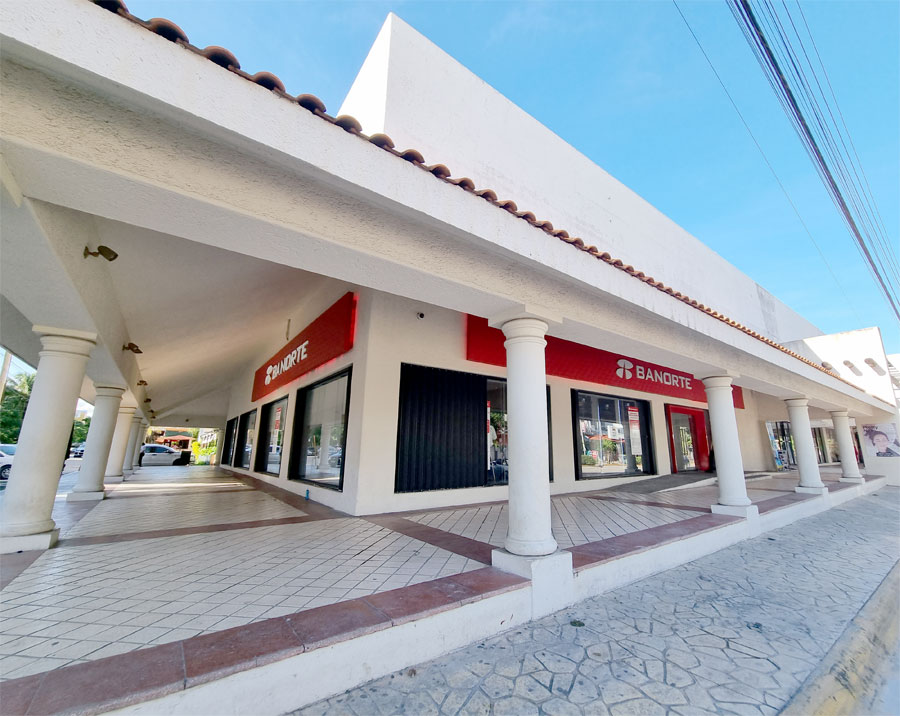
When it comes to money, it’s best to withdraw cash from local Mexican banks such as BBVA, Citibanamex, or Santander, as the exchange rates are much better than at “international” ATMs.
Avoid currency exchange offices at Cancún airport, as the rates are very unfavorable. Even though many businesses accept US dollars, paying in Mexican pesos is always more advantageous!
When it comes to tipping, keep in mind that waiters are used to American customers (20% standard). The local custom is 10–15%. Finally, always keep some cash on you: in villages, cenotes, or collectivos, cards are not accepted, and ATMs can run out of cash during high season.
5. Sample budget for two weeks in Yucatán based on your profile
To help you plan your trip, here is an estimate of the budget you will need for two weeks in Yucatán, whether you are traveling on a budget, in comfort, or in luxury.
5.1 Budget trip to Yucatán (backpacker) – 14 days – $100 to $220 per person
Accommodation: hostels, dormitory or single room $5–10/night, depending on the city and area.
Food & drink: local meals, taquerías, markets, menu del día 300–700 MXN/day ($17–40), bring filtered water or bottles.
Internal transport: collectivos, ADO buses, local taxis (~50–200 MXN/day, $3–12)
Activities & admission: cenotes, public beaches, archaeological sites, independent excursions to Isla Mujeres, Cozumel, Bacalar (~$1.50–$8.50/day).
Travel insurance: recommended, ~$0.75–$1.15/day.
Communication/eSIM/network: local SIM card with credit (~$7–14, $6–10), available at OXXO or online.
Souvenirs/extras: $7–15/day ($6–10).
Sample 14-day itinerary:
- Day 1–2: Cancún – Hostel or inn 400–600 MXN/night ($23–30), public beaches, Isla Mujeres ferry (~560 MXN return, $33).
- Day 3–5: Playa del Carmen / Tulum – Hostel / single room 500–700 MXN/night ($30–40), bike for getting around, local cenotes, cheap ferry to Cozumel / El Cielo (~480 MXN return, $28).
- Days 6–8: Bacalar – Hostel or single room 600–900 MXN/night ($35–52), kayak/paddle trip on the lagoon (~200–400 MXN, $12–23), cenote azul (50 MXN, $2.50), day trips to Majahual or Kohunlich (~400 MXN, $23).
- Days 9–11: Mérida – Hostel or single room 500–800 MXN/night ($30–47), walking tour of the city center, excursions to Uxmal (by colectivo 85 MXN -$5 one way and 531 MXN for admission to the site – $31)/ Cenotes (~200–400 MXN, $12–$23).
- Days 12–14: Valladolid – Single room or dormitory 600–900 MXN/night ($35–52), visit to Chichén Itzá (671 MXN – $39 + cenotes (~300 MXN, $17), Tour to Rio Lagartos accessible by colectivo (~800 MXN, $38).
5.2 Standard comfort stay – 14 days in Yucatán – $3,180 to $5,890 per person
Accommodation: 3★ / 4★ hotels, private rooms 1,200–2,500 MXN/night ($70–145), city center or near the beach depending on the city.
Food & drink: local restaurants, some tourist restaurants, menu del día 800–1,500 MXN/day ($47–88), filtered water or bottled water.
Internal transportation: economy car rental (~$5.50–$8.75/day), fuel (~$0.14/liter), tolls (~$0.35–$1.00), parking in tourist areas (~$0.70/day).
Activities & admission: semi-organized excursions, archaeological sites, cenotes, sea trips 500–1,200 MXN/day ($30–70).
Travel insurance: recommended 150–250 MXN/day ($8–12).
Communication/eSIM/network: local SIM or eSIM (~$7–$15, $6–$10), available locally or online.
Souvenirs/extras: $15–$30/day ($10–$20).
Sample 14-day itinerary:
- Days 1–2: Cancún – 3★/4★ hotel in the center or by the sea 1,500–3,000 MXN/night ($88–175), semi-organized excursions to Isla Mujeres or Xcaret (~1,200 MXN, $70).
- Days 3–5: Playa del Carmen / Tulum – 3★ / 4★ hotel near the beach 1,200–2,000 MXN/night ($70–115), Cozumel / El Cielo ferry (~500–700 MXN, $30–40), local cenotes.
- Days 6–8: Bacalar – 3★ hotel with lagoon access 1,200–1,800 MXN/night ($70–105), catamaran trip, paddleboarding/kayaking (~300–500 MXN, $17–30), Majahual/Kohunlich excursion (~800 MXN, $46).
- Days 9–11: Mérida – 3★ hotel 1,200–2,000 MXN/night ($70–94), excursion to Uxmal, Celestún or the cenote ring (~500–1,000 MXN, $30–60).
- Days 12–14: Valladolid – 3★ hotel 1,000–1,500 MXN/night ($55–88), Chichén Itzá + cenotes (~650 MXN, $38), Rio Lagartos / Las Coloradas (~800 MXN, $47).
5.3 Luxury stay – 14 days in Yucatán – $7,540 to $13,670 per person
Accommodation: 4★–5★ all-inclusive hotels or boutique hotels 4,000–8,000 MXN/night ($230–$465), seaside or luxury resort.
Food & drink: gourmet restaurants, beach clubs 1,500–3,000 MXN/day ($88–175).
Internal transportation: private transfers and premium car (~1,500–2,500 MXN/day, $88–145), fuel included, parking included.
Activities & admission: Guided tours, private excursions to Sian Ka’an, Cozumel, cenotes, Bacalar, Isla Mujeres 2,000–3,000 MXN/day ($115–175).
Travel insurance: mandatory, ~250–400 MXN/day ($15–23).
Communication / eSIM / network: local SIM or eSIM (~100–200 MXN, $5–9).
Souvenirs / extras: 500–800 MXN/day ($30–47).
Example 14-day itinerary:
- Day 1–2: Cancún – 5★ all-inclusive hotel 5,000–8,000 MXN/night ($290–465), private transfer from the airport (~700 MXN, $40), guided excursions to Isla Mujeres or Xcaret (~2,000 MXN, $115).
- Days 3–5: Playa del Carmen / Tulum – 5★ beach hotel 4,000–6,000 MXN/night ($230–350), private transfers, excursions to Cozumel / El Cielo (~2,000 MXN, $115).
- Days 6–8: Bacalar – 4–5★ lagoon hotel 4,000–6,000 MXN/night ($230–350), private catamaran trip, paddleboarding/kayaking, visit to Majahual / Kohunlich (~2,000 MXN, $115).
- Days 9–11: Mérida – 4★ hotel or boutique hotel 2,500–4,000 MXN/night ($145–230), private excursions to Uxmal, Celestún or the cenotes ring (~2,000 MXN, $115).
- Days 12–14: Valladolid – 4★ hotel or boutique hotel 2,500–4,000 MXN/night ($145–230), Chichén Itzá + cenotes and Rio Lagartos / Las Coloradas on a private tour (~2,500 MXN, $145).

6. When to go to Yucatán: the best seasons to save money on your trip
The time of year you travel has a significant impact on the price of your trip to Yucatán.
Hotel rates, car rental prices, and activity costs vary depending on the season and tourist traffic. By choosing your dates carefully, you can save up to 40% on your total budget while still enjoying excellent conditions.
6.1 Tourist seasons in Yucatán and their impact on prices
High season (December to April): the most expensive, especially during Christmas, New Year’s, and Holy Week. Prices skyrocket on the Riviera Maya; an all-inclusive hotel can cost up to MXN 8,000/night (≈ $467) for two people.
Mid-season (April to June and October to mid-December): pleasant weather, fewer tourists, and frequent discounts of 20-30% on accommodation and car rentals.
Low season (June to October): hot, humid, and occasional rain, but this is the ideal time for a cheap trip to the Yucatán. Prices drop and the sites are quieter. June and September offer the best value for money.
6.2 Where prices vary the most in the Yucatán Peninsula
Riviera Maya (Cancún, Playa del Carmen, Tulum, Bacalar): prices are highest from December to April. Between June and October, rain and the presence of Sargassum seaweed cause prices to drop by up to 40%.
Valladolid and Mérida: drier and warmer climate, with more stable prices throughout the year. An excellent option for an economical stay without sacrificing comfort.
Holbox Island: high prices from December to March and during whale shark season (May to September).
6.3 Average budget in Yucatán by season
Accommodation: variations of +30 to +50% between low and high season, especially in Cancún, Playa del Carmen, Tulum, Holbox, and Bacalar.
Car rental: approximately 900–1,200 MXN/day ($52–70) if booked in advance, up to 1,800 MXN/day in high season.
Excursions and activities: +10 to +20% in high season.
Restaurants and extras: in seaside areas, some restaurants and beach clubs increase their prices by 20 to 40% during periods of high demand.
7. How to save money in Yucatán: my practical tips 2026
The Yucatán Peninsula is one of Mexico’s most popular tourist destinations, and it’s very easy to blow your budget without realizing it. But with a little organization and the right habits, it’s entirely possible to travel in Yucatán without breaking the bank!
Booking your accommodation and tours in advance, avoiding the most expensive areas like Tulum for lodging, taking advantage of daily specials at small local restaurants, and always paying in pesos to avoid conversion fees can make a big difference.
By planning your itinerary well and choosing the right transportation (ADO buses, colectivos, or car rentals for groups), you can fully enjoy Yucatán while keeping your expenses under control.
8. Mistakes to avoid to get the most out of your trip to Yucatán
Traveling in Yucatán is generally straightforward, but there are some pitfalls that can quickly increase your budget or complicate your stay. Here are the main points to keep in mind:
Underinsuring your rental car: local insurance is mandatory and can cover significant costs in the event of an accident. Even for a budget profile, it is recommended that you take out comprehensive insurance.
Not checking ADO or colectivo schedules: some routes have limited frequency, especially early in the morning or late at night. Planning your schedule in advance will help you avoid long waits or unexpected taxi fares.
Relying solely on Tulum to visit the entire region: although it is centrally located, some excursions (Valladolid, Chichén Itzá, Bacalar) require several hours of driving. Planning your logistics and possibly spending a night on site reduces stress and transportation costs. At some destinations, restaurants and cenotes are more expensive, so the more time you spend at one of these destinations, the higher the total cost will be.
Forgetting to bring cash in pesos: some cenotes, markets, or taxis do not accept cards, and terminals may be limited or out of service. Keeping cash on hand also allows you to deal with small emergencies such as buying water or filling up with gas in a small town.
Exchanging money too early or at the Cancun airport: the rates there are often less favorable than at local banks or exchange offices in town.
Not taking tips into account: waiters are used to American tips (10%-15% or even 20%) and some bills already include a minimum tip (often 15%). Always check before paying to avoid unpleasant surprises.
Changing hotels every day: this increases transfer costs and complicates logistics, especially for budget travelers.
Booking activities at the last minute: some excursions, especially private ones, may be fully booked and cost more if booked on site.
Not alternating between guided tours and free time: trying to see everything in a single day leads to fatigue, stress, and additional transportation costs.
Not checking parking availability: some hotels or tourist areas charge for parking, so factor this cost into your budget. If you rent a car, you can check when booking your hotel to see if parking is included.
Not anticipating the season: certain periods of high demand or school holidays lead to higher prices for accommodation and excursions.
By keeping these points in mind, you can better organize your stay, avoid unexpected costs, and fully enjoy the Yucatán Peninsula.
FAQ: Budget for a stay in Yucatán in 2026
1. What is the estimated budget for a two-week stay in Yucatán in 2026?
For a 14-day trip to Yucatán with accommodation in 3- to 4-star hotels, car rental, and a mix of guided activities and independent visits, expect to spend around $3,115 per person (approximately 53,375 pesos).
This budget includes:
- Accommodation: 3 to 4 different hotels
- Meals: local restaurants and menus del día
- Transportation: car rental and gas
- Activities: guided tours and entrance fees to sites
- Extras: souvenirs, tips, communications
2. How much do tickets to archaeological sites in Yucatan cost?
Here are the new admission prices for archaeological sites on the Yucatan Peninsula, updated after the recent price increase.
- Chichén Itzá: 875 pesos (≈ $50)
- Tulum: 626 pesos (≈ $36)
- Coba: 330 pesos (≈ $20) + 50–100 MXN bike/tuktuk rental
3. Should you rent a car in Yucatán?
Renting a car offers great flexibility to explore the region at your own pace, especially to visit remote or less accessible sites without having to depend on bus and colectivo schedules.
It allows you to combine days, group several visits in the same region, and stop at less touristy places.
To rent a car, personally, I always use Booking.com Cars, for a few reasons:
- You can easily compare the rental cars prices between all the agencies: for sure the easiest way to find the best rate!
- Cancellation is often offered free of charge: no need to worry if you change your mind
- Booking Cars offers full insurance coverage at a lower price than the rental companies, so it’s an instant saving with no effort
Simply click on the green button to find your rental car at the best price:
 Rent a car in Cancun
4. How to get around Yucatán by public transport?
The Yucatán Peninsula is fairly well served by public transport compared to other regions of Mexico, but it is always best to plan your trips carefully if you plan to visit less touristy or more isolated areas—especially for the return journey!
Here are the main options:
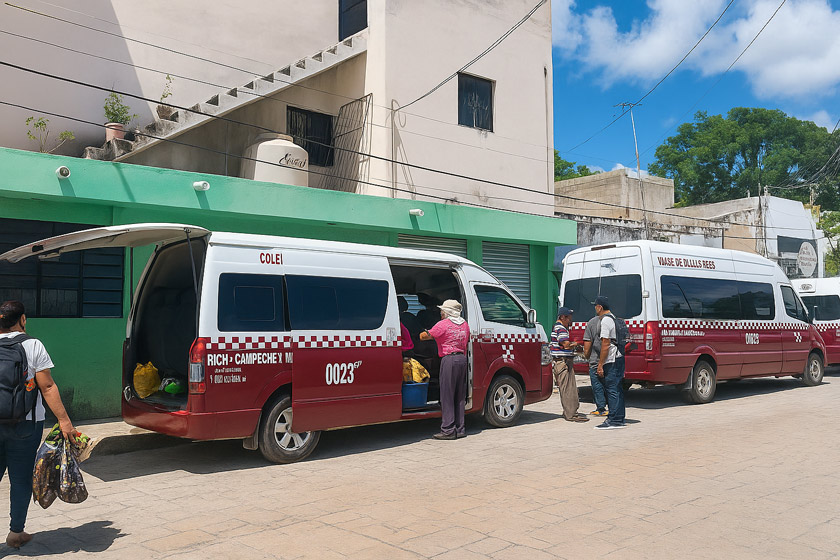
Collectivos: shared minibuses, ideal for short trips between cities or nearby sites, costing between 20 and 80 MXN ($1-5).
ADO: a long-distance bus company, comfortable and reliable for intercity travel. Convenient for traveling to major destinations and if you are staying in the city center of Playa del Carmen, Tulum, Bacalar, Valladolid, or Mérida. For hotels by the sea, you will need to take a taxi to reach them.
Maya Train: new tourist rail network connecting several major sites, fares starting at 303 MXN (≈ $20) for a short trip. Official website. More than 20 stations across the peninsula to Campeche and Palenque in Chiapas.
5. Where to stay in Yucatán on a budget?
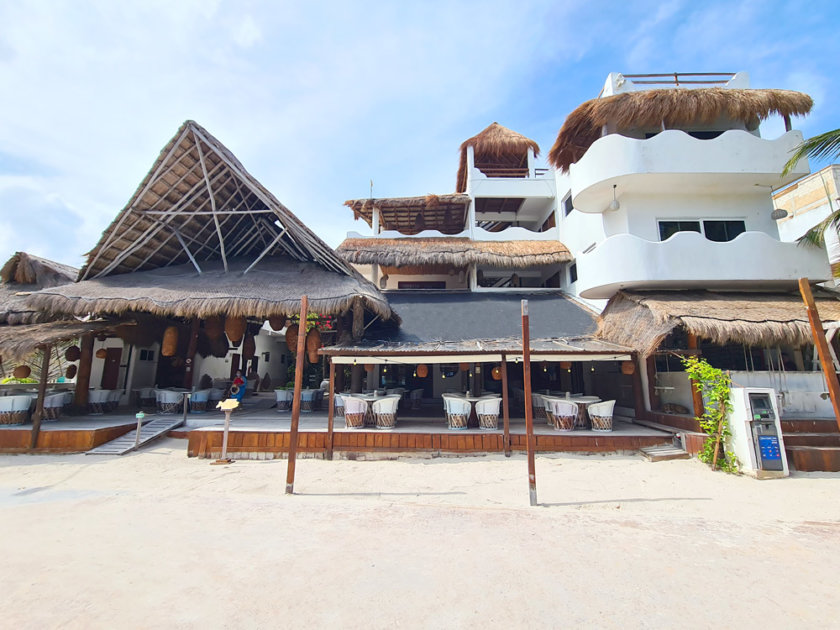
If you find accommodation in Cancún or Tulum too expensive, several towns in Yucatán offer more affordable options, while retaining their charm, authenticity, and easy access to the main tourist sites.
- Akumal: a quiet seaside town, ideal for snorkeling, known mainly as the destination for swimming with turtles in Mexico
- Mahahual: a peaceful coastal village, perfect for relaxing away from the crowds (often combined with Bacalar).
- Izamal: located between Valladolid and Mérida, it is nicknamed the “yellow city.”
- Puerto Morelos: a combination of beach and local charm, less touristy than its neighbors on the Riviera Maya (look towards the center, it’s much cheaper than the beach side!)
6. How to manage internet, communication, and payments on site?
Being well prepared in terms of communication and payment methods will save you many unexpected surprises in Yucatán. Here are the essentials for staying connected and managing your expenses without stress.
Staying connected: you can buy a local SIM card in OXXO stores or airports for between MXN 100 and 300 (≈ $6-17) for 10 to 30 days of data. You can also check your operator’s international plans (often around $35 for a month).
Cash withdrawals: use local banks to limit fees. Check with your bank about the conditions that apply abroad. When the ATM offers you a conversion rate, always refuse: your bank will generally apply a much more favorable rate.
Credit cards: accepted in many establishments, but inform your bank before you leave.
Tips: generally 10-15%, sometimes included in the bill, especially in tourist areas.
7. When is the best time to travel to Yucatán?
Choosing the right time to visit Yucatán allows you to save money and avoid the crowds while enjoying the tropical climate to the fullest.
- The low season (May to October) offers more affordable rates and fewer crowds. The showers, which are often short, do not spoil the stay.
- The high season (November to April) has dry, sunny weather, ideal for outdoor activities, but prices increase and sites are more crowded.
School holidays also cause prices to rise, so it’s best to plan around these periods to optimize your budget.
8. How much does it cost to enter the cenotes in Yucatán?
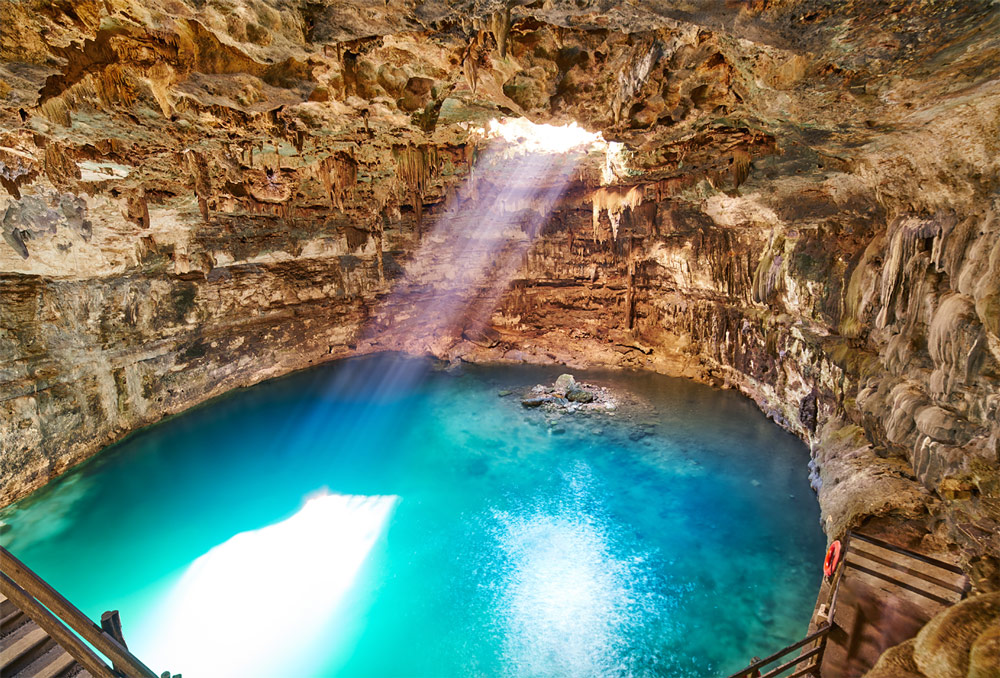
I’m always surprised by the price differences between the various cenotes in Yucatán! Some have become very expensive, while others, especially in the small villages of the state of Yucatán, remain very local and still affordable.
Here is an idea of the average costs to help you plan your budget.
- Entrance fee: 50–250 MXN (≈ $3–$15) depending on popularity.
- Life jacket/locker rental: 50–100 MXN (≈ $3–5)
Tip: choose a few less crowded cenotes to limit the cost and enjoy a quieter, more authentic experience.
9. What are the must-do activities in Yucatán?
Between nature, culture, and relaxation, Yucatán offers a range of activities that are not to be missed. Here is a balanced selection to help you discover the region from every angle.
Major ruins: Chichén Itzá, Cobá, Tulum, Ek Balam (where you can still climb the main pyramid), and Uxmal.
Cenotes: combine popular and less frequented sites, closed and open cenotes to vary the landscapes and experiences.
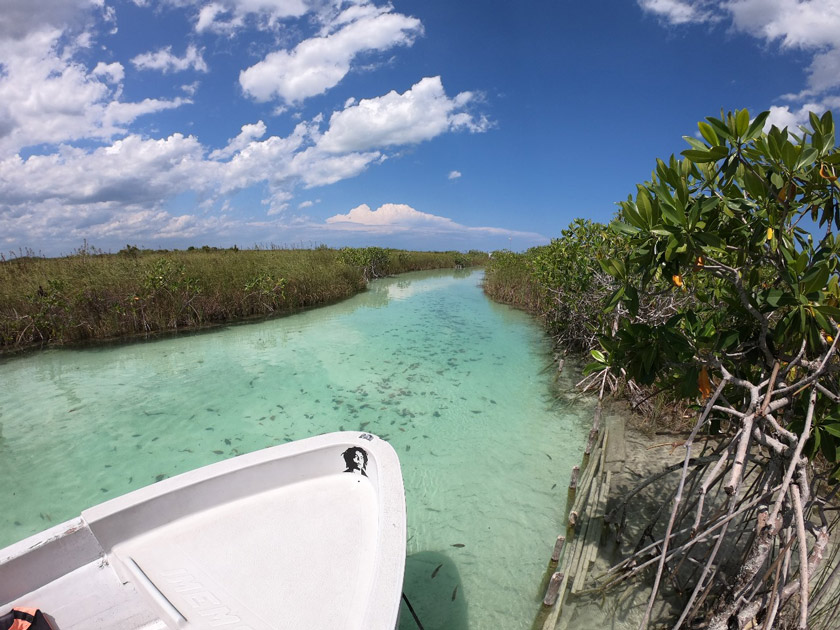
Nature outings: Bacalar Lagoon, Sian Ka’an Reserve, Yum Balam Reserve in Holbox, Punta Laguna, and several public beaches such as Playa Tortugas, Puerto Morelos, Coco Beach (Playa del Carmen) or Xpuha.
The islands: Cozumel, Isla Contoy, Isla Mujeres, and Holbox offer a paradise setting to enjoy the Caribbean.
10. How can you reduce your travel budget in the Yucatán without missing out?
A trip to the Yucatán doesn’t have to be expensive: with a few tips, it’s easy to enjoy the beaches, cenotes, and Mayan sites without breaking the bank.
- Alternate between independent visits and guided tours — some destinations even offer free walking tours.
- Prepare a small picnic before going to the beach (water, fruit, snacks) and avoid eating at expensive beach clubs.
- Book your accommodation and car rental in advance, especially during the high season.
- Travel during the low season, outside of school holidays, when prices are significantly lower.
- Compare last-minute hotel deals on Booking.com to take advantage of remaining availability.
- Use local transportation such as colectivos, which are inexpensive and widely used across the Yucatán Peninsula.
Want to rent a car in Mexico?
Renting a car in Mexico is one of the best ways to explore the country at your own pace, whether you’re traveling as a couple, with friends, or with family.
Mexico is a vast country, and having your own car makes it much easier to reach places that are difficult to access by public transportation.
However, finding a reliable car rental company in Mexico can sometimes be tricky, and many travelers end up facing unexpected fees or unpleasant surprises.
When I rent a car in Mexico, I personally use Booking.com Cars for several reasons:
- Easy price comparison: you can quickly compare offers from many rental agencies to find the best deal.
- Free cancellation in most cases: ideal if your travel plans change.
- Full insurance at a lower price: coverage is usually cheaper than what rental companies offer at the counter.
Click on the green button below to compare rental cars in Mexico and find the best price:
Find the best deals on flights to Mexico
To find the best price for your flight to Mexico, use our flight comparison tool powered by Skyscanner. It’s one of the easiest ways to compare airlines and quickly find cheap flights to Mexico or domestic flights within the country.
🚗 Rent a car
🗽 Book entrance tickets and guided visits
🏄 Book your sports activities
🌍 Take a travel insurance
🙎 Book a tour
✈️ Book your flight
You’re traveling in Mexico? These articles will help you!
Discover all my articles about Mexico: All my articles to help you plan your trip to Mexico are listed there.
- Yucatan Peninsula: Top 20 things to Do and See
- Riviera Maya: The 35 Epic Things to Do!
- Cancun: the 35 Best Things to Discover
- Playa del Carmen: Top 30 Things To Do and Must-See Attractions
- Tulum: 21 Best Things to Do + All My Best Tips!
- Mazatlan: The Best 31 Things to Do and Must-See Attractions!
- Isla Mujeres: 21 Best Things to Do!
- Cozumel: Top 15 Things To Do and Must-See Attractions
- Puerto Vallarta: Top 35 Things To Do and Must-See Attractions
- Itinerary: 10 days in Mexico – Mexico City, Chiapas and Yucatan
- Itinerary: 2 weeks in Mexico – Best itinerary to discover the Yucatan Peninsula and Chiapas!
- Itinerary: 3 weeks in Mexico – Mexico City, Puebla, Oaxaca, Chiapas, Campeche, Yucatán and Riviera Maya
- Itinerary: 1 month in Mexico – My Epic 30-31 Days Itinerary from Mexico City to Cancun
- Road trip in Mexico: The best itineraries for 10, 15, 21 days and a month
- Itinerary: 1 week in Yucatan – The Ultimate 6, 7 or 8 days Itinerary
- Itinerary: 10 days in Yucatan – Best Itinerary for 9, 10 or 11 Days in Yucatan
- Itinerary: 2 weeks in Yucatan – Epic Itinerary + All my Best Tips!
- Itinerary: 3 weeks in Yucatan – Best things to do in 20-21 days
- Itinerary: 1 month in Yucatan – Yucatan Peninsula in 29, 30 or 31 days from Cancun
- Road trip in Yucatan: The best itineraries for 7, 10, 15, 21 days and 1 month
You’re using Pinterest? Here is the picture to pin!