
Sargassum in the Riviera Maya and Cancun: Season, Beaches Affected and Best Places Without Seaweed
Are you planning a vacation in Mexico, in the beautiful Riviera Maya or Cancún, and wondering about sargassum?
You’re not alone. Many travelers ask the same question before booking their trip!
This brown seaweed, carried by ocean currents, sometimes washes up in large quantities on the beaches of the Mexican Caribbean, especially along the Riviera Maya. When it arrives, swimming can be less pleasant and the famous turquoise beaches may not look exactly like the photos.
But don’t worry: it doesn’t mean your trip to Mexico is ruined. There are still many ways to enjoy the region, from choosing beaches that are less affected by sargassum to visiting beautiful places like Bacalar, cenotes, and archaeological sites.
To help you plan your trip with confidence, I’ve prepared this complete guide to sargassum in Mexico: when it appears, which beaches are most affected, where you’re less likely to encounter it, and what to do if the sea has seaweed.
So, how can you enjoy Mexico without worrying about sargassum?
Sommaire
- Sargassum in the Riviera Maya and Cancun: Season, Beaches Affected and Best Places Without Seaweed
- 1. What is sargassum and why does it wash up in Mexico?
- 2. Sargassum season in Mexico: when and where is it found?
- 3. Where to go in Mexico to avoid sargassum in 2026
- 4. How are hotels and local authorities dealing with Sargassum in Mexico?
- 5. Practical advice before booking a trip to Mexico during the sargassum season
- 6. What to do in Mexico if the sea is full of Sargassum?
- Frequently asked questions: everything you need to know about sargassum in Mexico
- 1. When is sargassum season in Mexico?
- 2. Which beaches are usually affected in Cancún, Playa del Carmen, and Tulum?
- 3. Where can you find beaches with little or no sargassum?
- 4. Is the coast of Puerto Vallarta affected by sargassum?
- 5. Can you swim when there is sargassum? Is it dangerous?
- 6. Can you find hotels in Mexico with beaches without sargassum?
- 7. Do anti-sargassum nets and barriers really work?
- 8. Where can I follow the situation in (near) real time before I leave?
- Conclusion: should you cancel your trip to Mexico because of sargassum?
- Renting a car in Mexico
- Find the best deals on flights to Mexico
- You’re traveling in Mexico? These articles will help you!
1. What is sargassum and why does it wash up in Mexico?
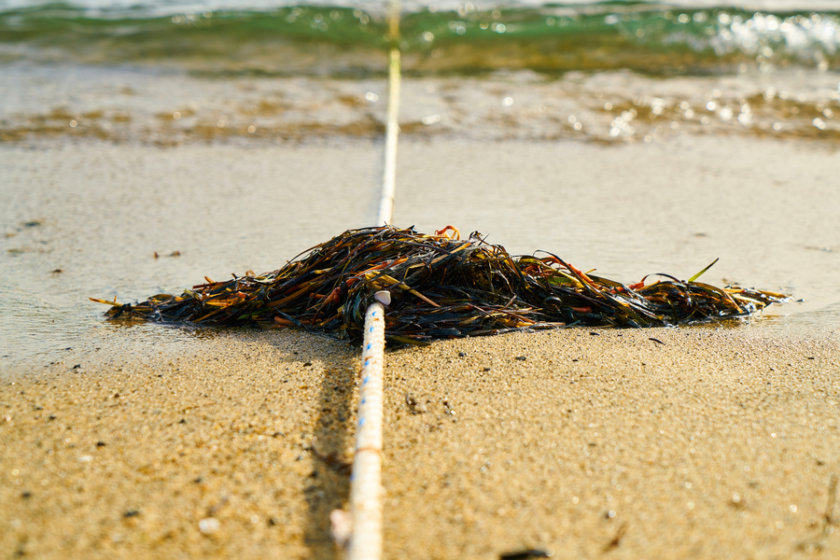
Sargassum is a type of brown seaweed that floats on the surface of the water. It is essential to the marine ecosystem as it provides shelter for fish, crustaceans, and turtles.
At sea, it forms huge patches visible on the surface, carried thousands of miles by Atlantic currents.
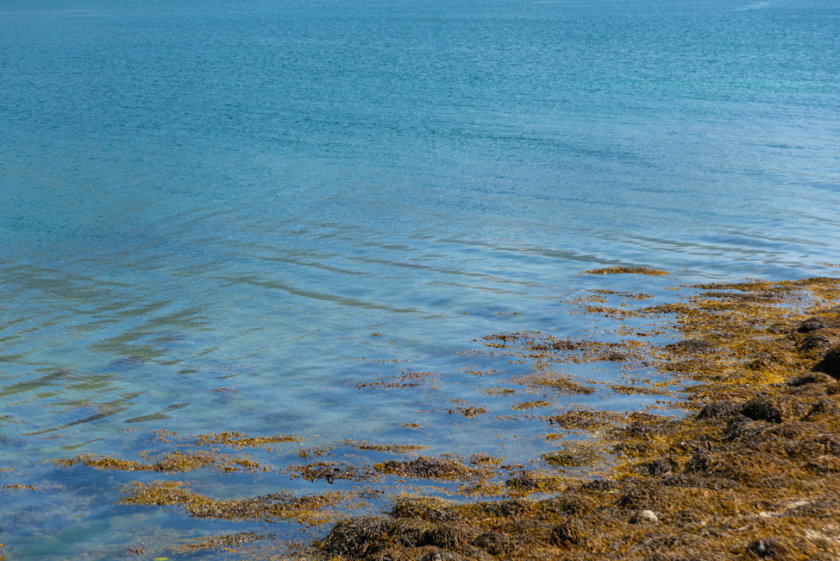
Pushed towards the coast of Quintana Roo, it sometimes washes up in Cancún, Playa del Carmen, or Tulum, giving off a sulfur smell as it decomposes and makes swimming or beach photos less enjoyable.
The phenomenon is seasonal and depends on wind, currents, and rainfall. It is generally more pronounced from May to October, when easterly winds favor their arrival.
Since 2011, the increase in sargassum has been linked to warmer waters, which accelerate its growth, also pollution from fertilizers and deforestation in the Amazon.
Rest assured: it is still possible to enjoy Mexico even during the sargassum season. By choosing the least affected areas or exploring other natural wonders such as Bacalar, the cenotes, or ecological reserves, your trip to Mexico will remain unforgettable.
2. Sargassum season in Mexico: when and where is it found?
2.1 Sargassum season
The seaweed generally appears between spring and fall, with a peak in summer (June to August).
- May to October: the most frequent period for strandings, particularly on the Caribbean coast.
- Winter (November to March): beaches are often spared, making this the best season to enjoy the turquoise sea.
2.2 Areas often affected (Caribbean coast)
The beaches most exposed to Sargassum in Mexico are those that open directly onto the Caribbean Sea.
This is particularly the case in Cancún (especially the hotel zone, which faces east towards the sea), Playa del Carmen (central beaches and the Playacar area) and Tulum (the entire coastline at the foot of the archaeological ruins).
These destinations, although magnificent, are the most vulnerable to massive arrivals of sargassum, especially between April and September.
2.3 Areas generally less affected by sargassum in Mexico
Fortunately, there are several alternatives, protected by their geographical location, such as:
- Isla Mujeres: the famous Playa Norte is often spared thanks to its protected orientation.
- Cozumel: choose beaches on the west and south sides, sheltered from currents (e.g., Playa Palancar, Playa El Cielo).
- Isla Contoy: a small paradise island north of Cancún, accessible only on day trips.
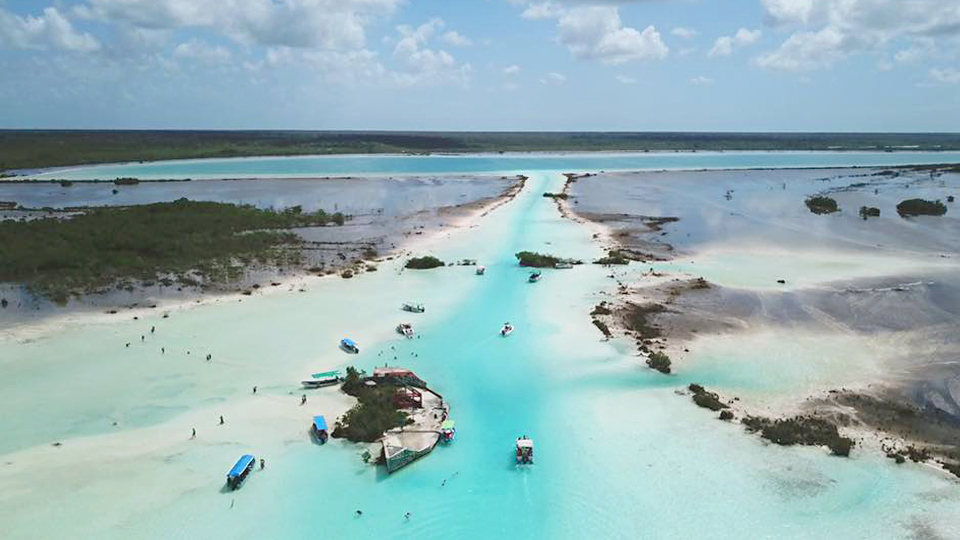
- Bacalar: the famous “7-color” lagoon, fed solely by freshwater sources, is completely spared from sargassum.
- Pacific Coast (Puerto Vallarta, Riviera Nayarit, Mazatlan, Huatulco, Los Cabos): completely clean, as the phenomenon only affects the Caribbean Sea and the Atlantic!
3. Where to go in Mexico to avoid sargassum in 2026
Although some beaches on the Riviera Maya are regularly affected, there are many places in Mexico where you can enjoy crystal-clear waters and idyllic surroundings.
Here are the best options for avoiding the problem, with a few ideas for excursions to enrich your stay.
3.1 The best sargassum-free destinations in the Riviera Maya
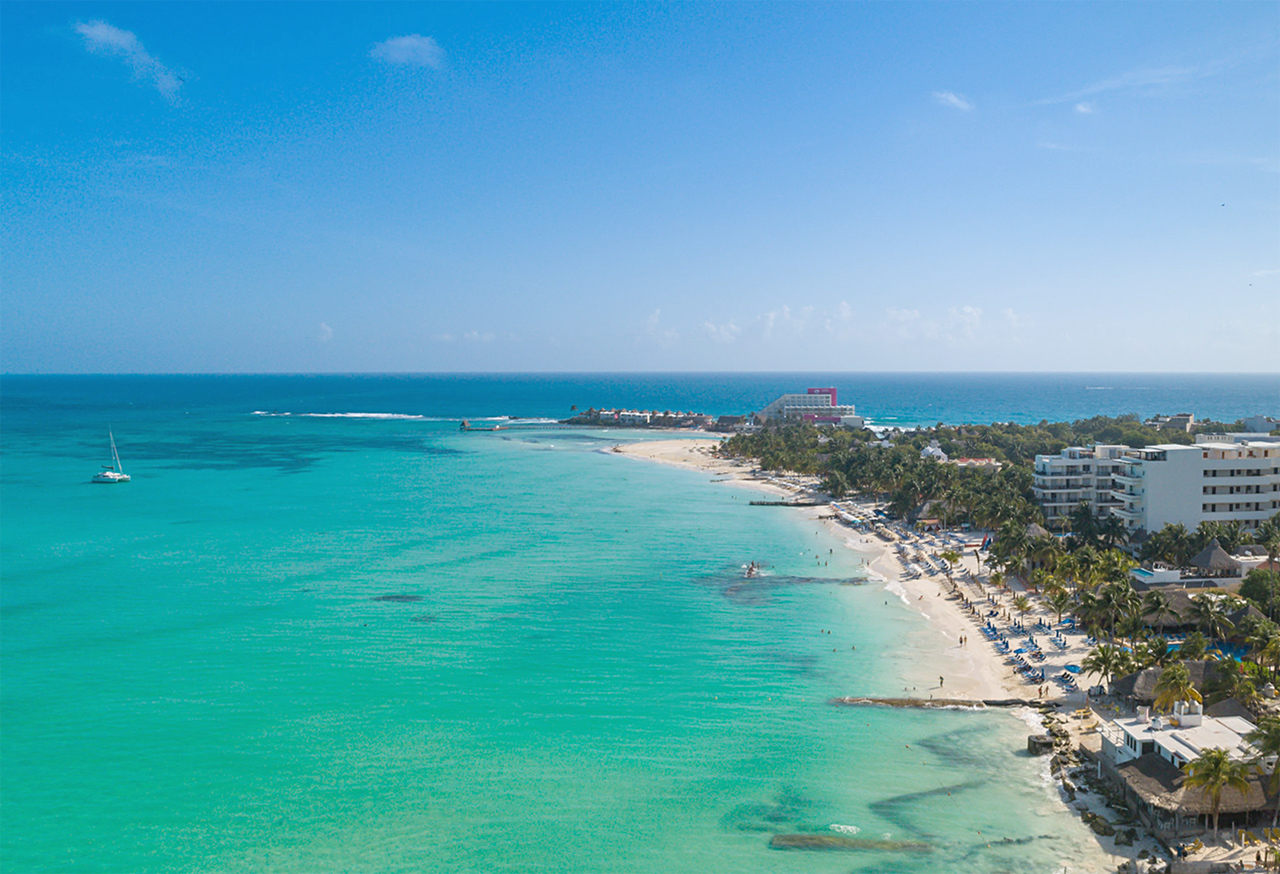
Isla Mujeres
Located just 20 minutes by boat from Cancún, Isla Mujeres is a sure bet.
Don’t miss Playa Norte, ranked among the most beautiful beaches in the world, which is often spared from sargassum.
The best excursions in Isla Mujeres
- All-inclusive tour to El Garrafon Park: round-trip ferry from Cancún, breakfast on board, buffet lunch, and open bar on the boat. Perfect for a relaxing day of snorkeling and panoramic views of the Caribbean Sea.
- Catamaran cruise with open bar and snorkeling: sailing from Cancún, stop for snorkeling, buffet lunch, and free time on the beautiful Playa Norte.
- Diving with whale sharks (June to September): a unique experience swimming alongside these peaceful giants, accompanied by a certified guide and equipment included.
Cozumel
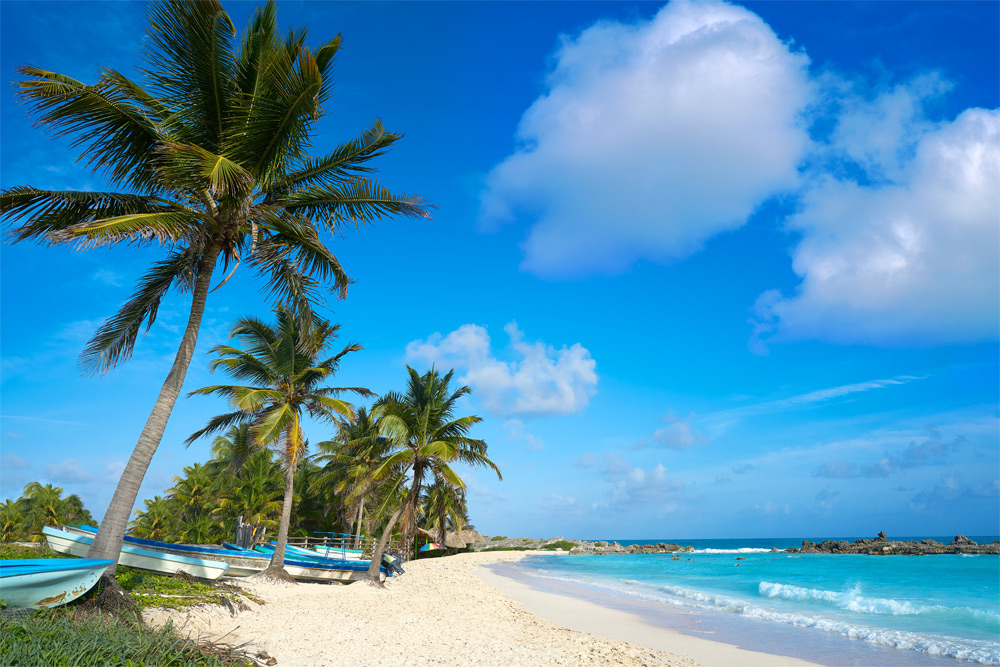
Accessible by ferry from Playa del Carmen, the island of Cozumel charms visitors with its quiet beaches and exceptional coral reef.
The best areas for swimming and snorkeling are on the west coast, notably Playa Palancar and Playa El Cielo, famous for its starfish.
The best things to do in Cozumel
- Chankanaab Park: a full day of relaxation and snorkeling in a protected marine park, with access to the beach, botanical gardens, and underwater sculptures.
- Three reef dive: explore Cozumel’s spectacular seabed on a glass-bottom boat trip, with snorkeling on three different reefs.
- Punta Sur Park: take a buggy ride through Cozumel’s most famous ecological reserve, between wild beaches, a lighthouse, and a crocodile lagoon.
- El Cielo with English-speaking guide: discover the famous sandbar with starfish and swim in turquoise waters with a passionate English-speaking guide.
- Atlantis Submarine: a unique experience to admire corals and tropical fish at a depth of over 30 meters without getting wet.
Isla Contoy
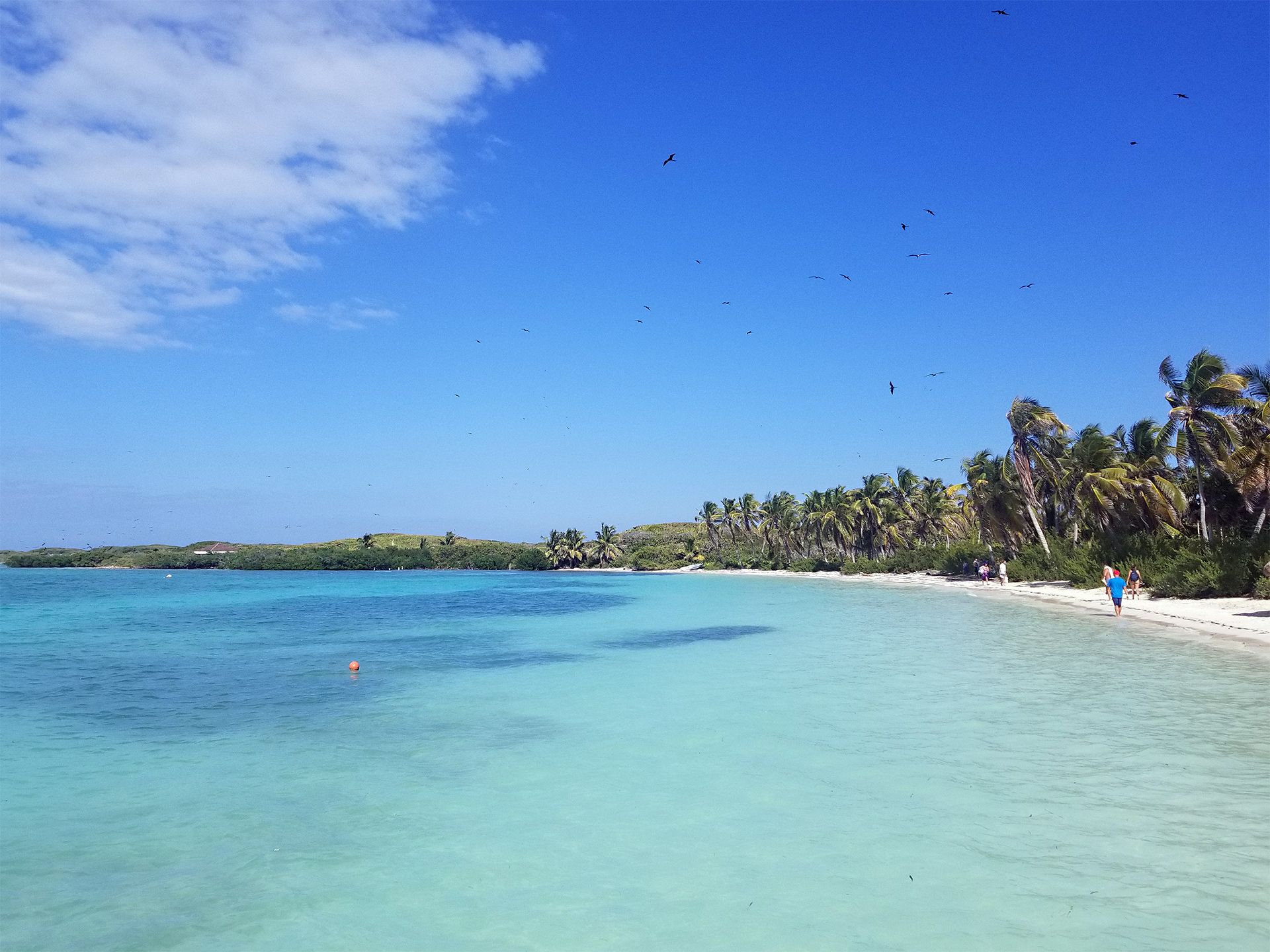
Located north of Cancún, Isla Contoy is a small protected island that can only be visited on a day trip.
Completely untouched by sargassum, it charms visitors with its unspoiled beaches and exceptional wildlife: birds, turtles, and tropical fish live in harmony here. It’s an ideal getaway for nature lovers and snorkelers in a wild and unspoiled setting.
Please note that access to Isla Contoy is strictly limited to 200 visitors per day. Places fill up quickly, so it is strongly recommended that you book your tour in advance to guarantee your visit to this natural paradise:
Bacalar
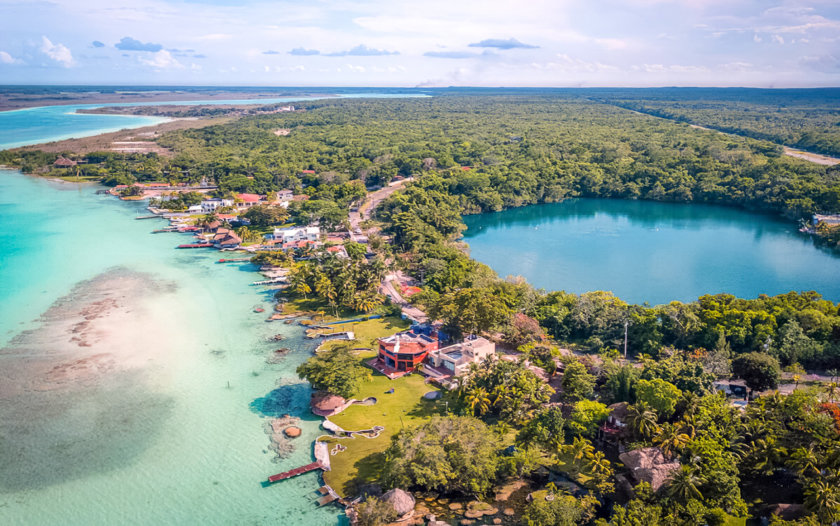
Bacalar Lagoon, nicknamed the “Lagoon of Seven Colors,” is a must-see destination if you want to avoid sargassum. Plus, the water is fresh and crystal clear!
I recommend booking this boat trip on the Lagoon of Seven Colors with an English-speaking guide:
3.2 Mexican destinations without sargassum (outside the Caribbean)
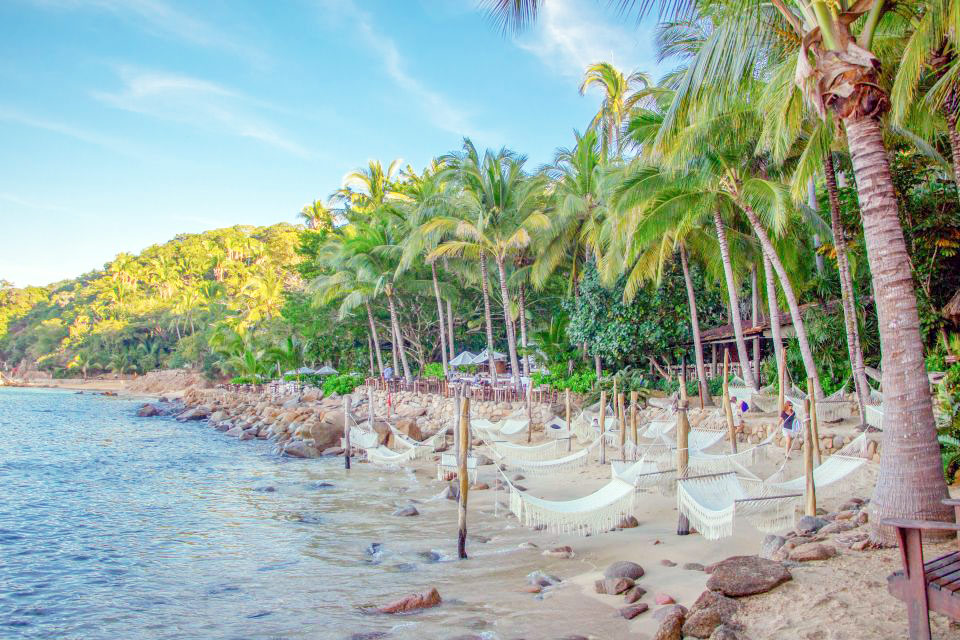
If you’re looking for beaches without sargassum in Mexico, head for the Pacific!
This region, bordered by the Pacific Ocean, is not affected by this natural phenomenon and offers a very different atmosphere from the Caribbean coast.
Puer to Vallarta and the Riviera Nayarit charm visitors with their lively atmosphere, golden beaches, spectacular sunsets, and friendly nightlife. It is the ideal destination for those who want to enjoy the sea while discovering a rich cultural and gastronomic scene.
Mazatlán, nicknamed the “Pearl of the Pacific,” perfectly combines colonial charm with long golden beaches lined with palm trees. Its colorful historic center, its several-miles-long Malecón, and its sunsets over the ocean make it a must-see for those seeking both culture and relaxation.
Huatulco, located on the coast of the state of Oaxaca, enchants with its wild coves, nine protected bays, and turquoise waters perfect for diving. Less crowded, this unspoiled region offers an exceptional natural setting for a peaceful stay, between jungle, sea, and local traditions.
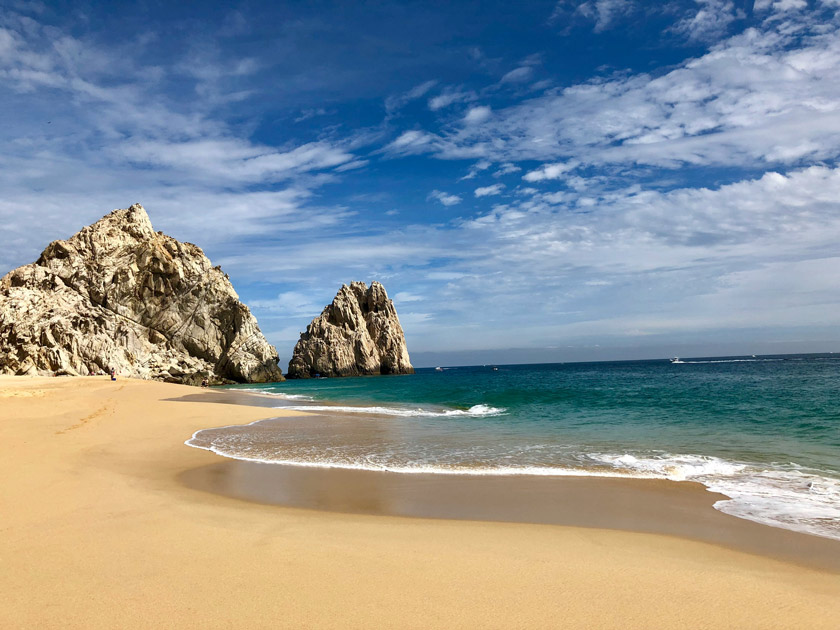
Baja California Sur captivates visitors with its desert landscapes contrasting with the crystal-clear waters of the Sea of Cortez. Around La Paz, you will find spectacular beaches such as Playa Balandra and Playa del Amor in Cabo San Lucas, true natural gems where swimming and snorkeling are pure bliss.
If you are planning a trip to Cancún, Playa del Carmen, Tulum, or the Riviera Maya, it is reassuring to know that hotels and municipalities are taking various measures to limit the impact of Sargassum on your travel experience. Here is what they are doing in concrete terms.
4.1 Immediate measures: cleaning and barriers at sea
Nets and floating barriers: Many hotels, such as the Moon Palace in Cancún, are installing barriers to intercept sargassum before it reaches the beach.
The Quintana Roo government has also deployed several miles of nets along the coastline to protect the main tourist areas.
Their effectiveness depends on the currents and the volume of seaweed—they reduce the phenomenon, but do not eliminate it completely!
Daily cleanup: Manual or mechanical collection of seaweed is carried out several times a day, especially during high season, to keep beaches clean and safe for swimming.
4.2 Sustainable solutions: recycling and recovery of Sargassum
Faced with the accumulation of sargassum, several local initiatives are transforming this seaweed into useful resources.
Some municipalities in Quintana Roo use it to produce organic compost, while companies such as Sargablock manufacture eco-friendly bricks from sargassum. Other projects are testing its conversion into bioenergy, thereby contributing to more sustainable management of the phenomenon and the creation of local jobs.
4.3 Communication and transparency before the stay
Many hotels now inform their guests about the condition of the beaches before their arrival: recent photos, videos, or messages via email, WhatsApp, or social media. This allows travelers to have a realistic view and adapt their plans.
5. Practical advice before booking a trip to Mexico during the sargassum season
To fully enjoy your vacation in Mexico despite the sargassum season, it is essential to prepare your stay carefully. Here is my practical advice for anticipating the phenomenon and organizing your activities without stress.
5.1 Check recent sargassum trends
- Riviera Maya News – daily updates on beaches and sargassum.
- Sargassum Monitoring – real-time interactive map of affected areas.
- Tulum Times – detailed monitoring of the situation in Tulum and the surrounding area.
- Beachday™ – regular updates on beaches and travel advice.
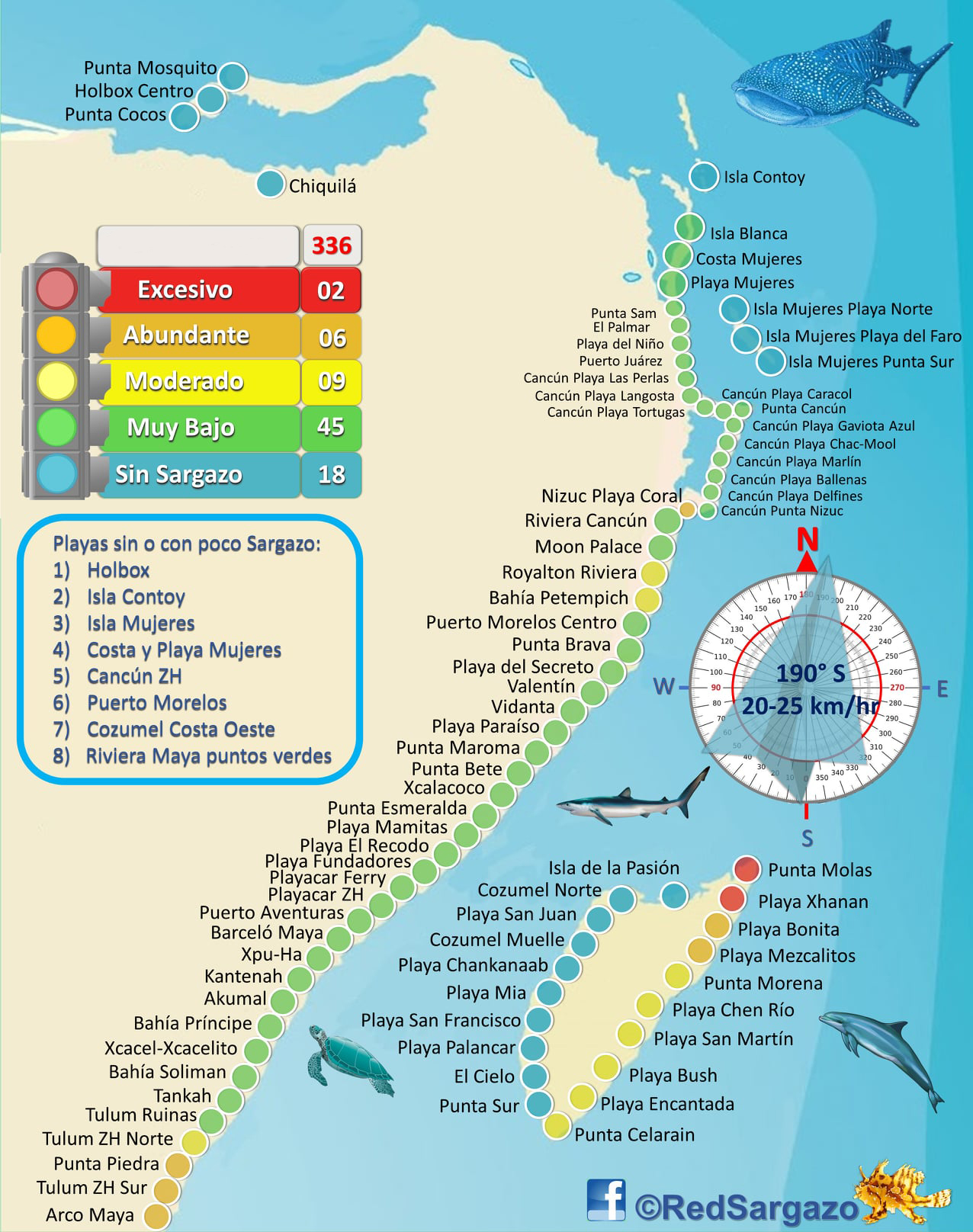
- Red Sargazo Facebook – real-time photos and information shared by the community.
- Instagram @sargassummonitoring – alerts and maps on sargassum arrivals.
5.2 Travel insurance and cancellation conditions
Although sargassum is a natural and unpredictable phenomenon, it is possible to reduce its impact on your trip by choosing suitable insurance and flexible accommodation. In the event of a large influx of seaweed, some excursions or swimming activities may be canceled, so it is best to be covered.
- Check that your travel insurance covers cancellations or changes related to weather and environmental conditions, such as sargassum.
- Choose hotels that offer flexible cancellation policies or the option to postpone your stay at no extra cost.
5.3 Choose the right hotel location
To fully enjoy your vacation in Yucatán without sargassum, it is essential to choose the right hotel location. The orientation of the coastline plays a key role: beaches facing east are more affected, while those facing west or north—such as Isla Mujeres or certain sheltered bays —are often spared.
Many resorts in the Riviera Maya have spacious swimming pools, kids’ clubs, spas, and activities that allow you to enjoy your stay even when the sea is temporarily unusable. Some establishments also have protected swimming areas with natural breakwaters, artificial pools, or pontoons.
Tip: always check the location of your hotel and choose quieter areas that are less exposed to winds and currents. Hotels located on islands or sheltered beaches generally have clearer water and no sargassum.
Discover my selection of recommended accommodations based on your destination:
- Best all-inclusive hotels in Playa del Carmen: ideal for a mix of beach, excursions, and relaxation inside modern resorts.
- Best all-inclusive hotels in Cancún: perfect for those who want to enjoy great facilities, entertainment, and swimming pools right in the hotel zone.
- Hotels in Playa del Carmen: family hotels with kids’ clubs and spas.
- Hotels in Tulum: boutique hotels with private pools and wellness retreats.
6. What to do in Mexico if the sea is full of Sargassum?
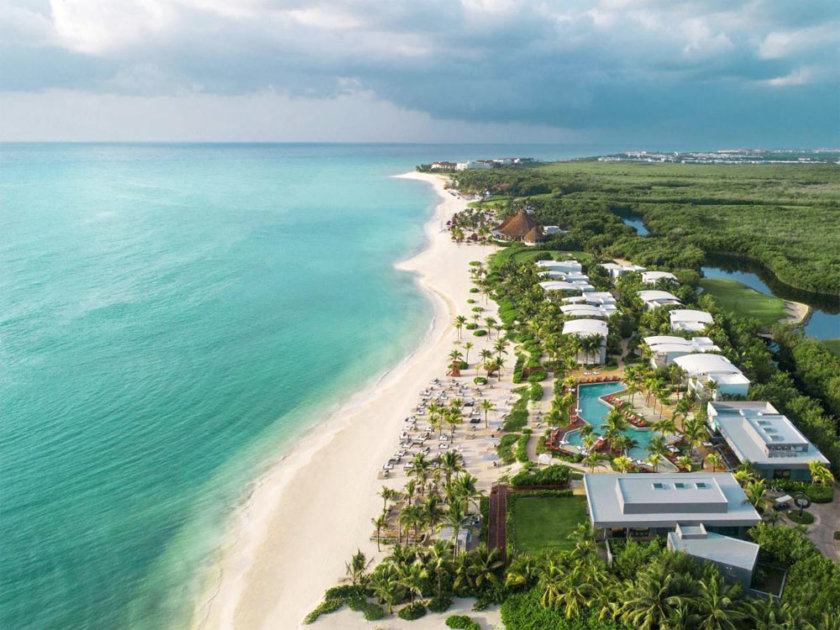
The country offers many Sargassum-free activities: swimming in cenotes, cultural visits, nature excursions, and local discoveries to make the most of your trip.
6.1 Explore the cenotes: an ideal alternative to beaches
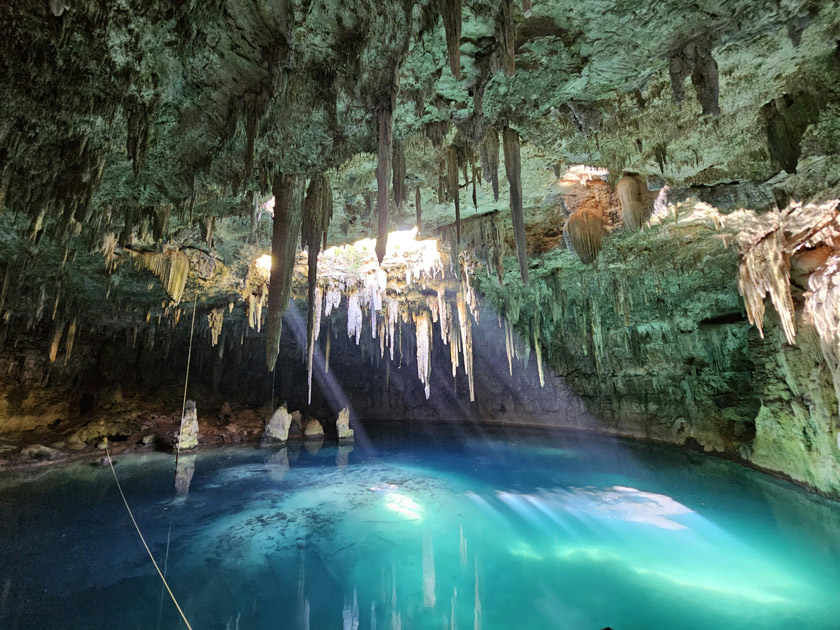
Cenotes (natural freshwater wells) are completely free of sargassum and are an unmissable experience during a trip to Mexico. You can swim, snorkel, or even dive in crystal-clear waters surrounded by spectacular rock formations.
Check out my practical guides to choosing the best cenotes for your destination:
- Cenotes around Playa del Carmen: perfect for a refreshing swim just a few minutes from the city.
- The most beautiful cenotes near Cancún: easy to access for a day trip.
- Cenote diving in Tulum: a unique experience for diving enthusiasts, especially in the famous Dos Ojos and Gran Cenote.
- Visit the Dos Ojos cenote: one of the most impressive in the Riviera Maya, ideal for snorkeling or diving.
6.2 Chichén Itzá: one of the 7 new wonders of the world
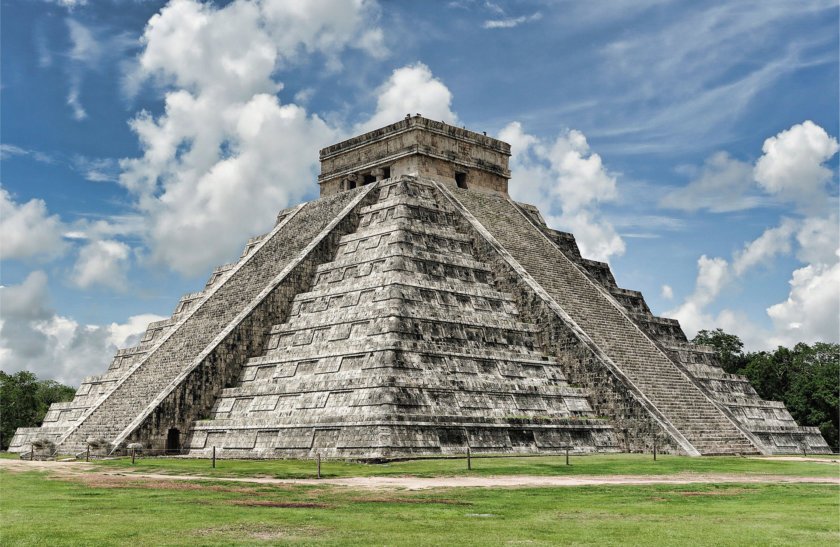
A must-see during any trip to Mexico, Chichén Itzá is undoubtedly the most famous archaeological site on the Yucatán Peninsula. Listed as a UNESCO World Heritage Site and voted one of the 7 new wonders of the world, it impresses with the scale and beauty of its buildings.
Its iconic monument is the Pyramid of Kukulcán, also known as El Castillo.
This step pyramid is particularly famous for the light phenomenon that occurs there during the equinoxes: the shadow of its steps forms the image of a feathered serpent descending the ramp, a fascinating spectacle that reminds us of the importance of astronomy to the Mayan civilization.
The site is also home to the Great Ball Court, the largest ever discovered in the Mayan world, where sporting and religious rituals of great importance were once held.
6.3 Tulum: ruins with a view of the Caribbean Sea
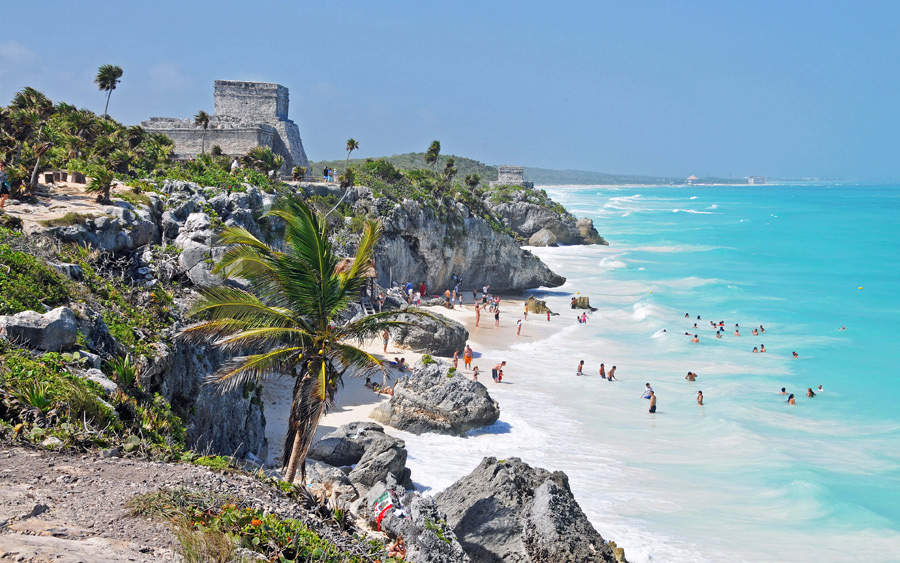
Located on a cliff facing the Caribbean Sea, Tulum captivates visitors with its spectacular setting, unique in the Mayan world.
Its ruins, surrounded by walls, reveal a site that was both defensive and ceremonial. Highlights include the Templo del Dios del Viento (Temple of the Wind God) and, above all, El Castillo, which overlooks the ocean and offers breathtaking views.
Even though the surrounding beaches can sometimes be affected by sargassum, the beauty of the panorama remains intact and makes Tulum a must-see destination on the Riviera Maya.
To make the most of it, I suggest this tour to Tulum with pick-up at your hotel, which includes the ruins and swimming in two cenotes:
6.4 The site of Cobá
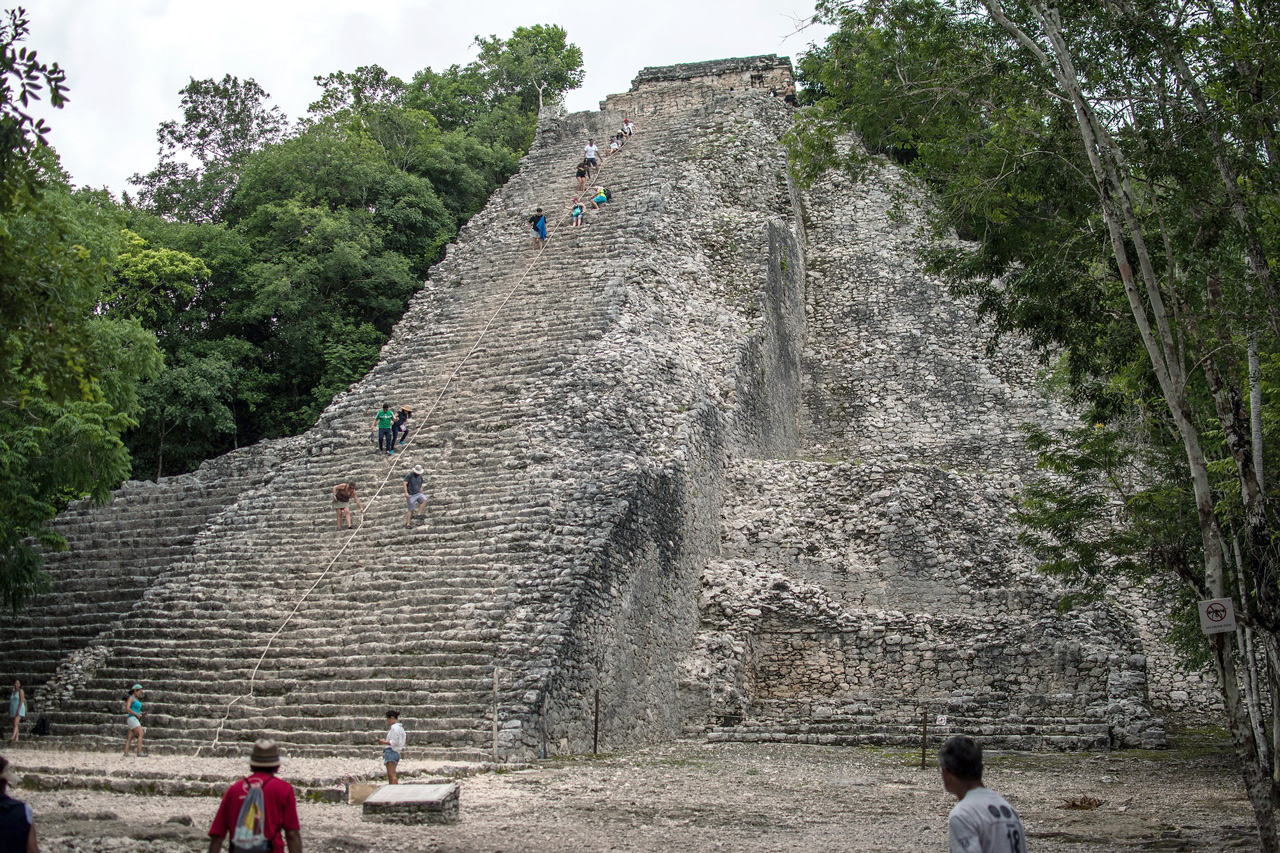
Deep in the Quintana Roo jungle and located 50 minutes from Tulum, Cobá offers a wilder and more authentic atmosphere than the coastal sites. Its ruins, connected by ancient Mayan paths called sacbeob, can be explored on foot, but also by bike (rented on site) or in a small tuk-tuk driven by a local guide.
The site is best known for its main pyramid, Nohoch Mul, one of the highest on the peninsula, which towers above the canopy.
Although climbing is no longer allowed, the site is an impressive visit that gives an idea of the splendor of the ancient Mayan city now buried in vegetation.
6.5 Ek Balam
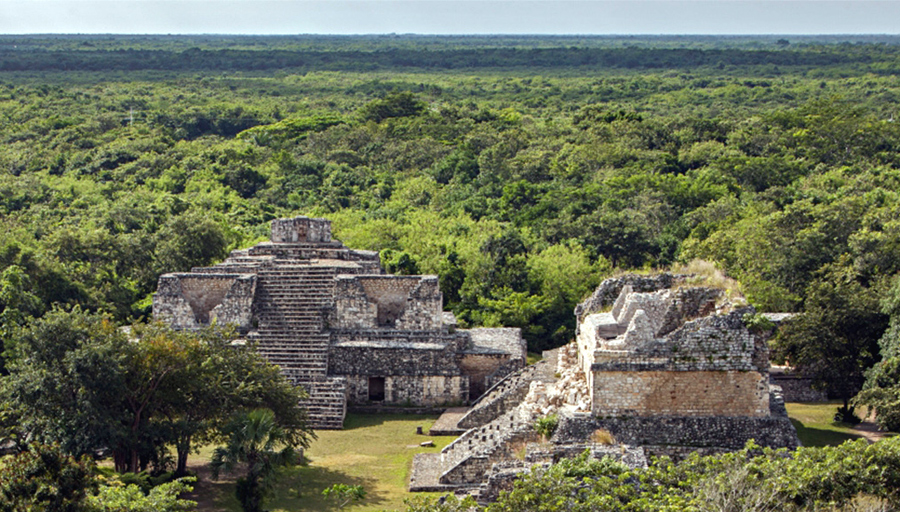
Less crowded than Chichén Itzá or Tulum, Ek’ Balam is a spectacular site that charms visitors with its more intimate atmosphere and impressive architecture. Its large pyramid, the Acropolis, is particularly remarkable, adorned with finely crafted sculptures.
Unlike other sites in the region, it is still possible to climb to the top of the main pyramid, offering breathtaking views of the surrounding jungle.
6.6 Uxmal
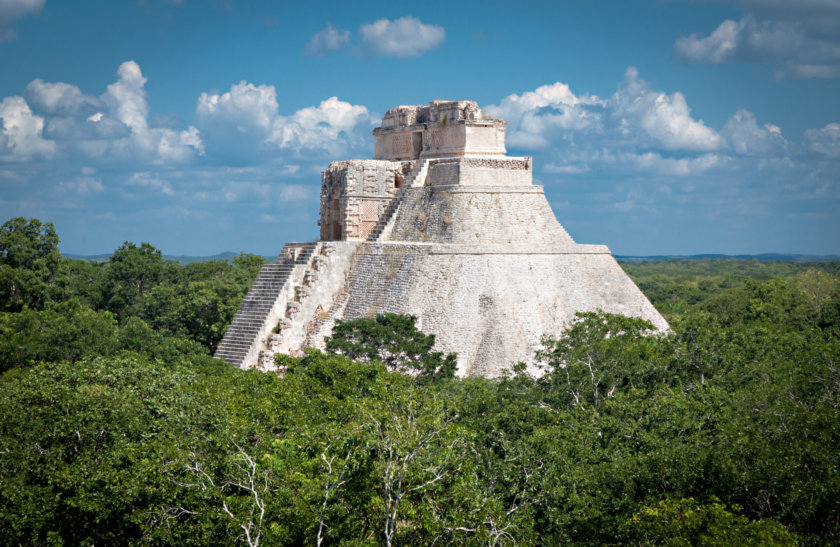
A little further west, in the state of Yucatan, lies Uxmal, a jewel of Puuc architecture. Here, the buildings are distinguished by their facades richly decorated with geometric patterns and divine representations. Not very touristy, the site is ideal for those who want to discover an exceptional Mayan heritage far from the crowds.
6.7 Sian Ka’an (UNESCO)
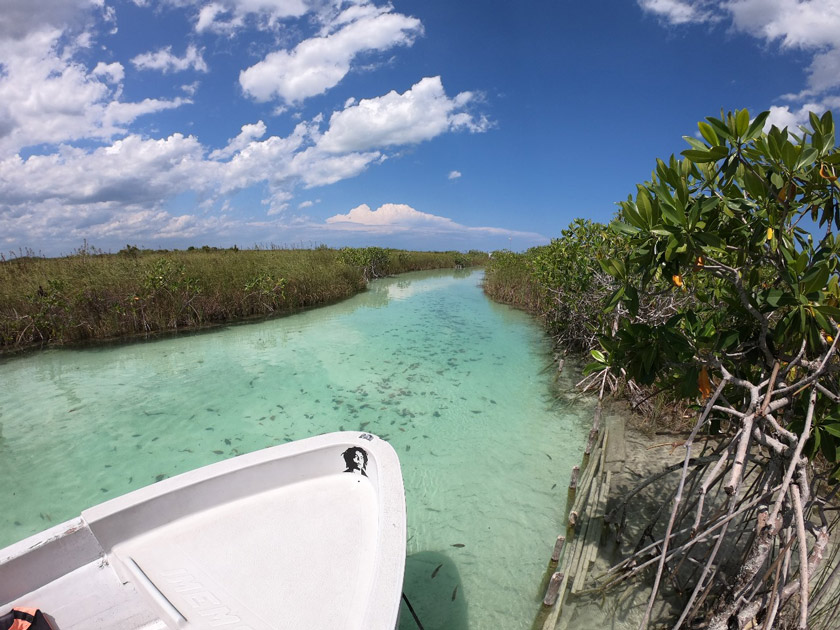
Sian Ka’an is one of Mexico’s most beautiful nature reserves, listed as a World Heritage Site for its exceptional biodiversity. Among lagoons, mangroves, and coral reefs, you can see dolphins, turtles, and tropical birds on small boat excursions accompanied by local guides.
The two main access points are Muyil, in the north, known for its Mayan canals and peaceful lagoons, and Punta Allen, in the south, which is wilder and more isolated, ideal for those seeking unspoiled nature far from mass tourism.
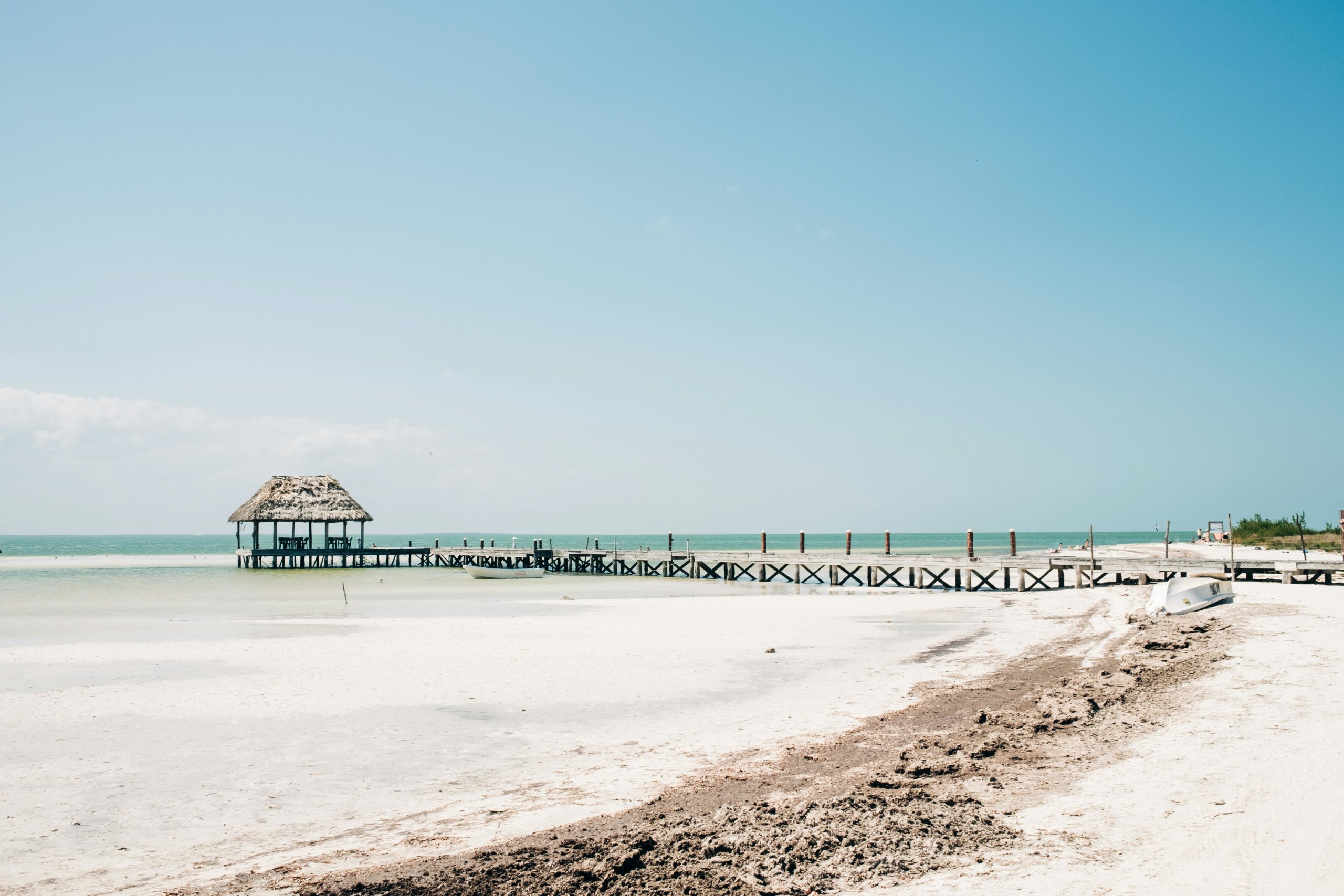
6.8 Isla Holbox
A true natural paradise, Isla Holbox is renowned for its pristine beaches, lagoons, and peaceful atmosphere, far from the hustle and bustle of Cancún or Playa del Carmen.
It is a privileged place for observing flamingos, but also for enjoying a unique experience: swimming with whale sharks (in season, from June to September). The island is part of the Yum Balam reserve, ensuring the preservation of its landscapes and exceptional wildlife.
The boat trip around Holbox allows you to discover three iconic sites: Isla Pájaros (a protected bird sanctuary), the Yalahau cenote (with its rejuvenating waters), and Isla Pasión (with its deserted beaches).
6.9 Other activities
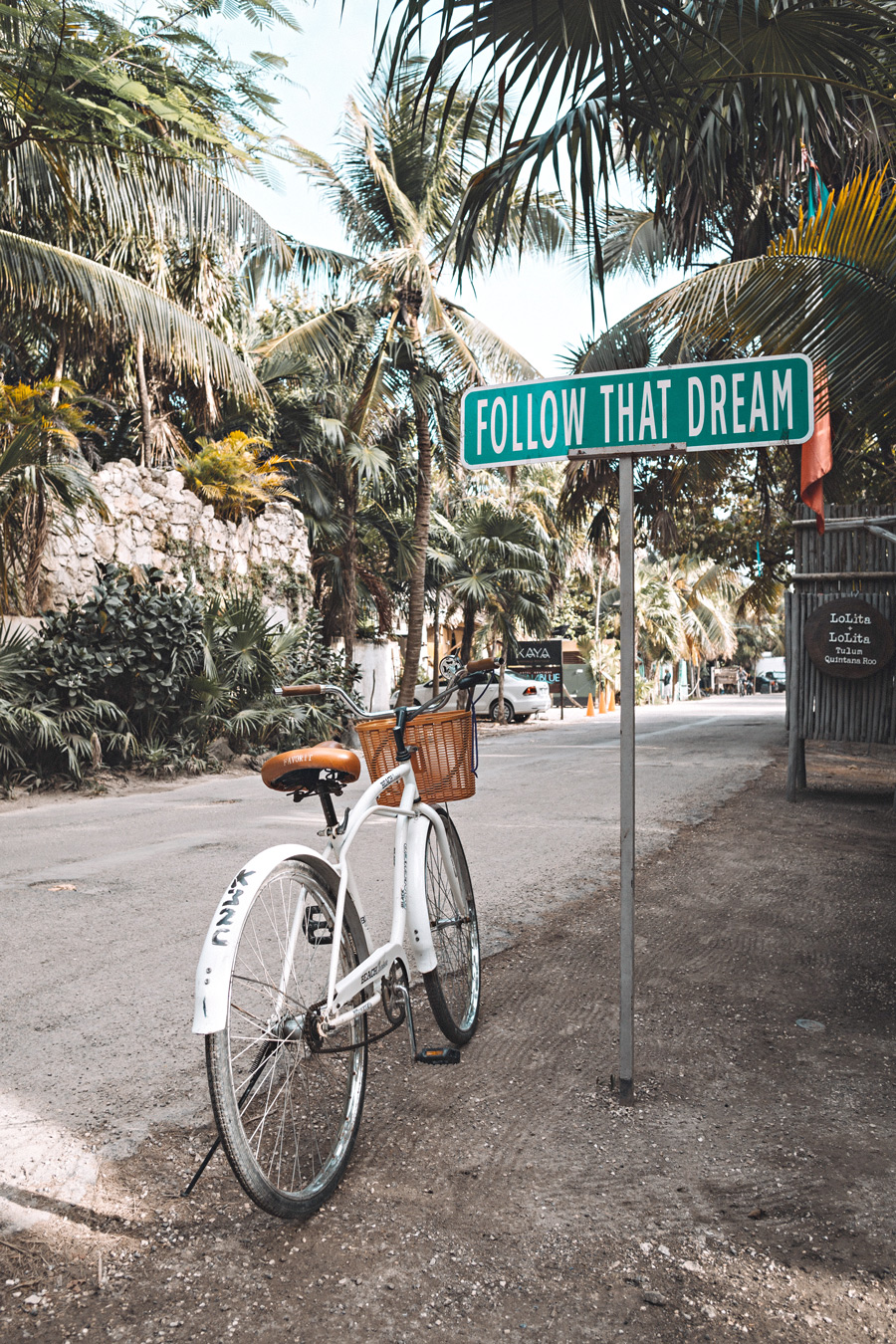
Bike tour of the cenotes in Tulum: this bike ride is one of the best activities to do in Tulum without sargassum!
It will allow you to discover the cenotes of Tulum accessible along the route and enjoy nature while swimming in crystal clear waters.
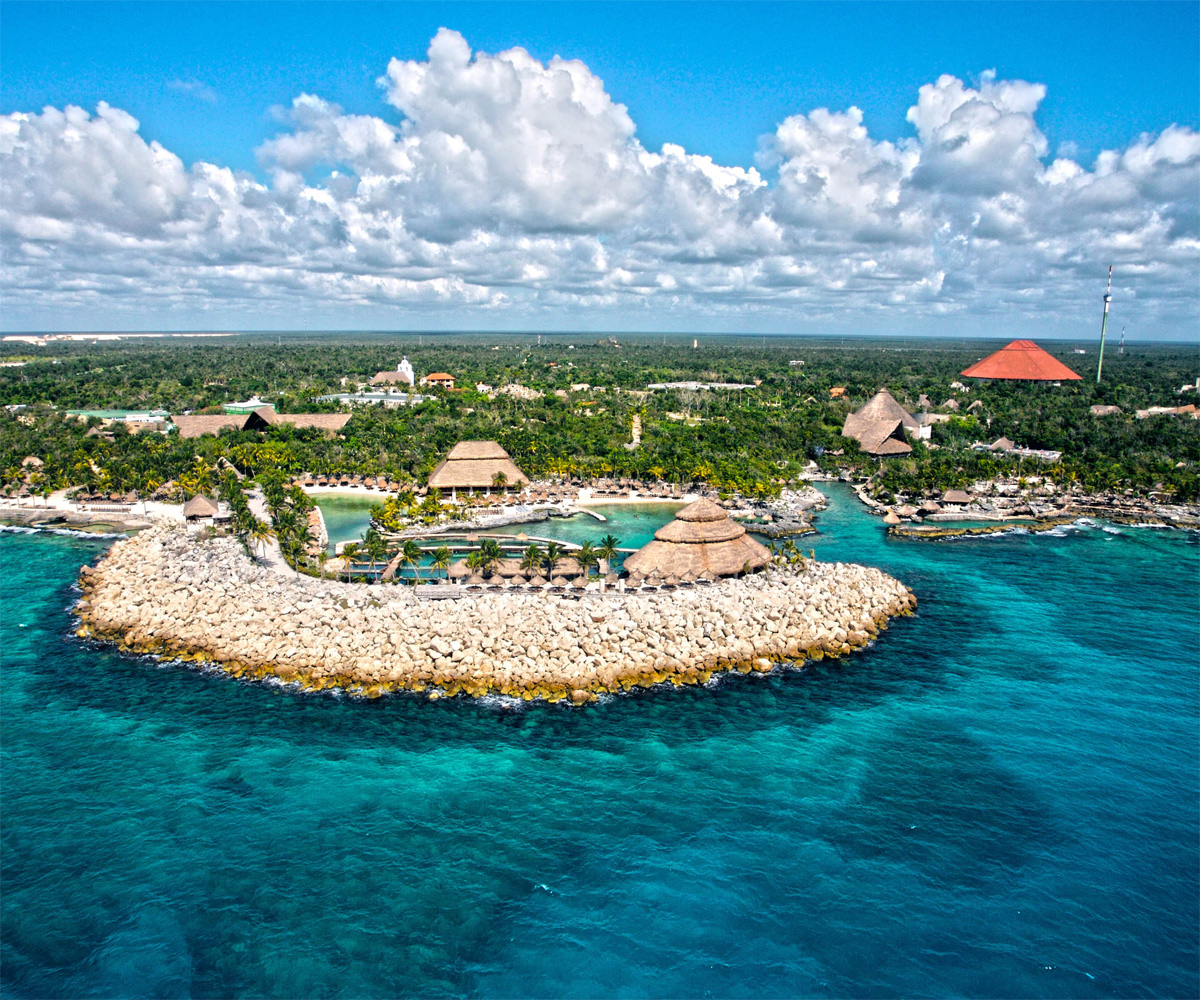
Adventure and theme parks: For a day full of thrills, Xcaret and Xplor parks offer total immersion in Mexican nature and culture.
Ziplines, underground rivers, snorkeling, and cultural shows guarantee a rich and fun day, perfect for families and adventure seekers!
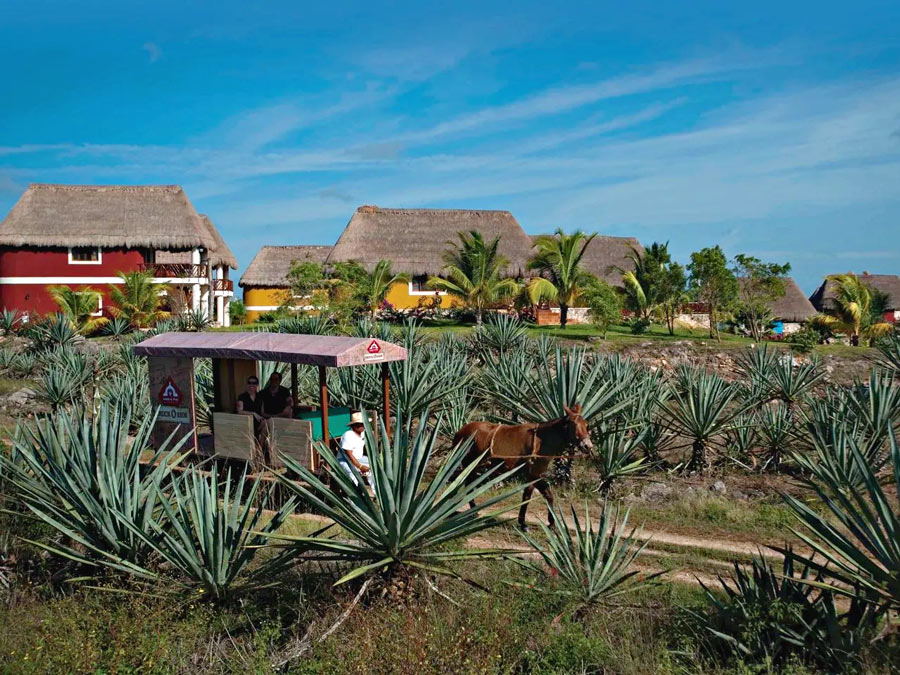
Visit the Sotuta de Peón hacienda in Mérida: discover a traditional hacienda where you can see the plantations, watch craft demonstrations, and taste local products like mezcal.
Frequently asked questions: everything you need to know about sargassum in Mexico
Want to know when, where, and how to avoid sargassum in Mexico, but don’t have time to read the whole article? Here are the answers to the most frequently asked questions so you can plan your trip with peace of mind.
1. When is sargassum season in Mexico?
Sargassum generally appears from May to October, with a peak in summer (June to August) on the Caribbean coast of Quintana Roo (Cancún, Playa del Carmen, Tulum).
In winter (November to March), the beaches are oftenly spared.
2. Which beaches are usually affected in Cancún, Playa del Carmen, and Tulum?
- Cancún: mainly the hotel zone, on the east side facing the sea.
- Playa del Carmen: central beaches and Playacar.
- Tulum: all beaches open on the sea side.
3. Where can you find beaches with little or no sargassum?
- Caribbean: Isla Mujeres (Playa Norte), Cozumel (west/south sides), Isla Contoy.
- Freshwater/lagoons: Bacalar, completely untouched.
- Pacific: Puerto Vallarta, Riviera Nayarit, Huatulco, Mazatlan, Baja California Sur
4. Is the coast of Puerto Vallarta affected by sargassum?
No, the Pacific coast is completely unaffected by the phenomenon. Sargassum only falls upon the Caribbean Sea and the Atlantic Ocean.
5. Can you swim when there is sargassum? Is it dangerous?
Swimming is not dangerous, but it can be unpleasant: strong smell, sticky seaweed, and murky water.
6. Can you find hotels in Mexico with beaches without sargassum?
Yes, it is entirely possible to find hotels with beaches without sargassum in Mexico, provided you choose areas that are not exposed to the currents that carry this seaweed.
However, in at-risk areas such as Tulum, Playa del Carmen, or Cancún, no hotel can offer an absolute guarantee, as this is a natural phenomenon beyond their control.
However, many establishments install nets or floating barriers to limit its arrival and clean their beaches every morning to keep them safe for swimming.
7. Do anti-sargassum nets and barriers really work?
Yes, but with limitations: they depend on the strength of the currents and the volume of seaweed, it can require additional manual cleaning.
8. Where can I follow the situation in (near) real time before I leave?
Before you leave, take a few minutes to check the sargassum situation: several websites and accounts share reliable information about Mexico’s beaches every day. Thanks to these local sources, you’ll know in near real time which areas are affected… or spared!
- Riviera Maya News – daily updates on beaches and sargassum.
- Sargassum Monitoring – interactive real-time map of affected areas.
- Tulum Times – detailed monitoring of the situation in Tulum and the surrounding area.
- Beachday™ – regular updates on beaches and travel advice.
- Red Sargazo Facebook – real-time photos and information shared by the community.
- Instagram @sargassummonitoring – alerts and maps on sargassum arrivals.
Conclusion: should you cancel your trip to Mexico because of sargassum?
Absolutely not! Mexico remains an exceptional destination all year round, even during the sargassum season.
By choosing the right areas such as Isla Mujeres, Cozumel, Bacalar, or the Pacific coast, you can enjoy beautiful beaches and crystal-clear waters, far from the seaweed.
Hotels and local authorities are taking active measures: floating barriers, daily cleaning, and ecological reuse of the seaweed.
And even if the sea is full of seaweed, Mexico offers a thousand other wonders: cenotes, lagoons, jungles, colonial villages, and Mayan sites guarantee an exciting and exotic trip.
Before you leave, check the sargassum situation in Mexico via Red Sargazo or Sargassum Monitoring to choose the best time to visit and the beaches least affected.
With a little forward planning, you can enjoy an unforgettable trip to Mexico, free from sargassum and stress.
Renting a car in Mexico
Many travelers choose to rent a car to visit Mexico, and they are right to do so! It allows you to travel at your own pace, explore less touristy places, and enjoy complete freedom in your schedule and itinerary.
But as you probably know, finding a reliable car rental agency in Mexico can be complicated: between hidden fees and frequent scams, it’s best to choose your partner carefully.
To rent a car, personally, I always use Booking.com Cars, for a few reasons:
- You can easily compare the rental cars prices between all the agencies: for sure the easiest way to find the best rate!
- Cancellation is often offered free of charge: no need to worry if you change your mind
- Booking Cars offers full insurance coverage at a lower price than the rental companies, so it’s an instant saving with no effort
Simply click on the green button to find your rental car at the best price:
Find the best deals on flights to Mexico
To get the best price on your flight, use our Mexico flight comparison tool powered by Skyscanner — the easiest way to find cheap flights both within Mexico and abroad.
🚗 Rent a car
🗽 Book entrance tickets and guided visits
🏄 Book your sports activities
🌍 Take a travel insurance
🙎 Book a tour
✈️ Book your flight
You’re traveling in Mexico? These articles will help you!
Discover all my articles about Mexico: All my articles to help you plan your trip to Mexico are listed there.
- Yucatan Peninsula: Top 20 things to Do and See
- Riviera Maya: The 35 Epic Things to Do!
- Cancun: the 35 Best Things to Discover
- Playa del Carmen: Top 30 Things To Do and Must-See Attractions
- Tulum: 21 Best Things to Do + All My Best Tips!
- Mazatlan: The Best 31 Things to Do and Must-See Attractions!
- Isla Mujeres: 21 Best Things to Do!
- Cozumel: Top 15 Things To Do and Must-See Attractions
- Puerto Vallarta: Top 35 Things To Do and Must-See Attractions
- Itinerary: 10 days in Mexico – Mexico City, Chiapas and Yucatan
- Itinerary: 2 weeks in Mexico – Best itinerary to discover the Yucatan Peninsula and Chiapas!
- Itinerary: 3 weeks in Mexico – Mexico City, Puebla, Oaxaca, Chiapas, Campeche, Yucatán and Riviera Maya
- Itinerary: 1 month in Mexico – My Epic 30-31 Days Itinerary from Mexico City to Cancun
- Road trip in Mexico: The best itineraries for 10, 15, 21 days and a month
- Itinerary: 1 week in Yucatan – The Ultimate 6, 7 or 8 days Itinerary
- Itinerary: 10 days in Yucatan – Best Itinerary for 9, 10 or 11 Days in Yucatan
- Itinerary: 2 weeks in Yucatan – Epic Itinerary + All my Best Tips!
- Itinerary: 3 weeks in Yucatan – Best things to do in 20-21 days
- Itinerary: 1 month in Yucatan – Yucatan Peninsula in 29, 30 or 31 days from Cancun
- Road trip in Yucatan: The best itineraries for 7, 10, 15, 21 days and 1 month
You’re using Pinterest? Here is the picture to pin!