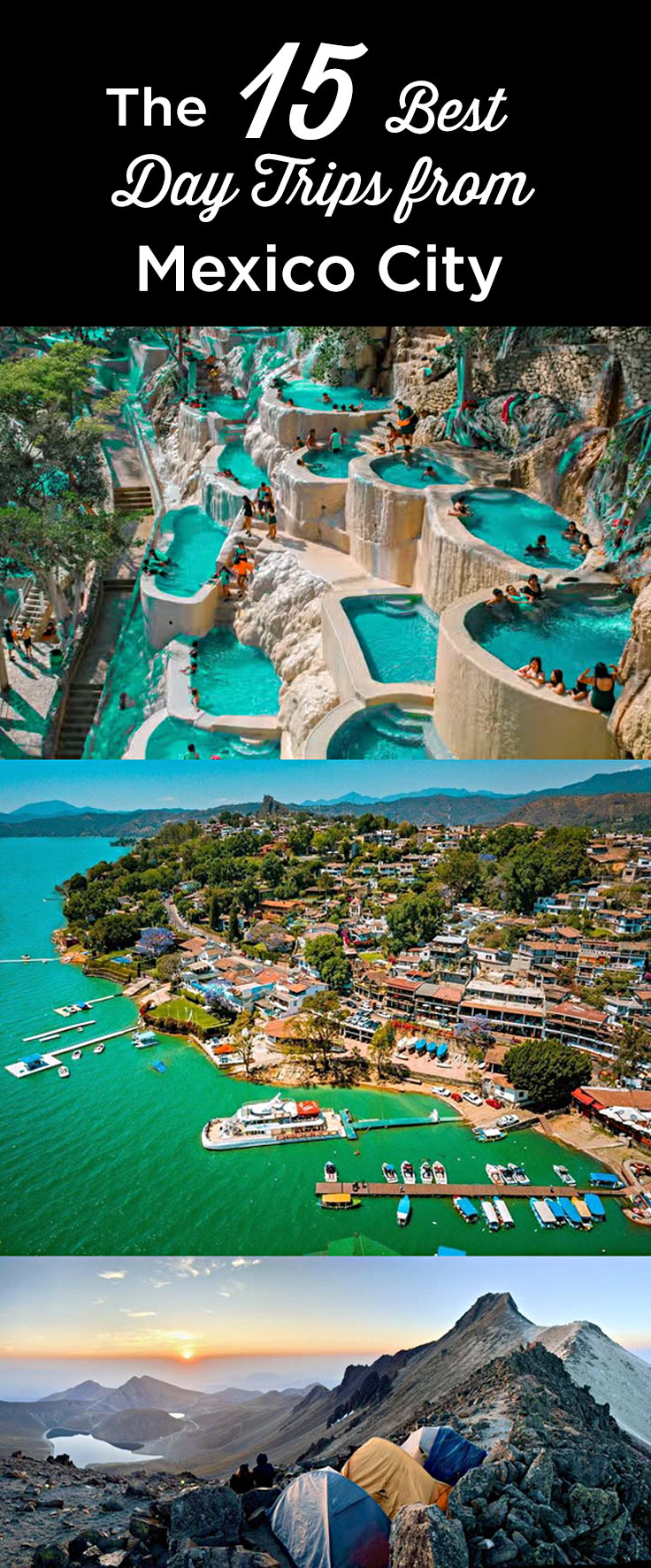

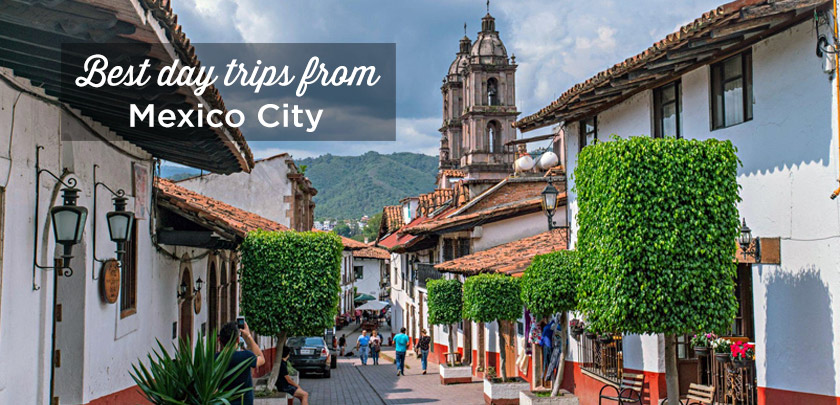
The 15 Best Day Trips from Mexico City
Want to explore the surrounding area during your stay in Mexico City?
Great idea!
As well as being a fascinating capital, Mexico City is also an excellent base for discovering some of the most interesting places in central Mexico. In just a few hours, you can reach major archaeological sites, colonial towns, mountains, forests, hot springs, and even volcanoes.
Whether you want to visit Teotihuacán, wander around Puebla or Taxco, cruise through the canals of Xochimilco, or go hiking in places like Nevado de Toluca or La Malinche, there are plenty of great options for a day trip from Mexico City.
In this guide, I share the best day trips from Mexico City, with practical information on how to get there, the places that are really worth your time, and my personal recommendations to help you choose the right outing.
What are the best excursions from Mexico City? Which ones can you do without a car? And which day trips are most worth it if you have limited time?
Here are my favorite ideas for exploring around Mexico City.
Sommaire
- The 15 Best Day Trips from Mexico City
- The best excursions from Mexico City
- 1. Teotihuacán, the city of the gods
- 2. Dawn on the chinampas of Xochimilco
- 3. Puebla and Cholula, between volcanoes and gastronomy
- 4. Grutas de Tolantongo, a thermal paradise
- 5. San Miguel de Allende, the colonial jewel
- 6. Taxco, the city of silver
- 7. Nevado de Toluca, between lagoons and volcano
- 8. La Malinche, forest and volcanic panoramas
- 9. Tepoztlán, energy and traditions
- 10. Valle de Bravo, between lake and forest
- 11. Malinalco, between mysticism and history
- 12. Real del Monte
- 13. El Chico, forest and cliffs
- 14. Peña de Bernal, the stone giant
- 15. Tequisquiapan, wine and relaxation
- FAQ – Everything you need to know before you go
- Plan your itinerary around Mexico City
- Where to stay in Mexico City – The best accommodations
- Renting a car in Mexico City
- Find a cheap flight to Mexico City
- You’re traveling in Mexico? These articles will help you!
- The best excursions from Mexico City
The best excursions from Mexico City
1. Teotihuacán, the city of the gods
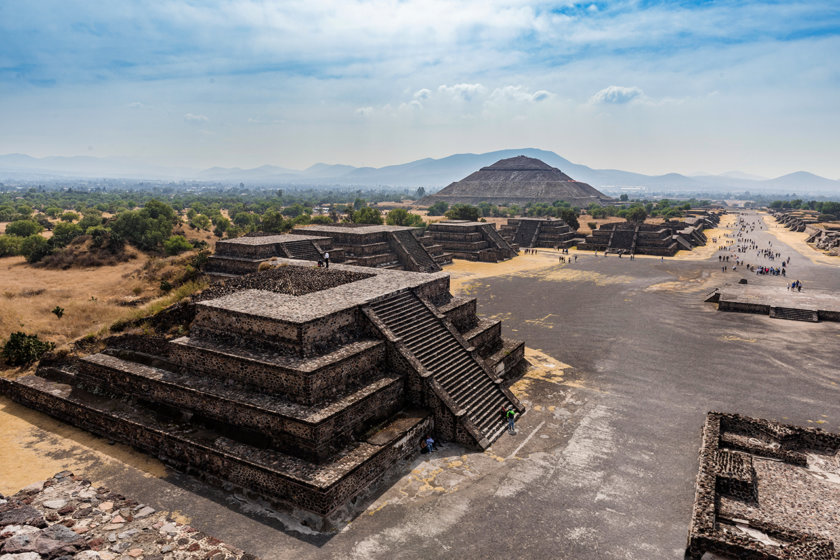
Teotihuacán was one of the largest cities in Mesoamerica, founded around the 2nd century BCE.
At its peak, it had more than 100,000 inhabitants and was renowned for its urban planning, temples, and significant cultural influence.
Today, the site impresses with its two imposing main pyramids, the Pyramid of the Sun and the Pyramid of the Moon, connected by the Avenue of the Dead. Climbing to the top of the Pyramid of the Moon allows you to admire the full extent of the city.
Taking a trip to Teotihuacan from Mexico City gives you a better understanding of the history and symbolism of the place. Some tours combine Teotihuacan with the Basilica of Guadalupe and include entrance fees, a guide, transportation, and meals (breakfast or lunch).
For an unforgettable experience, several operators offer hot air balloon flights over Teotihuacan, usually at sunrise. The flight lasts about 45 minutes and offers spectacular views of the pyramids and the valley.
How to get to Teotihuacan from Mexico City
- By car: you can get there by car via Highway 132D (about 1.5 hours)
- By bus: from Terminal Norte (Autobuses Teotihuacanos bus company)
- With a guided tour: for a complete experience, I suggest this tour to Teotihuacan, which includes transportation, a hot air balloon ride, and a guided tour!
2. Dawn on the chinampas of Xochimilco
Founded in the 14th century by the Xochimilcas, this immense lake territory was developed with chinampas, floating plots of land used to grow vegetables and flowers.
This ingenious system, still in use today, provided food for the Aztec capital and later New Spain, while creating a unique landscape.
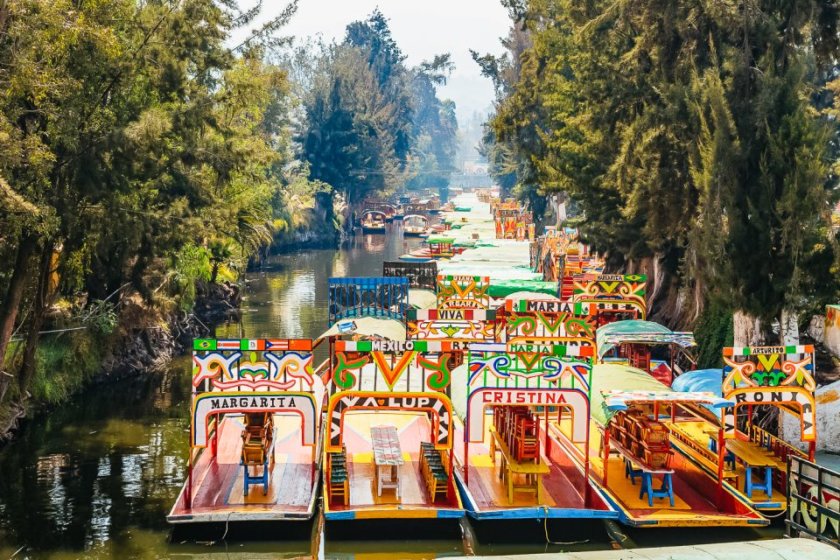
Listed as a UNESCO World Heritage Site, Xochimilco is now famous for its trajineras, colorful boats that sail along the canals.
Once there, you will find 11 main piers, including Nativitas, Fernando Celada, Las Flores, and Belén, where it is easy to rent a trajinera without a prior reservation.
There are all kinds of offers, some festive, others more focused on ecotourism with visits to chinampas, permaculture, etc.
Among the most unusual trips are those that include a visit to the famous Isla de las Muñecas, or Island of Dolls. This strange place is covered with hundreds of dolls hanging from trees, creating an atmosphere that is both fascinating and disturbing.
Did you know?
Xochimilco is the last natural habitat of the axolotl, an amphibian endemic to Mexico known for its ability to regenerate.
This small, strange-looking animal lives in the canals and chinampas, but is now critically endangered due to pollution and habitat loss. Conservation projects are underway, notably in collaboration with local chinamperos.
How to visit Xochimilco from Mexico City
Xochimilco is located about 45 minutes to 1 hour from Mexico City, depending on traffic.
- By car: about 45 minutes to 1 hour from Mexico City, depending on traffic.
- By public transportation: Metro line 2 to Tasqueña, then light rail to Xochimilco (direct one-way trip).
- With a guided tour: to avoid the crowds and fully enjoy the canals, I recommend a tour that includes a trajinera boat ride, with mariachis, drinks, and Mexican snacks.
3. Puebla and Cholula, between volcanoes and gastronomy
If you are looking for a cultural excursion around Mexico City, the Puebla region is of course a must-see!
Founded in 1531, it is known for its UNESCO-listed historic center, its azulejo facades, its colorful domes, and its iconic cuisine.
Don’t miss the Chapel of the Rosary, the Cathedral of the Immaculate Conception, the Amparo Museum, and the International Museum of Baroque Art, remarkable for its contemporary architecture.
For a leisurely stroll, Calle de los Dulces and the El Parián craft market are pleasant places to stop.
And of course, don’t forget to try the famous mole de Puebla, one of the most iconic dishes in Mexican cuisine!
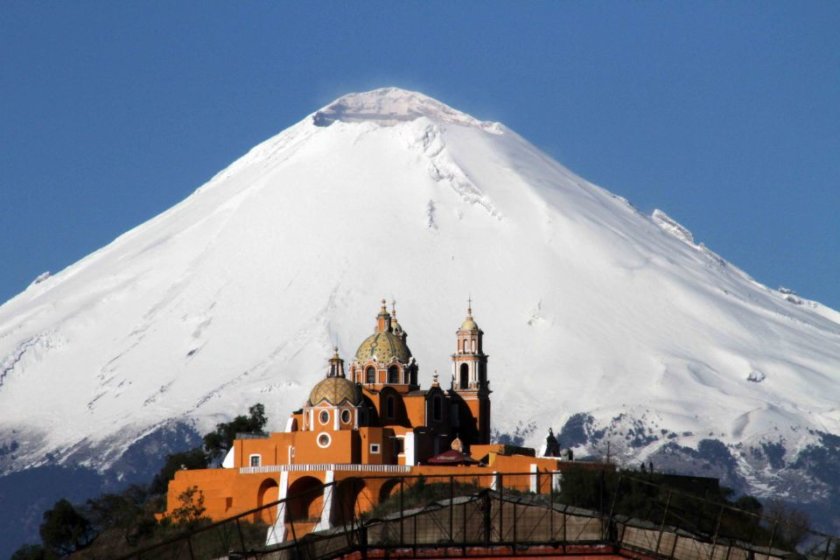
Cholula, the older of the two cities, is famous for its Great Pyramid, the largest in the world in terms of volume. You can explore its interior tunnels, then climb up to the Nuestra Señora de los Remedios church perched at the top.
From the summit, the view of the Popocatépetl and Iztaccíhuatl volcanoes is spectacular, especially at sunrise.
Among the local churches, San Gabriel and Santa María Tonantzintla stand out, the latter being remarkable for its indigenous Baroque style.
Did you know?
On May 5, 1862, Puebla was the scene of a victory against the French army led by Napoleon III, under the command of General Ignacio Zaragoza. This episode, known as the Battle of Puebla, is the origin of the 5 de Mayo, celebrated every year, especially in the United States!
How to get to Puebla from Mexico City
- By car: approximately 2.5 hours via Highway 150D.
- By bus: frequent departures from the TAPO Terminal to Puebla with ADO or Estrella Roja
- With a guided tour: I recommend this day trip, which includes transportation and a guided tour of Puebla and Cholula, ideal for seeing as much as possible without having to worry about the logistics.
4. Grutas de Tolantongo, a thermal paradise
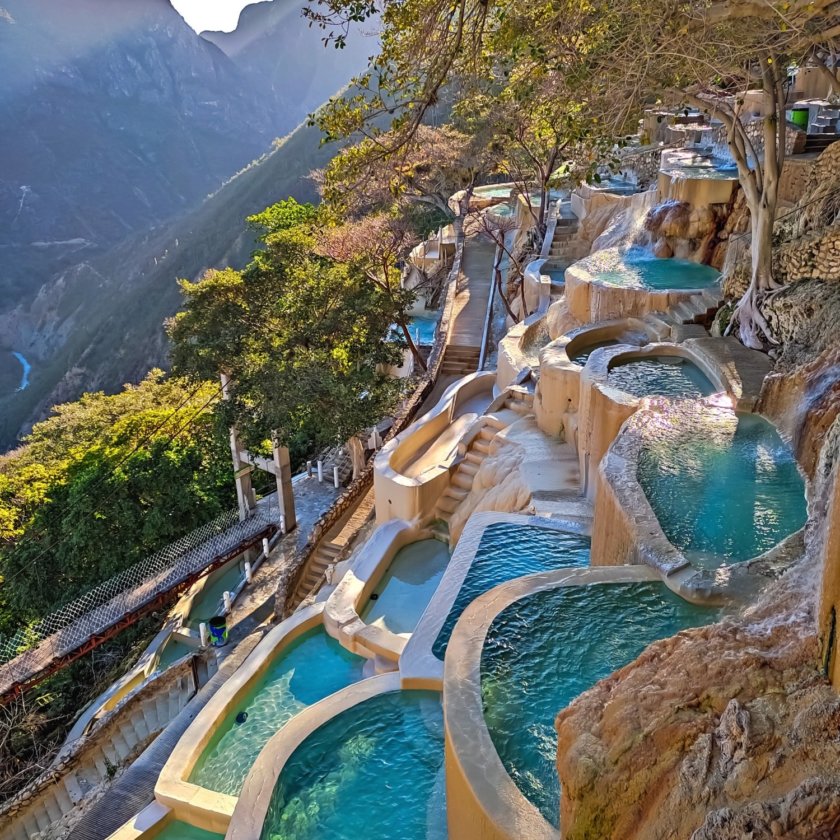
The Tolantongo Caves are famous for their turquoise thermal waters that cascade down and fill terraced pools carved into the mountainside.
The water, naturally heated by geothermal activity, maintains a pleasant temperature all year round.
The site includes several areas: a main cave from which a hot river flows, a tunnel to explore on foot in the water, suspended pools with views of the canyon, and a thermal river below.
It’s a perfect place to relax, swim, hike the trails, or simply admire the spectacular scenery.
Tolantongo is a popular family outing from Mexico City, so I suggest going on a weekday and avoiding weekends and holidays.
- There are restaurants, small grocery stores, and lockers for storing personal belongings.
- It’s best to bring non-slip sandals, a headlamp for the tunnels, waterproof bags for phones, a change of clothes, and a towel.
- Mobile phone reception is limited, and payment is cash only, including for admission.
How to get to the Tolantongo Caves from Mexico City
- By car: about 4 hours from Mexico City. The route goes via Pachuca and Ixmiquilpan, then a winding mountain road leads to the site. It is recommended to leave early. Parking is paid and admission costs about 180 pesos per day.
- By public transport: there is no direct bus service; you have to combine several journeys, which makes it very long and inconvenient.
- With a guided tour: I recommend this tour, which includes transportation, a guided tour, and free time at the Grutas de Tolantongo.
5. San Miguel de Allende, the colonial jewel
San Miguel de Allende is a must-see destination to discover on a day trip from Mexico City.
Listed as a UNESCO World Heritage Site, this city in Guanajuato charms visitors with its preserved colonial architecture, cobbled streets, colorful houses, and artistic atmosphere.
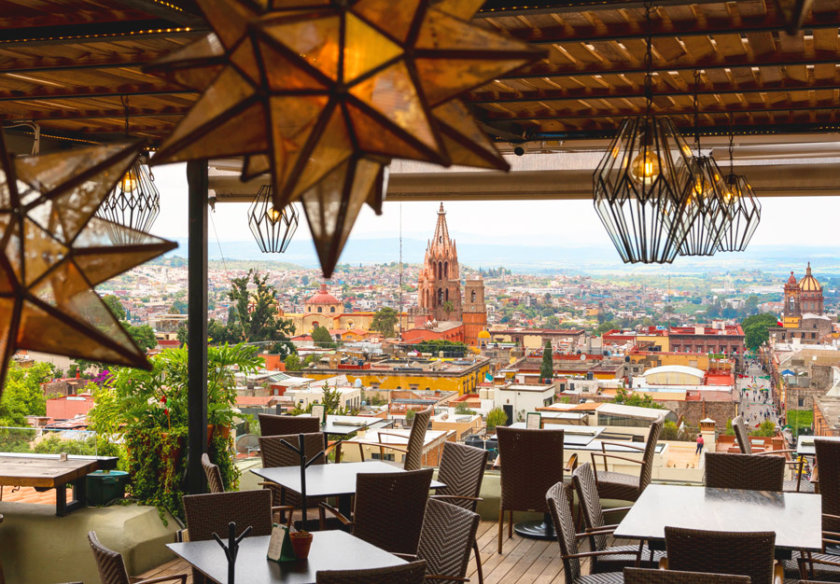
The heart of the city is centered around the Parroquia de San Miguel Arcángel, its iconic neo-Gothic church that dominates the central garden.
Among the must-see attractions are the Fábrica La Aurora, a former textile factory converted into a contemporary art center; the mercado de artesanías, ideal for finding local ceramics, textiles, and jewelry; and the Mirador, which offers a panoramic view of the city and its surroundings.
San Miguel hosts many cultural festivals such as the International Jazz and Blues Festival, the Sanmiguelada, the Feria de San Miguel, and “La Noche más Mexicana,” which celebrates national culture with music, dance, and fireworks.
How to get to San Miguel de Allende from Mexico City
- By car: approximately 3.5 hours from Mexico City, via Querétaro.
- By bus: direct buses from Terminal Norte, with ETN or Primera Plus.
- With a guided tour: includes transportation from downtown Mexico City, a guided tour, and free time in San Miguel de Allende.
Otherwise, it’s best to take your time and plan to spend at least two days there.
To prepare for your visit, I recommend checking out my complete guide to the 30 Best Things to Do in San Miguel de Allende: it will help you organize your day (or your stay!) in the best possible way.
6. Taxco, the city of silver
Nestled in the mountains of Guerrero, Taxco is a former mining town that has become the capital of silver craftsmanship.
Its historic center, dominated by the baroque Santa Prisca church, is a maze of steep cobbled streets lined with white houses with wrought-iron balconies. Driving here is tricky: it’s best to park your vehicle at the entrance to the city and get around on foot or by local taxi.
Taxco is famous for its jewelry stores and goldsmith workshops, where you can watch silver being worked using traditional techniques. The creations range from fine jewelry to decorative objects, often stamped “.925” for sterling silver.
The craft market, located near the Zócalo, is full of unique pieces, as well as textiles, pottery, and typical souvenirs.
The municipal market is another must-see. Here you can find fresh produce, spices, local sweets, and typical dishes such as pozole verde, frijol tamales, and flor de calabaza quesadillas.
For dessert, don’t miss the alegrías (amaranth seed bars) or dulces de leche.
Other activities include taking the cable car to admire the city from above, visiting the Guillermo Spratling Museum dedicated to the history of silver, and the pre-Hispanic mine, which is over 500 years old.
How to get to Taxco from Mexico City
- By car: Taxco is about 3 hours from Mexico City, via Cuernavaca and Iguala. The road is direct and well maintained.
- By bus: Direct buses depart from the Tasqueña Terminal ( Estrella de Oro company). This is a simple and comfortable option if you don’t want to drive.
- Organized tour: I recommend this tour, which includes transportation from downtown Mexico City, a visit to Cuernavaca, a guided tour and free time in Taxco, as well as an optional visit to the pre-Hispanic mine.

7. Nevado de Toluca, between lagoons and volcano
Nevado de Toluca is definitely one of the best ecotourism excursions from Mexico City!
This extinct volcano, Mexico’s fourth highest peak (15,350 ft.), offers a unique hike in the heart of its crater, where there are two glacial lagoons: Laguna del Sol and Laguna de la Luna.
The site is classified as a national park and attracts nature lovers, photographers, and high-altitude enthusiasts.
The hike usually starts from the parking lot located at an altitude of 13,120 ft. From there, a well-marked trail descends to the lagoons, with the option of walking around the crater or climbing to the peaks for the more experienced.
The air is cool, and the lunar landscapes offer a very special atmosphere, especially in winter when snow covers the slopes.
To access the park, you must obtain an entry permit (approximately 58 pesos) and be accompanied by a certified guide if you plan to make a full ascent.
It is essential to check the weather conditions before setting off, as fog and wind can make the hike difficult.
How to get to Nevado de Toluca from Mexico City
- By car: Nevado de Toluca is accessible via Toluca, then by the winding road leading to the national park. The journey takes about 2.5 hours from Mexico City.
- By public transport: from the Observatorio terminal, take a Zina-Bus bus to Sultepec (270 pesos, 1 hour 40 minutes) and ask to get off at the entrance to Nevado de Toluca, near Raíces.
- Organized excursion: I recommend this excursion, which will take you to the summit of Nevado de Toluca via the famous Paso del Quetzal. It includes transportation, a professional guide, mountain fees, technical equipment, lunch, food, insurance, and the loan of a backpack.

8. La Malinche, forest and volcanic panoramas
Located between the states of Tlaxcala and Puebla, the La Malinche volcano (also known as Matlalcueitl) rises to 14,500 ft.
This extinct stratovolcano is one of the most accessible in central Mexico, with a marked trail that crosses a pine forest before reaching alpine meadows and the summit.
It is a popular excursion from Mexico City for its spectacular views of neighboring volcanoes: Popocatépetl, Iztaccíhuatl, and sometimes even Nevado de Toluca.
The hike usually starts at the Centro Vacacional Malintzi, run by the IMSS, located at an altitude of about 10,100 ft. From there, the trail climbs gradually for about 3 to 4 miles to the summit, with an elevation gain of over 4,265 ft.
The route is considered moderately difficult: it does not require technical equipment, but does require good physical condition and acclimatization to the altitude.
The site is very busy on weekends, especially with hikers and school groups. For a quieter experience, it is advisable to set off early on a weekday.
- In winter, snow can cover the slopes, making the climb more challenging. Between May and June, the rainy season means you need to be extra careful.
How to get to La Malinche from Mexico City
- By car: La Malinche is about 2.5–3 hours from Mexico City. The route goes via San Martín Texmelucan, then Tlaxcala and Apizaco. From Apizaco, follow the road to Teacalco until you reach Centro Vacacional Malintzi, where you can park and start your hike.
- By public transport: Take a bus (companies such as ATAH or Supra) from the TAPO terminal to Apizaco (approximately 2.5 hours, 214–410 MXN). From the ATAH bus station in Apizaco, take a colectivo or taxi to the Centro Vacacional Malintzi.
- With a guided tour: book this tour to reach the summit of La Malinche with pick-up at your hotel, a professional guide, entrance fees, lunch at the summit, a meal at the end of the hike, safety equipment, a backpack, a helmet, and accident insurance.

9. Tepoztlán, energy and traditions
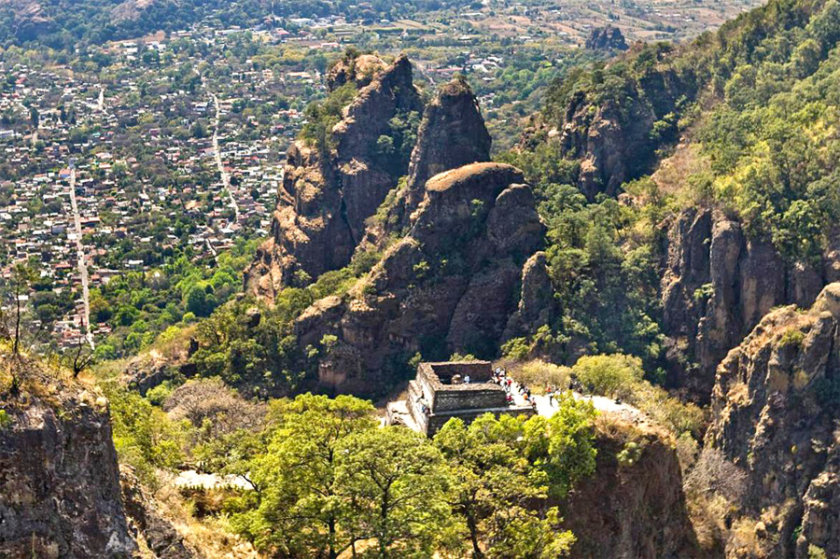
Tepoztlán is a picturesque village surrounded by steep mountains and spectacular rock formations. It is best known for the Cerro del Tepozteco, a sacred peak accessible by a hike of about 1 hour, depending on your pace. At the summit is a small pre-Hispanic temple dedicated to the god of pulque, Ometochtli Tepoztecatl, with a panoramic view of the valley.
The village center is bustling with a craft market where you can find incense, textiles, jewelry, esoteric items, and local products. On weekends, the market spreads out across the main square and attracts both locals and visitors. Tepoztlán is renowned for its mystical atmosphere, meditation centers, temazcales (traditional steam baths), and spiritual festivals.
When it comes to food, don’t miss the artisanal nieves (local ice creams) with original flavors such as avocado, mezcal, and rose petals. Tlacoyos, huitlacoche quesadillas, and cecina tacos are also local specialties that can be enjoyed in fondas or at the market.
Tepoztlán is also known for its legends linked to extraterrestrials. For several decades, residents and visitors have claimed to have observed luminous phenomena or unidentified flying objects in the sky, particularly around the Cerro del Tepozteco.
This sacred peak is considered by some to be an energy point, conducive to apparitions and spiritual connections.
The town attracts many enthusiasts of esotericism, meditation, and paranormal phenomena. Some centers offer cosmic contact workshops, spiritual retreats, or lectures on galactic civilizations. Whether you believe in it or not, this mystical dimension is an integral part of Tepoztlán’s identity.
- The village can get very busy on weekends, so it is advisable to arrive early or visit during the week. Parking is limited in the center, so it is best to park at the entrance to the village and continue on foot.
How to get to Tepoztlán from Mexico City:
- By car: Tepoztlán is about an hour and a half from Mexico City via the road to Cuernavaca.
- By bus: It is also possible to get there by bus from the Terminal de Autobuses del Sur (Tasqueña) and take a bus with the OCC or Pullman company, costing between 130 and 180 pesos.
- With a guided tour: enjoy transportation from Mexico City, a local guide, a hike to Tepozteco, a breakfast stop, and free time to explore Tepoztlán.
10. Valle de Bravo, between lake and forest
Located on the edge of an artificial lake surrounded by green mountains, Valle de Bravo is one of the most popular weekend destinations from Mexico City.
Its historic center, with its cobbled streets, white houses with tiled roofs, and lively plaza, offers a peaceful and romantic atmosphere.
The lake is the center of activities: boat rides, kayaking, sailing, or private lancha trips.
Thrill seekers choose paragliding, which is very popular in Valle. Flights take off from Monte Alto, a natural viewpoint offering spectacular views of the forest and lagoon.
Close to the center, the La Peña neighborhood offers a more residential atmosphere, with panoramic restaurants. It is also the starting point for the trail leading to the Mirador de La Peña, an iconic rock that is ideal for watching the sunset.
To fully enjoy Valle de Bravo, it is best to leave early on Saturday morning and spend the night there: charming hotels, forest cabins, and lodges with lake views are plentiful around the lagoon.
Millions of monarch butterflies migrate from Canada to spend the winter in the oyamel forests. Guided excursions lead to the sanctuaries of El Capulín or Piedra Herrada, sometimes on horseback to access the protected areas.
How to get to Valle de Bravo from Mexico City
- By car: approximately 3 hours via Toluca.
- By bus: from the Poniente Terminal (Observatorio) with the Autobuses Zina company.
- Organized tour: includes transportation, guided tour of Valle de Bravo with the Cascada del Molino and Velo de Novia waterfalls, the large Ahuehuete tree “Cristo Negro” and the La Peña de Valle de Bravo viewpoint.

11. Malinalco, between mysticism and history
Malinalco is a colonial village in the State of Mexico, famous for its monolithic archaeological site carved directly into the rock.
This Aztec temple, dedicated to eagle and jaguar warriors, is reached by a staircase of more than 400 steps offering a panoramic view of the valley.
The village center charms visitors with its colorful houses, bohemian cafés, and art galleries.
Its craft market is a great place to discover embroidered textiles,obsidian, medicinal plants, and traditional incense.
Malinalco is also renowned for its spiritual retreats, temazcales, and ancestral medicine workshops. On the gastronomic side, you can enjoy fresh trout, flor de calabaza quesadillas, mole verde, and seasonal aguas frescas.
How to get to Malinalco from Mexico City
- By car: approximately 1 hour 45 minutes to 2 hours via Chalma and Ocuilan. A pleasant wooded route, ideal early in the morning to visit the archaeological site before the heat sets in.
- By bus: depart from Terminal Poniente (Observatorio) with the Autobuses Flecha Roja company. Direct route or via Chalma, then colectivos or taxis to Malinalco. Total travel time: 1 hour 50 minutes to 2 hours 30 minutes.
- Organized tour: includes transportation, visit to the archaeological site, a local guide, and sometimes a traditional lunch.

12. Real del Monte
Real del Monte is an old mining village nestled in the mountains of Hidalgo. It is famous for its British heritage, brought by miners from Cornwall in the 19th century. Their influence can be seen in the architecture, cuisine, and local traditions.
The houses with sloping roofs, wooden balconies, and cobbled streets give the village a unique atmosphere.
Real del Monte is also renowned for its silver mines, including the Mina de Acosta and the Mina La Dificultad. Guided tours allow visitors to explore the old underground galleries and learn about the village’s mining history.
Don’t miss the famous pastes, small savory pastries of Cornish origin, filled with meat, potatoes, or mole.
The paste museum even offers workshops where you can learn to make them yourself. The village is also home to traditional cafes, artisan confectioneries, and family restaurants with views of the mountains.
How to get to Real del Monte from Mexico City
- By car: about 2.5 hours from Mexico City via the highway to Pachuca, then towards Mineral del Monte. The road is pleasant and passes through beautiful mountain scenery.
- By bus: From Terminal Norte, take a bus to Pachuca. Once there, colectivos and buses will take you to Real del Monte in about 20 minutes.
- Organized tour: Several guided tours include transportation, a visit to the mines, and sometimes a stop in Pachuca or El Chico National Park. This is a convenient option that saves you from having to arrange your own transportation.

13. El Chico, forest and cliffs
Parque Nacional El Chico, created in 1898, is one of Mexico’s oldest national parks.
Located in the Sierra de Pachuca, it offers dense forests and spectacular rock formations. The park has marked trails for all levels, perfect for hiking and via ferrata.
Climbing areas such as Las Ventanas and Peñas Cargadas attract climbers and photographers. The park is rich in biodiversity, with butterflies, mushrooms, deer, and endemic plants.
The village of Mineral del Chico, at the entrance, offers rustic cafes and restaurants where you can enjoy fresh trout.
How to get to El Chico from Mexico City
- By car: approximately 2.5 hours via the highway to Pachuca, then the road to Mineral del Chico. Roads are well maintained.
- By bus: from Terminal Norte to Pachuca, then bus or colectivos to Mineral del Chico in 30 minutes.
- Organized tour: includes transportation, hike to Peñas Cargadas, village tour, and adventure activities.

14. Peña de Bernal, the stone giant
Peña de Bernal is one of Mexico’s most impressive natural sites. Located in the state of Querétaro, this colossal rock formation is the third largest monolith in the world and towers over the village of Bernal by more than 1,150 ft.
It is an ideal excursion from Mexico City for lovers of hiking, nature, and photography.
The main trail leads to a panoramic viewpoint, accessible to most visitors. To reach the top of the monolith, a more technical climb is required, only with a specialized guide and climbing equipment.
The village of Bernal, classified as a Pueblo Mágico, charms with its cobbled streets, colorful houses, and craft shops.
Here you can find blue corn gorditas, regional sweets, and various cactus-based products. Bernal is also renowned for its mystical energies, which attract travelers and wellness enthusiasts.
How to get to Peña de Bernal from Mexico City
- By car: approximately 3.5 hours from Mexico City. Follow the highway to Querétaro then Ezequiel Montes; parking is available near the site.
- By bus: from Terminal Norte, take a bus to Querétaro (ETN, Primera Plus). In Querétaro, a bus or colectivo will take you to Bernal via Ezequiel Montes. Total travel time: approximately 4.5 hours.
- Guided tour: includes transportation from Mexico City, Peña de Bernal, and Tequisquiapan with wine tasting

15. Tequisquiapan, wine and relaxation
Just 30 minutes from Bernal, the village of Tequisquiapan is a Pueblo Mágico renowned for its peaceful atmosphere, vineyards, thermal spas, and neocolonial architecture.
The historic center is organized around the Miguel Hidalgo plaza, lined with cafés, art galleries, and the Parroquia Santa María de la Asunción.
Must-do activities include wine and cheese tasting, a visit to the Freixenet winery, bike rides through the vineyards, and relaxation in the thermal baths of the local spas.
The artisan market is a great place to discover embroidered textiles, leather goods, and local gourmet products.
How to get to Tequisquiapan from Mexico City
- By car: Tequisquiapan and Peña de Bernal are about 3.5 hours from Mexico City via the highway to Querétaro. The road is direct and well maintained.
- By bus: From Terminal Norte in Mexico City, take a bus to Querétaro (ETN, Primera Plus), then a bus or colectivo to Tequisquiapan. The entire journey takes about 4.5 hours.
- Guided tour: I recommend this combined tour of Tequisquiapan with wine tasting and Peña de Bernal

FAQ – Everything you need to know before you go
What is the best day trip from Mexico City?
For a quick cultural excursion from Mexico City, Teotihuacan is a must.
For accessible nature, I recommend El Ajusco. If you want to combine hiking and heritage, Malinalco or Peña de Bernal offer an interesting balance.
What excursions are possible without a car from Mexico City?
Several destinations are easily accessible by bus from Mexico City:
- Teotihuacan: direct buses from Terminal Norte.
- Taxco: frequent departures from Tasqueña (Estrella de Oro).
- Tepoztlán: buses from Tasqueña or Terminal del Sur.
- Valle de Bravo: buses from Observatorio (Terminal Poniente).

Can you visit Tolantongo without an organized tour?
Yes, but it’s a logistical adventure. You have to take a bus to Ixmiquilpan (from Terminal Norte), then a colectivo or taxi to Grutas de Tolantongo.
The journey takes about 4 to 5 hours, depending on connections. For greater comfort, organized tours are still a good option, especially for a day trip.
When is the best time for volcanoes and hiking?
The ideal season is from November to April, during the dry season. The trails are in better conditions, the views are clear, and the temperatures are more stable.
In summer (June to September), the rains make the trails slippery, especially at La Malinche, Nevado de Toluca, and El Chico. In winter (December to February), bring very warm clothing: snow is common at high altitudes.
Which destinations are best for a full weekend?
For a weekend with an overnight stay, consider:
- Valle de Bravo: water sports, paragliding, monarch butterflies in season.
- Real del Monte or El Chico: mines, forest, gastronomy.
- Malinalco: archaeological site, spirituality, gastronomy.
- Bernal and Tequisquiapan : hiking, wine, crafts.
Plan your itinerary around Mexico City
To make the most of excursions around Mexico City, it’s best to plan ahead as there is already plenty to see in the capital.
I recommend first consulting my comprehensive guide to Mexico City and my 1-, 2-, 3-, and 4-day itineraries to decide how long to stay in the capital:
- Mexico: the Top 45 places not to be missed!
- 1 day in Mexico City – How to spend 24 hours in the Mexican capital
- 2 days in Mexico City – The perfect itinerary for 48 hours!
- 3 days in Mexico City – The best itinerary + where to stay
- 4 days in Mexico City – The complete itinerary for visiting Mexico City
To plan your trip around Mexico City, I recommend that you:
- First, decide how many days you want to spend in Mexico City, using my detailed itineraries as a guide.
- Then choose 1 to 3 day trips that suit you (Teotihuacan, Puebla, hiking, villages, etc.).
- Itinerary: 8-10 days in Mexico – from Mexico City to Oaxaca
- Itinerary: 10 days in Mexico – Mexico City, Chiapas, and Yucatan
- Itinerary: 2 weeks in Mexico – Detailed itinerary in Yucatan and Chiapas
- Itinerary: 3 weeks in Mexico – The best of Mexico in 20, 21, or 22 days
- Itinerary: 1 month in Mexico – Recommended itinerary from Mexico City to Cancun
Where to stay in Mexico City – The best accommodations
- Hostel Mundo Joven Catedral (historic center): one of the best hostels in Mexico City. Friendly staff, simple but clean dorms and rooms. We love its rooftop terrace with a bar, which offers a great atmosphere andexceptional views of the cathedral and the Zocalo.From just 16$ for a dorm and 35$ usd for a private room!
- Hotel Villa Condesa (Condesa): if you’re looking for aromantic hotel in Mexico City, this is a little oasis of peace in the heart of the La Condesa neighborhood. It’s an elegant house with small green terraces and tastefully decorated lounge areas. The rooms are spacious and modern, the service is particularly attentive, and the breakfast is very good. From 180$ usd per night.
- Hotel Casa Goliana (Roma Norte): a high-end hotel offering the best value for money inits category, located in anearly 20th-century house typical of the La Roma neighborhood. Rooftop terrace, comfortable rooms, very attentive staff, and a good breakfast. From 215$ usd per night
- Four Seasons Hotel Mexico City (Juarez): this 5* hotel is one of the best hotels in Mexico City, ideal for a business trip or a romantic getaway. Located on Paseo de la Reforma between Colonia Juarez and Roma Norte. Large interior garden, gym, swimming pool, spa, restaurant, and bar. From 715$ usd per night!
Renting a car in Mexico City
For your trip to Mexico, I recommend renting a car, as it’s the best way to discover the country!
As you know, finding a reliable car rental agency in Mexico is no easy task, as scams and disappointments are unfortunately common!
To rent a car, personally, I always use Booking.com Cars, for a few reasons:
- You can easily compare the rental cars prices between all the agencies: for sure the easiest way to find the best rate!
- Cancellation is often offered free of charge: no need to worry if you change your mind
- Booking Cars offers full insurance coverage at a lower price than the rental companies, so it’s an instant saving with no effort
Simply click on the green button to find your rental car at the best price:
Find a cheap flight to Mexico City
Benito Juárez International Airport in Mexico Cityisa large airport that handles a huge number of domestic and international flights. It is the largest airport in Latin America!
To find a cheap flight to Mexico City and the best domestic flights in Mexico,I recommend using our flight comparison tool in partnership with Skyscanner. It guarantees you’ll pay the best price!
🚗 Rent a car
🗽 Book entrance tickets and guided visits
🏄 Book your sports activities
🌍 Take a travel insurance
🙎 Book a tour
✈️ Book your flight
You’re traveling in Mexico? These articles will help you!
Discover all my articles about Mexico: All my articles to help you plan your trip to Mexico are listed there.
The 35 Best Things to Do in Mexico
- Mexico City: The 45 Best things to Discover
- Where to stay in Mexico City? – Best areas and hotels for all budgets!
- 1 Day in Mexico City – How to spend just 24h in the Mexican capital
- 2 Days in Mexico City – The perfect itinerary for 48h!
- 3 Days in Mexico City – The Best Itinerary + Where to Stay
- 4 Days in Mexico City – Your Four-Day Must-See Guide
- Day of the Dead in Mexico City: All the Best Things to Do and See
- Mexico City on a Budget: Guide + All my Best Tips to Save Money
- The Definitive Guide to 40 Best Free Things to Do in Mexico City
- World Cup 2026 Mexico: Guide, Tickets, Stadiums + Tips
- Anthropology Museum (Mexico City): Tickets & Must-Know Tips
- Teotihuacan (Mexico City): The Definitive Guide + Tips
- How to Visit Xochimilco (Mexico City): The Ultimate Guide
- Coyoacán (Mexico City): the 20 Best Things to Do in Frida Kahlo’s Neighborhood
- Frida Kahlo Museum (Casa Azul): Info, Tickets and Opening Hours
- Lucha Libre in Mexico City (Tickets, Venues, Tips & More!)
- Day of the Dead (Mexico): How to Celebrate Día de Muertos Like a Local
- 40+ Wifi Cafes in Mexico City that Every Digital Nomad Should Know About
- Muralism in Mexico City: The Essential Guide to the Best Murals
- Itinerary: 8-10 days in Mexico – From Mexico City to Oaxaca
- Itinerary: 10 days in Mexico – Mexico City, Chiapas and Yucatan
- Itinerary: 2 weeks in Mexico – Best itinerary to discover the Yucatan Peninsula and Chiapas!
- Itinerary: 3 weeks in Mexico – Mexico City, Puebla, Oaxaca, Chiapas, Campeche, Yucatán and Riviera Maya
- Itinerary: 1 month in Mexico – My Epic 30-31 Days Itinerary from Mexico City to Cancun
- Road trip in Mexico: The best itineraries for 10, 15, 21 days and a month
- Itinerary: 1 week in Yucatan – The Ultimate 6, 7 or 8 days Itinerary
- Itinerary: 10 days in Yucatan – Best Itinerary for 9, 10 or 11 Days in Yucatan
- Itinerary: 2 weeks in Yucatan – Epic Itinerary + All my Best Tips!
- Itinerary: 3 weeks in Yucatan – Best things to do in 20-21 days
- Itinerary: 1 month in Yucatan – Yucatan Peninsula in 29, 30 or 31 days from Cancun
- Road trip in Yucatan: The best itineraries for 7, 10, 15, 21 days and 1 month
You’re using Pinterest? Here is the picture to pin!