




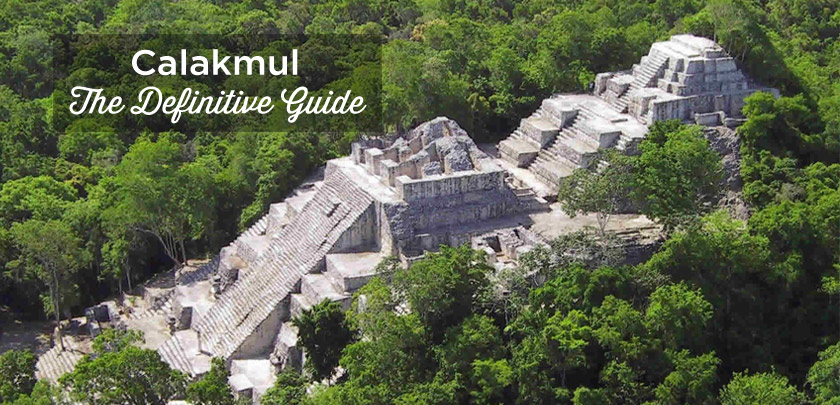
Visiting Calakmul: The Complete Travel Guide to Mexico’s Hidden Maya Ruins
Both a Biosphere Reserve and a UNESCO World Heritage Site, Calakmul is without a doubt one of the most impressive places to visit in Mexico.
Here, there are no crowds or overly structured routes. You explore a vast Maya city hidden deep in the jungle, within one of the largest tropical reserves in the country, following the rhythm of nature and under the curious gaze of monkeys in the treetops.
Calakmul is not the easiest place to reach: located near the Guatemalan border, it is about 5 hours by road from Campeche, and it is also a longer but increasingly popular excursion from Bacalar.
To help you plan your visit in the best possible way, here is the complete guide to Calakmul, where I have gathered all the practical information you need: how to get there, when to visit, and which options to choose depending on your itinerary.
So, how do you visit Calakmul? Let’s go!
Sommaire
- Visiting Calakmul: The Complete Travel Guide to Mexico’s Hidden Maya Ruins
- 1. Practical Information for Visiting Calakmul
- 2. How to Get to Calakmul
- 3. Where to stay near Calakmul?
- 4. What to bring to Calakmul
- 5. The history of Calakmul in a nutshell
- 6. What to see in Calakmul
- 7. Calakmul tourist map
- 8. Calakmul: My Opinion
- 9. Frequently Asked Questions about Calakmul (FAQ)
- You’re traveling in Mexico? These articles will help you!
1. Practical Information for Visiting Calakmul
1.1 Entrance Fees (Conhuas, Biosphere Reserve, Archaeological Site)
When visiting Calakmul, it is important to know that entrance fees are paid at several points along the way, as the site is located within a local community and a protected natural reserve.
In practice, the current costs are as follows:
- Access to the Conhuas community (mandatory community fee): $90 MXN.
- Entrance to the Calakmul Biosphere Reserve (environmental fee): $110 MXN for Mexican nationals and $215 MXN for foreign visitors.
- Entrance to the Calakmul archaeological site: $100 MXN.
Overall, you should budget approximately $300 MXN for nationals and around $400 MXN for foreign visitors.
1.2 Opening Hours
The Calakmul archaeological site is open daily from 8:00 a.m. to 5:00 p.m..
My practical advice: try to arrive as early as possible. Not only because of the heat, but also because wildlife is more active in the morning.
1.3 Is It Worth Hiring a Guide?
Hiring a guide is optional, and prices can vary, so it is best to check directly on site or through your accommodation or tour provider.
If you simply want to walk around, climb the structures, and enjoy the site, you can visit Calakmul without a guide. However, if you want to understand what you are seeing—the history, symbolism, and Maya context—then hiring a guide is well worth it, especially on a first visit.
Calakmul is vast, and a guide can help you optimize your route to see the most important areas without wasting time.
1.4 Important Tips (Cash, Weather, etc.)
- Cash: essential. Bring enough cash for entrance fees, food, and unexpected expenses. Credit cards are not always accepted, and there are no ATMs nearby.
- Gas and water: plan ahead before entering the Reserve; there are no services inside.
- Weather: heat and humidity can be intense. Wear light, breathable clothing that still protects you from the sun.
- Insect repellent and sunscreen: absolutely necessary, especially during the rainy season.
- Time: between access points and long distances, everything takes longer than expected. Allow extra time and avoid rushing.
2. How to Get to Calakmul
Visiting Calakmul requires a bit of planning, but that is precisely what makes the experience so special. Xpujil is the essential starting point, as it is the closest town with tourist infrastructure: hotels, restaurants, gas stations, banks, and local tour agencies.
From here, all transfers and tours to the Calakmul Biosphere Reserve and the archaeological site are organized.
2.1 Getting to Calakmul with a Tour
Taking a Tour to Calakmul from Bacalar
If you are staying in Bacalar or southern Quintana Roo and prefer not to drive long distances, this is a very convenient option.
This full-day Calakmul tour includes round-trip transportation with pickup and drop-off at your hotel or Airbnb in Bacalar, Chetumal, or nearby areas, a guided visit to the archaeological site, and a stop in the jungle.
Taking a Tour to Calakmul from Campeche
You can also take this tour from Campeche, which includes hotel pickup, a guided visit to Calakmul, and the archaeological site of Balamkú.
2.2 Getting to Calakmul on Your Own
Before planning your visit, it is important to understand that Calakmul is located deep in the jungle, far from major cities, and that the final stretch of the journey takes place inside the Reserve.
From Xpujil to the archaeological site, you should allow approximately 2 additional hours:
- A first section on paved road up to the entrance of the Biosphere Reserve, where access fees are paid.
- A second section of around 60 km through the jungle, with a speed limit of 30 km/h.
This final stretch is slow and silent, but it is very much part of the experience.
By Car
The Federal Highway 186 (Escárcega–Chetumal) is the main route to reach Xpujil from southeastern Mexico.
Approximate driving times:
- From Campeche: 4h30
- From Bacalar: 2h
- From Chetumal: 1h45
- From Mérida: 5 to 6 hours
- From Palenque: around 5 hours
Important driving tips:
- Fill up your gas tank in Escárcega or Chetumal; gas stations are scarce afterward.
- Download Google Maps offline, as there are areas with no signal.
- Avoid driving at night, especially between Escárcega and Xpujil.
- Inside the Reserve, respect the speed limit: wildlife sightings are common.
Many travelers choose to spend the night in Xpujil or nearby in order to enter the jungle early the next morning.
To rent a car, personally, I always use Booking.com Cars, for a few reasons:
- You can easily compare the rental cars prices between all the agencies: for sure the easiest way to find the best rate!
- Cancellation is often offered free of charge: no need to worry if you change your mind
- Booking Cars offers full insurance coverage at a lower price than the rental companies, so it’s an instant saving with no effort
Simply click on the green button to find your rental car at the best price:
By Public Transportation
Xpujil is connected by bus to Campeche, Mérida, Escárcega, and Chetumal. Buses are comfortable and safe, although schedules are not always ideal.
- From Campeche: direct buses to Xpujil from the Terminal Sur at 08:00, 13:30, and 22:00 with Autobuses Sur. The ticket costs approximately 363 pesos.
- From Bacalar: there is an AU bus departing at 23:55 from the ADO terminal, arriving in Xpujil at 02:45. It is direct, but the schedule is not very practical.
Another option is to take a bus or colectivo from Bacalar to Chetumal (40 minutes), then an ADO bus from Chetumal to Xpujil (1h45), with departures at 18:30, 21:00, 22:00, or with AU at 00:55.
Once in Xpujil, there is no regular public transportation to the archaeological site, so you will need to arrange a local transfer or take a tour.
Here is the WhatsApp contact I managed to find: +52 1 983 119 0982
Departure around 6:00 am from Xpujil to Calakmul and return around 2:00 pm from Calakmul to Xpujil – 600 pesos per person.
Information to be reconfirmed directly with them, of course.
By Plane
The closest airport is Chetumal (CTM). From there, you can rent a car, book private transportation to Xpujil (approximately 1h30), or combine your flight with the Tren Maya.
There are daily flights from Mexico City with Aeroméxico, Viva Aerobus, and Volaris.
To find a cheap flight ticket to Cancun, Campeche or Chetumal, I recommend you to use our flight comparator, in partnership with Skyscanner: it’s the guarantee to pay the best price!
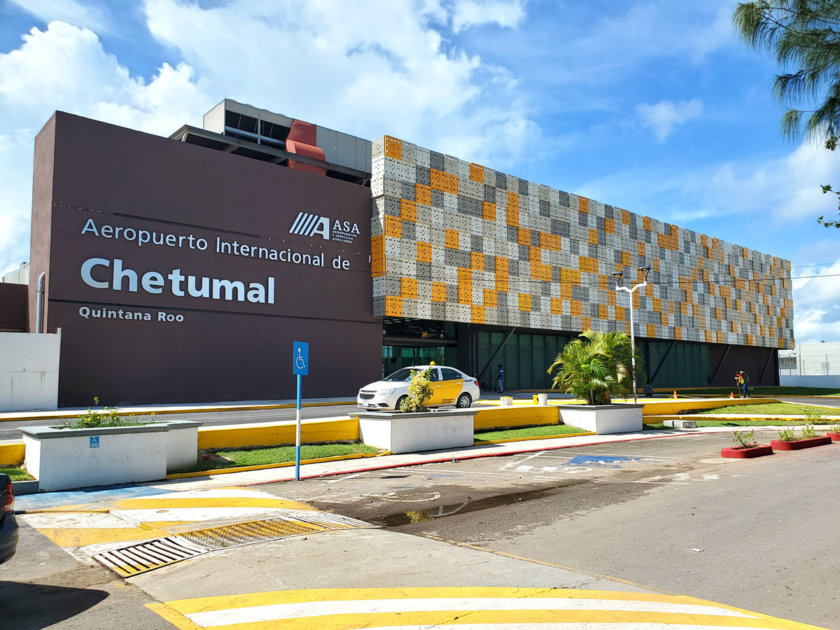
Tren Maya: A New Way to Get There
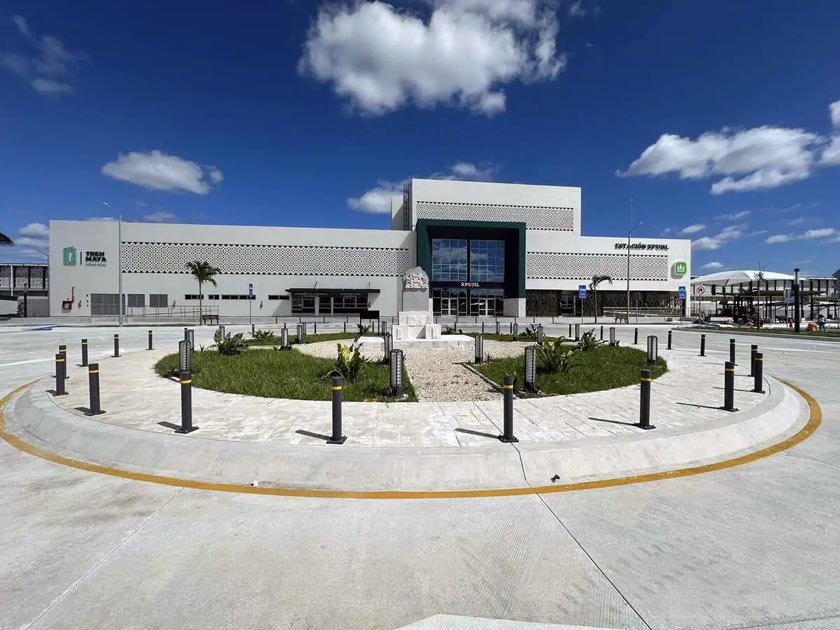
The Tren Maya is a modern and scenic alternative for reaching the region without long drives.
- Xpujil Station: located in town, with access to hotels, transportation, food, and tours. This is the recommended option.
- Calakmul Station: located in a remote jungle area, with no signal or services.
Important: the “Calakmul” station is not located at the archaeological site and has no taxis. Do not get off here unless you have transportation arranged in advance.
From Xpujil to the Archaeological Site
From the center of Xpujil to the Calakmul ruins, the distance is approximately 110 km, which takes about 2 hours.
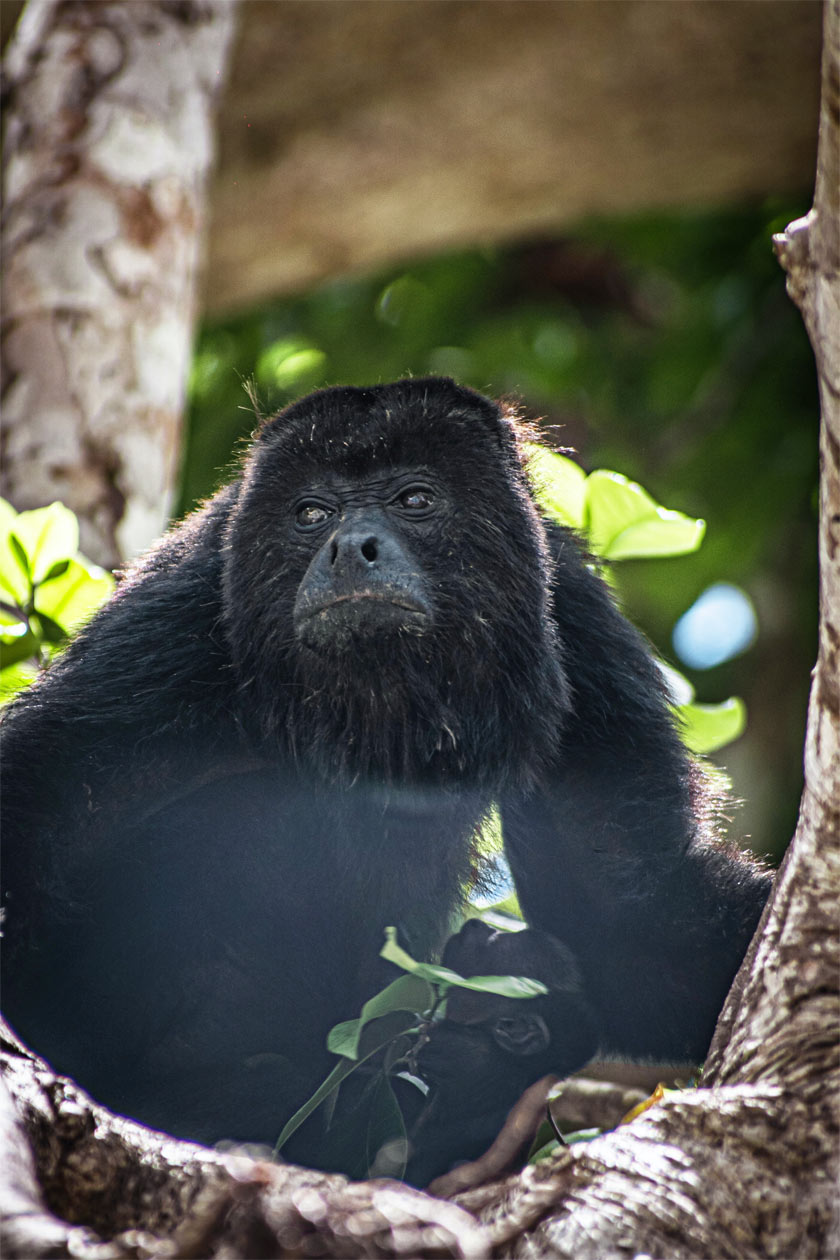
Along this route, it is common to spot toucans, deer, howler monkeys, and sometimes even jaguars in the distance. The speed limit inside the Reserve is 30 km/h.
- Do not drive at night inside the Reserve.
- Carry enough gas and water.
- Take your time and enjoy the silence of the jungle.
3. Where to stay near Calakmul?
It really depends on your itinerary.
If you want to visit Calakmul in one day from Campeche, you’ll need a good place to stay in the city. My recommendations for hotels in Campeche are:
- Melisa Hostal: very well located hostel in a beautiful typical house in the center of Campeche, friendly staff, with a small pool, access to a kitchen, and very clean and comfortable mattresses. Bed in shared room, from only 20 $usd per night
- Casa Serena Beautiful Colonial Loft: a spacious apartment in the center of Campeche that offers excellent value for money. With air conditioning, a living room, kitchen, terrace, good wifi with breakfast included. Sleeps 2 to 4 people, starting at 125 $usd per night
- Boutique Hotel Casa Don Gustavo: an elegant 18th century manor house completely restored on a pedestrian street in downtown Campeche. A beautiful blend of modernity and colonial decor, with comfortable air-conditioned rooms. Wifi, outdoor pool, jacuzzi and a very tasty à la carte breakfast await guests. Starting at 65 $usd!
Xpujil is a good option to stay if you are visiting Calakmul from or on your way to Bacalar. It is a small town with some hotels and restaurants, and it is close to the entrance of the Calakmul Biosphere Reserve. Here are some of the hotels in Xpujil that I recommend:
- Coa de Collar: great budget option in Xpujil with simple, but clean and well-located rooms, close to restaurants and supermarkets. Miguel, the owner, is a tour guide, which is very helpful. From 40 $usd a night
- Ecohabitat: a small country house surrounded by vegetation. It is comfortable, very clean, with a very nice welcome. In the morning they bring you breakfast on the veranda, or if you prefer they prepare it to take away. Delicious breakfast included, from 70 $usd per night
- Casa Kaan: comfortable cabins with air conditioning, terrace and kitchen, in the middle of nature. It is an ecological lodging that works with solar energy, has several fruit trees and the residues are used as fertilizer for the vegetable garden. Breakfast included, from 98 $usd
4. What to bring to Calakmul
Calakmul can be hot and humid, so dress comfortably and wear sturdy shoes.
You’ll be climbing up and down the ancient structures, and you’ll want to avoid the sunburn and the mosquito bites. Bring some repellent and sunscreen.
Don’t forget to pack some binoculars if you have them. You’ll be amazed by the wildlife and the ruins that are hidden in the jungle.
Remember: Calakmul is isolated, so bring enough snacks and water. There are no shops or restaurants nearby.
5. The history of Calakmul in a nutshell
Calakmul’s name means “two towering mounds” in the Yucatec Maya language, after its two largest pyramids: structures I and II. But the city also had other names in the past, such as Kan, meaning “serpent”, or Ux te tuun, meaning “three stones”.
Calakmul boasts the most stelae of any Mayan site, containing valuable information that has helped to reconstruct the history of Calakmul and the kind of society it was.
Along with Palenque in Chiapas and Tikal in Guatemala, it was one of the most important and influential cities of the Mayan world.
A brief summary of its history:
- It was occupied from 550 BC and reached its peak from 250 to 900.
- Between 636 and 695, Calakmul formed a very powerful socio-political network.
- After being defeated by Tikal in Guatemala, Calakmul had to change its political strategy. The new rulers established relations with other cities further north, such as Río Bec.
- Between 1000 and 1500, it was mainly a pilgrimage site.
- Calakmul was a hub of creativity and culture from 400 BC to 1000 AD. It attracted talented artists and craftsmen who produced stunning works of art and architecture. They built magnificent buildings, murals, friezes and giant masks, as well as colorful pottery for the elite houses and tombs. They also made exquisite jade jewelry and masks, shell and wood objects, and more. Calakmul has the most funerary masks of any Mayan site, revealing the beliefs and customs of its people.
6. What to see in Calakmul
The archaeological zone of Calakmul has 6,500 ancient structures, but only 21 of them have been excavated and restored so far.
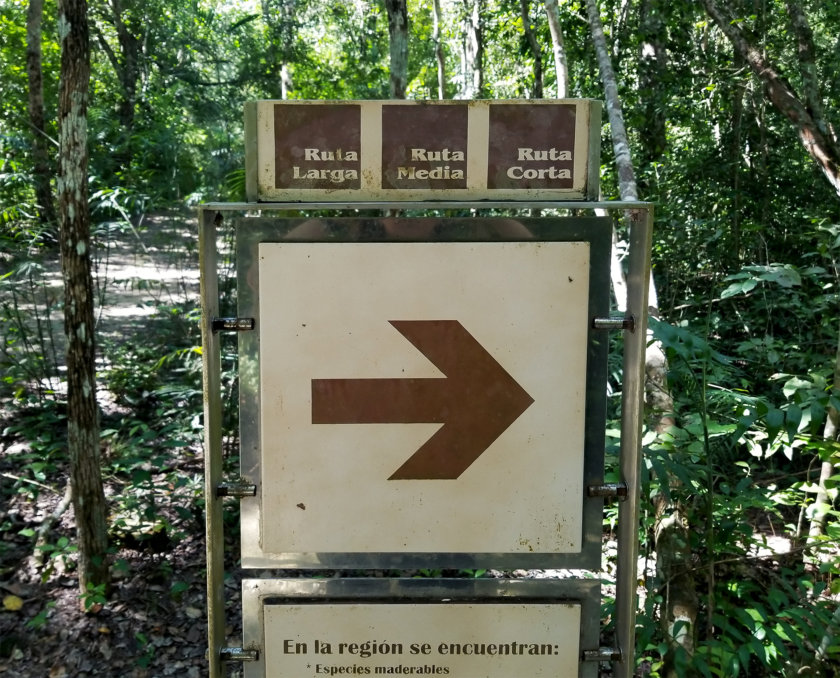
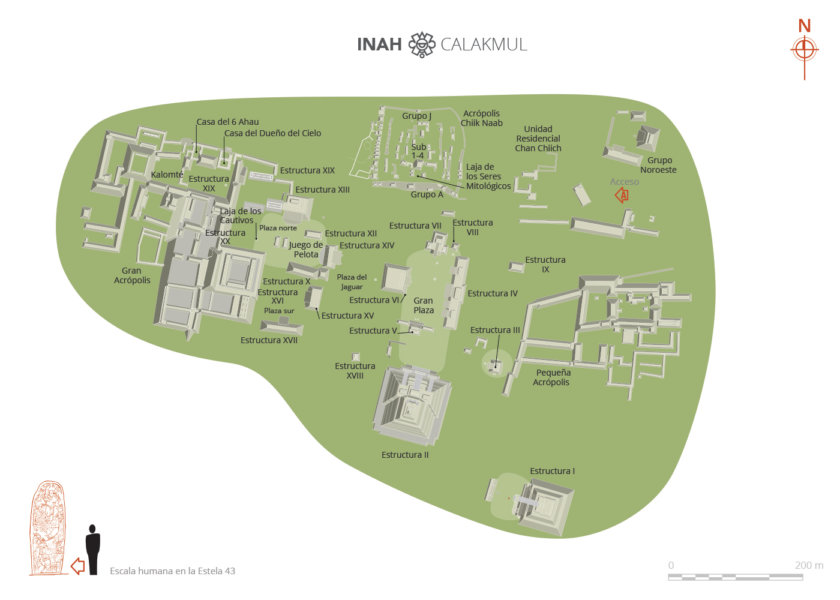
There is a map at the start of the tour that shows all the accessible structures and the different routes. I took some photos of this map and they were very helpful. I suggest you do the same! Luckily, the path is well marked.
I went for the long path. After driving for 5 hours from Campeche, I thought, I might as well make the most of it.
So, I present to you What to see in Calakmul, in the order of the route I followed:
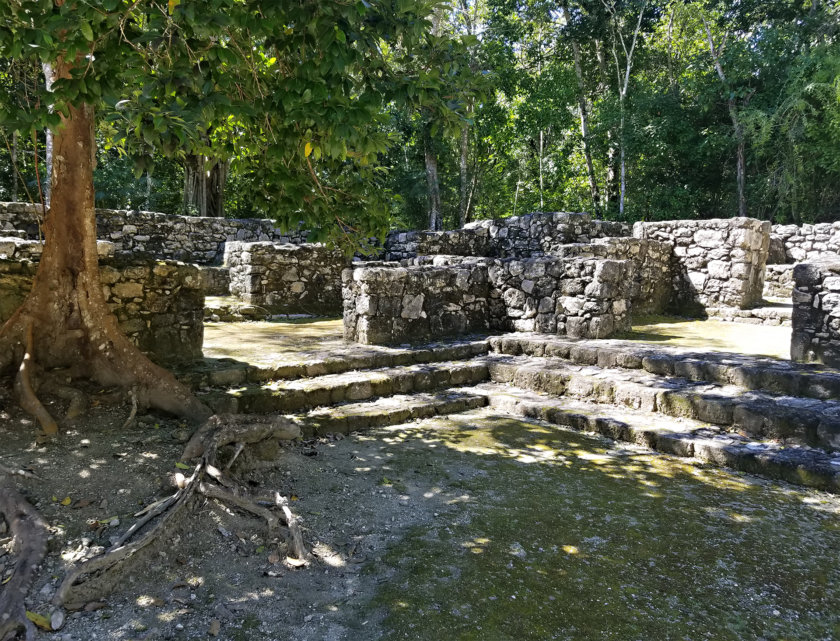
6.1 Chan Chi’ich
This was a residential area where large families lived together. They were not all related by blood, but by their common ancestry.
They had a drainage channel to deal with the heavy rain and avoid flooding.
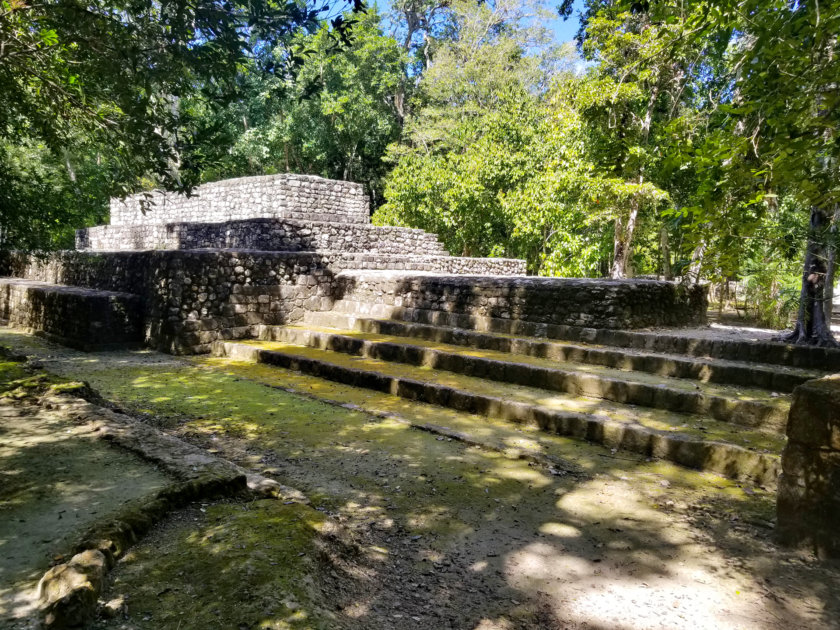
6.2 Chii’k Naab
This was a huge complex of 68 structures with plazas and corridors. It was probably a place for festivals and celebrations.
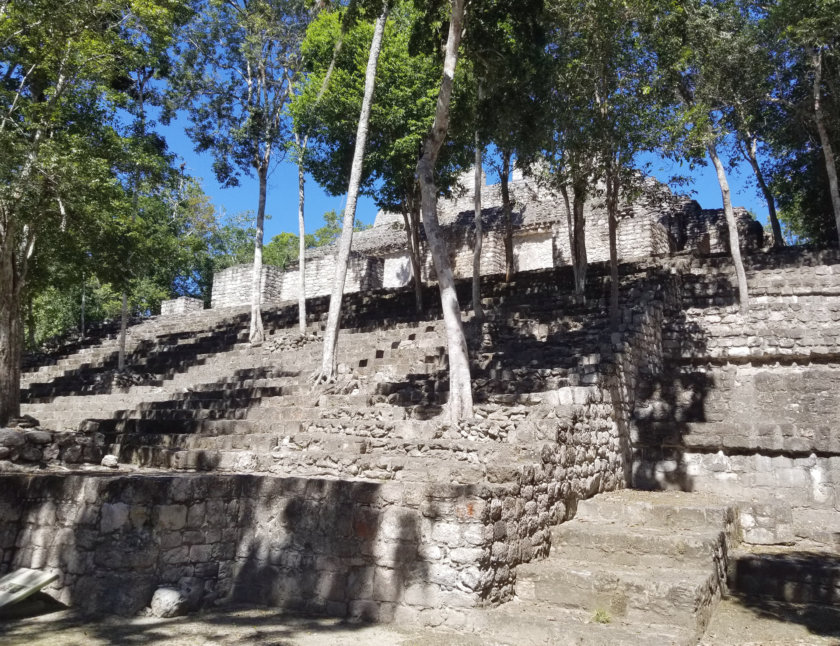
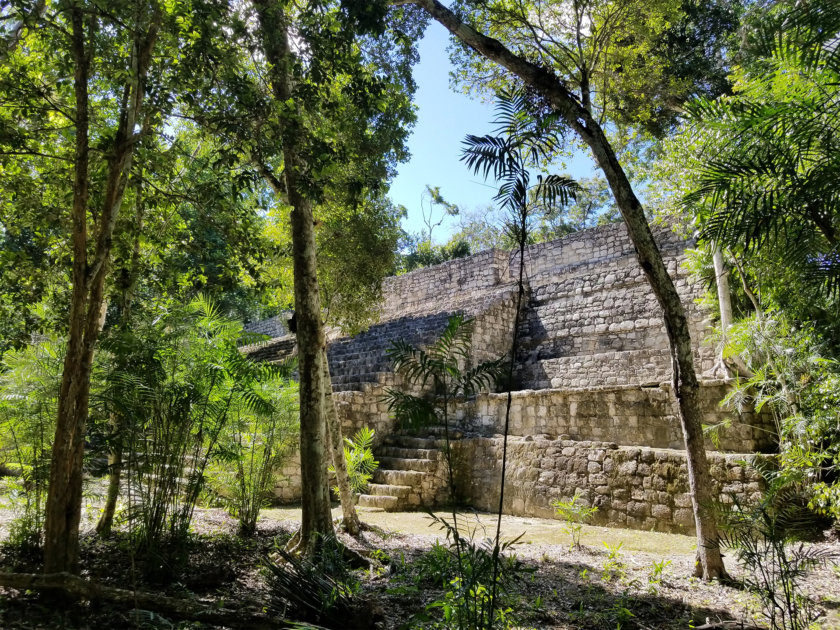
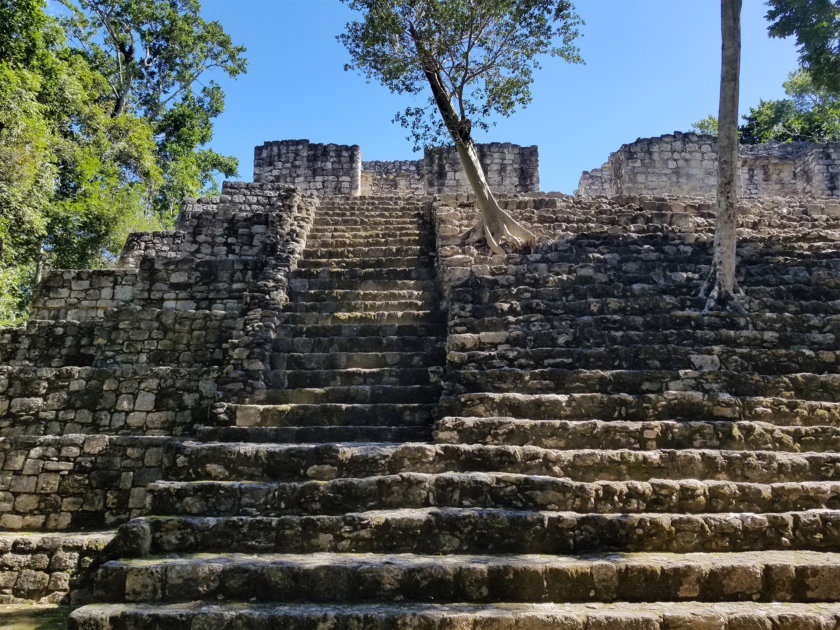
6.3 Great Acropolis
It was the first big site I saw in Calakmul, and it blew me away!
It was a large residential area with two main parts: a semi-public part and a private part for the elite.
- The semi-public area had about 10 buildings around two plazas. They were separated by structure XII. The north plaza had a ball court, and the south plaza had a staircase. The main entrance to the Acropolis was through structure XIV. It was open to the public, but very controlled.
- The private area was where the governor and the elite of Calakmul lived. There were about 70 structures around 17 courtyards and plazas.
The Great Acropolis was not only a residential area, but also a center for administration, politics, society and ceremony. Some of the structures had tombs of important people with offerings, such as structure XV, where three tombs were found.
6.4 Gran Plaza and Structure II
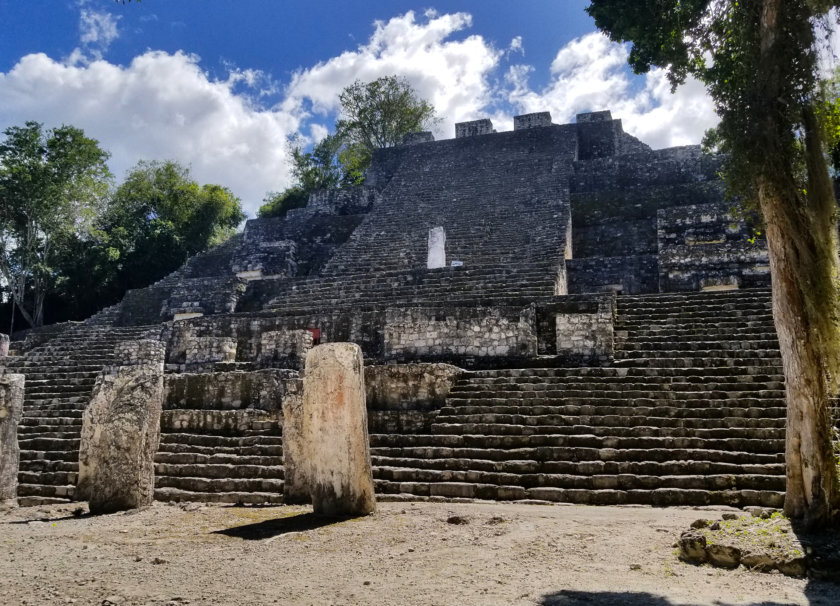
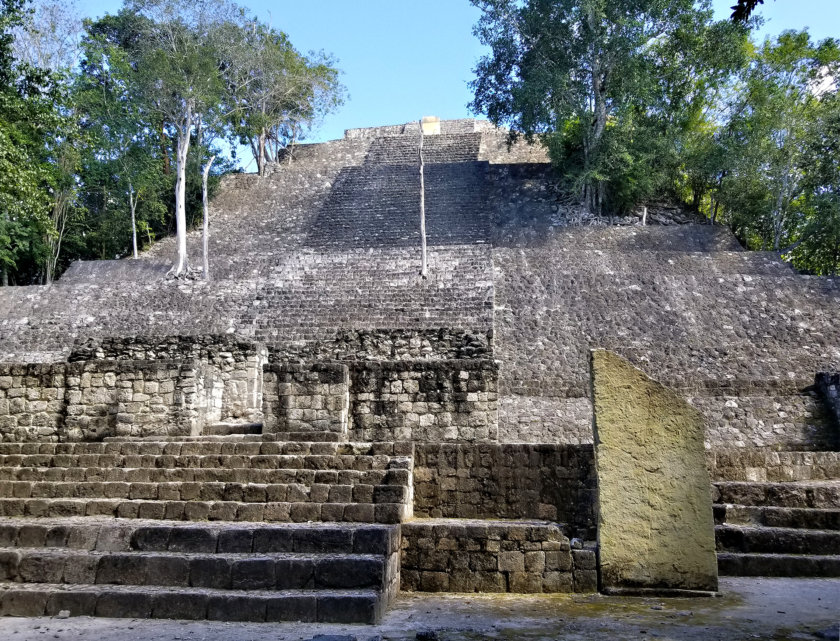
The Gran Plaza is the main plaza of Calakmul. It is surrounded by several structures, such as the famous Structure II. Besides being the largest pyramid in Calakmul, it is also the heart of the city.
This pyramid is one of the tallest and most important in the Mayan world. It stands at 55 feet high, but it used to be 66 feet high in its glory days!
It was the symbol of power and authority in Calakmul, and the burial place of some of its rulers. Archaeologists have found nine tombs inside the pyramid.
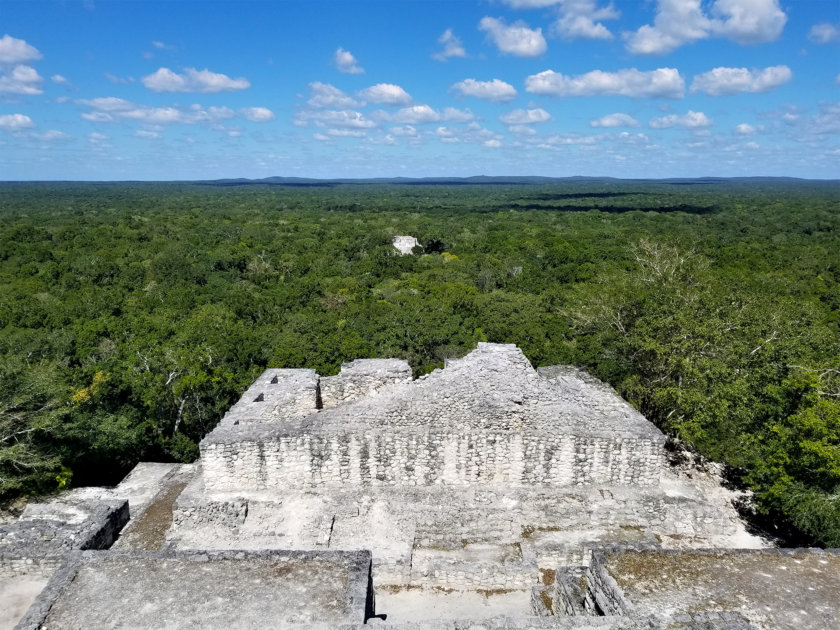
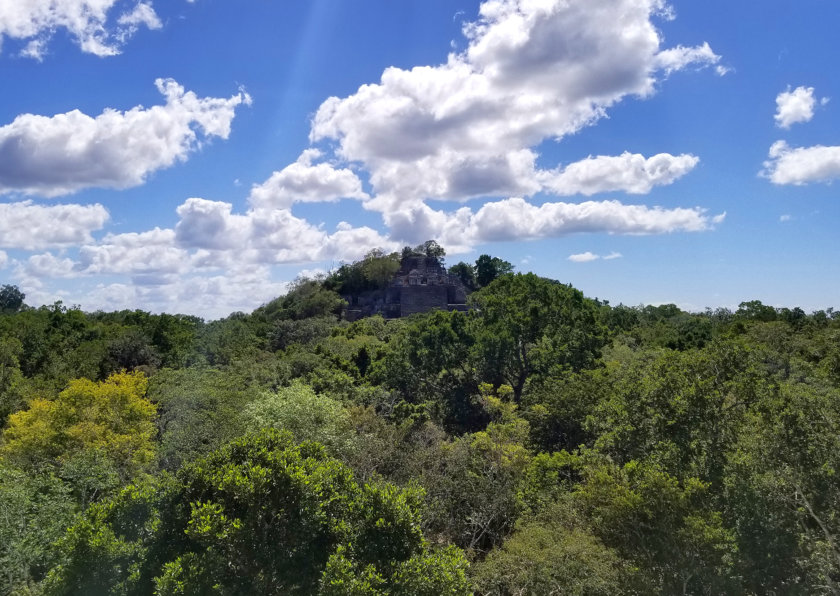
You have to climb up to admire the view, beyond the top of the trees. And if you look closely, you will see some dots emerging from the vegetation: they are other pyramids. Among them, on your left, you will see the other great pyramid of Calakmul: Structure I.
I thought I had reached the top, but I was wrong. The pyramid is bigger than it looks from the ground.
Luckily, I followed someone who knew the way to the top. You have to take the stairs on the right as you go up!
6.5 Structure I
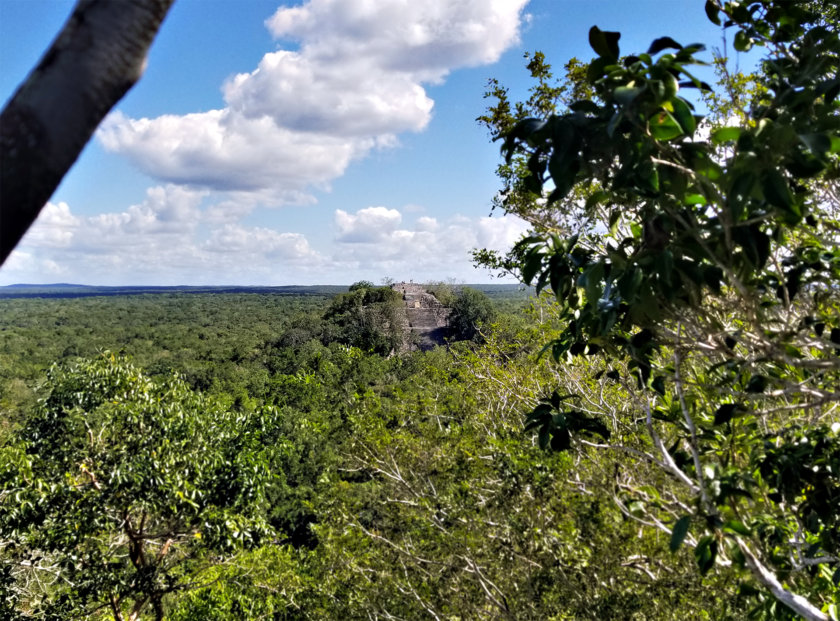
Structure I is the second tallest pyramid in Calakmul, after Structure II.
It’s 44 feet high, and you can climb it if you’re brave enough. But watch out, the stairs are uneven and steep.
From the top, you can see the amazing view of the jungle. And you can also spot Structure II peeking through the trees. It’s a breathtaking sight, and it feels like you’re in a movie!
6.6 Small Acropolis and Structure III
This is your last chance to see the ruins before you leave, so make the most of it.
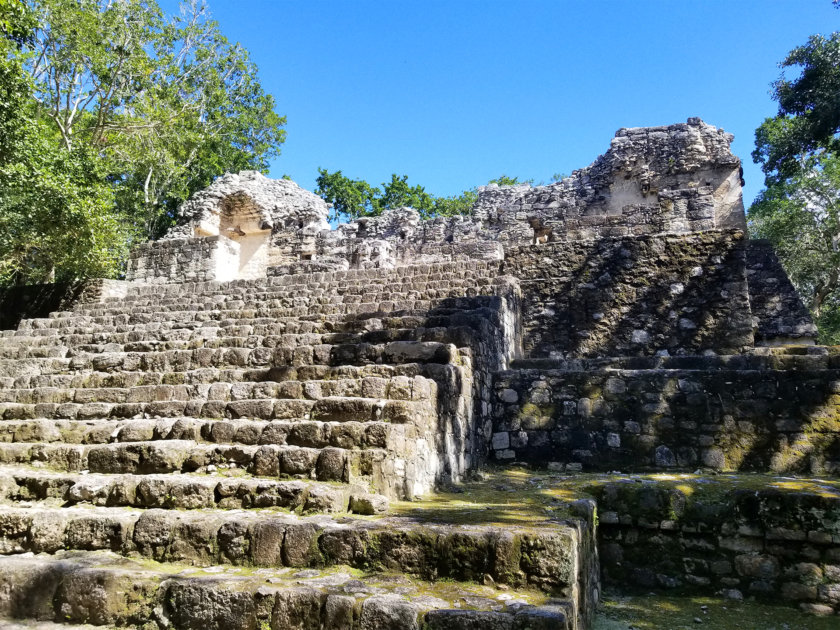
The Small Acropolis may not look as impressive as the big pyramids, because they are not well restored.
But trust me, it’s still fun to climb around and explore. You’ll feel like an adventurer, like Lara Croft or Indiana Jones!
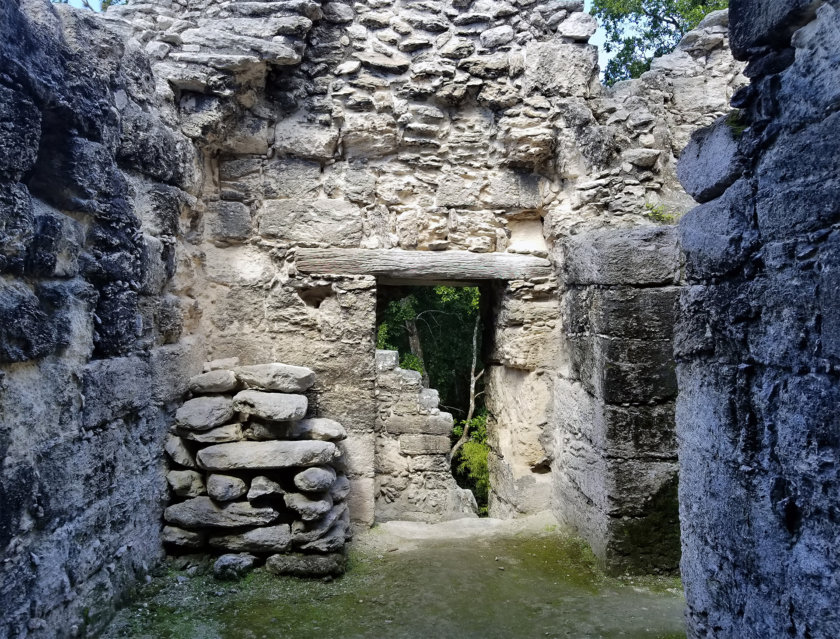
Structure III is located on the edge of the Small Acropolis.
It’s a palace where one of the oldest lineages of the city lived. Two tombs have been found here, one of them with offerings (ceramic, jade masks) and plaques with hieroglyphic writings, indicating that the deceased was an important ruler.
This was a palace where a royal family of Calakmul lived. They were one of the oldest and most powerful lineages in the city.
Archaeologists have found two tombs inside the palace, with valuable offerings (ceramics, jade masks) and inscriptions. One of the tombs belonged to a great ruler of Calakmul.
6.7 Fauna of Calakmul Reserve
The Calakmul reserve has a rich wildlife: 235 species of birds, 5 of the 6 Mexican felines, numerous reptiles and monkeys.
As for the archaeological site of Calakmul, I saw several howler monkeys playing from one branch to another and a couple of ocellated turkeys walking around. You will probably encounter them along the way, so keep your eyes open.
7. Calakmul tourist map
Here is a map of Calakmul with all the buildings accessible to the public, provided by INAH.
8. Calakmul: My Opinion
Calakmul is a hidden treasure in the jungle, waiting for you to discover it.
You can roam freely around the ancient Mayan site, climbing up and down the pyramids and other structures. This is a rare opportunity, as most other archaeological sites in Mexico don’t allow it anymore.
Calakmul is not very famous, but very important. It was once a powerful city, rivaling Tikal in Guatemala. Now, it’s a peaceful place, with few visitors and lots of wildlife. You might see only 100 people on a busy day, or none at all!
You need to be fit and adventurous to explore Calakmul. There are many steps to climb, and some are steep and slippery. But don’t worry, you’ll find people of all ages and backgrounds enjoying the site.
The big question is: is it worth the long drive to get there? YES, absolutely.
Trust me, it’s a unique and unforgettable experience that you don’t want to miss on your trip to Mexico!
9. Frequently Asked Questions about Calakmul (FAQ)
9.1 How much time do you need to visit Calakmul?
To visit Calakmul properly, it is best to set aside a full day.
While exploring the archaeological site itself usually takes around 3 to 4 hours, you also need to factor in the long drive from Xpujil, the different entrance checkpoints along the way, and the large distances within the site, which is vast.
If you are coming from Campeche or Bacalar, the most practical option is to spend at least one night near Calakmul to avoid rushing and enjoy the visit at a relaxed pace.
9.2 Is it dangerous to visit Calakmul?
No, visiting Calakmul is not dangerous as long as you plan ahead and take basic precautions.
The site is calm, monitored, and receives relatively few visitors. The main challenges are not related to safety, but rather to heat, humidity, long distances, and the lack of services inside the Biosphere Reserve.
Arriving early, bringing enough water and fuel, and following local guidelines are far more important than any security concern.
9.3 Can you visit Calakmul with children?
Yes, it is possible to visit Calakmul with children, but a few points should be considered.
The visit involves a fair amount of walking, climbing steep structures, and dealing with heat and humidity. For children who are used to walking and spending time outdoors, it can be an amazing experience. For very young children, however, it may feel tiring.
In that case, it is best to shorten the visit and avoid trying to see everything.
9.4 What is the best time to visit Calakmul?
The best time to visit Calakmul is generally from November to March, when temperatures are more comfortable and humidity is lower.
During the dry season (November to April), conditions are better for walking, with less heat and fewer mosquitoes, although the vegetation is slightly less green. In the rainy season (May to October), the jungle is lush and wildlife is more active, but heat, humidity, and rainfall increase.
Personally, I visited Calakmul in February and conditions were perfect: pleasant temperatures, low humidity, and a very enjoyable visit overall. If you can choose, January and February are among the best months to go.
🚗 Rent a car
🗽 Book entrance tickets and guided visits
🏄 Book your sports activities
🌍 Take a travel insurance
🙎 Book a tour
✈️ Book your flight
You’re traveling in Mexico? These articles will help you!
Discover all my articles about Mexico: All my articles to help you plan your trip to Mexico are listed there.
- Bacalar: The 18 Best Places to Visit
- Campeche: The 20 Best Places to Visit
- Edzna: Everything You Need to Know
- Itinerary: 8-10 days in Mexico – From Mexico City to Oaxaca
- Itinerary: 10 days in Mexico – Mexico City, Chiapas and Yucatan
- Itinerary: 2 weeks in Mexico – Best itinerary to discover the Yucatan Peninsula and Chiapas!
- Itinerary: 3 weeks in Mexico – Mexico City, Puebla, Oaxaca, Chiapas, Campeche, Yucatán and Riviera Maya
- Itinerary: 1 month in Mexico – My Epic 30-31 Days Itinerary from Mexico City to Cancun
- Road trip in Mexico: The best itineraries for 10, 15, 21 days and a month
- Itinerary: 1 week in Yucatan – The Ultimate 6, 7 or 8 days Itinerary
- Itinerary: 10 days in Yucatan – Best Itinerary for 9, 10 or 11 Days in Yucatan
- Itinerary: 2 weeks in Yucatan – Epic Itinerary + All my Best Tips!
- Itinerary: 3 weeks in Yucatan – Best things to do in 20-21 days
- Itinerary: 1 month in Yucatan – Yucatan Peninsula in 29, 30 or 31 days from Cancun
- Road trip in Yucatan: The best itineraries for 7, 10, 15, 21 days and 1 month
You’re using Pinterest? Here is the picture to pin!



Discussion2 Comments
We are traveling to Calakmul the very end of January/beginning February, do you know it they will still limit entry 5am to 1pm, with last access at 10am.
Hi Jennie! It’s a bit hard to give a definite answer since it really depends on the progress of the Maya Train construction. But, given there are still two months to go and the train is already running up to Campeche station, there’s a good chance it might be finished by then. If that’s the case, Calakmul should be back to its normal opening hours soon.